Search

 한국어
 русский
 عربى
Duplex stainless steel is defined by structure, not by one grade
Duplex stainless steel is a family of iron-chromium-nickel-molybdenum alloys whose mill-annealed structure contains both austenite and ferrite, normally in a near 50/50 balance. That two-phase structure is the source of the practical difference from 316: duplex grades usually deliver about twice the yield strength of 316L and a higher pitting resistance equivalent number, or PREN, at the cost of tighter welding control and narrower temperature limits.
The name does not describe a single chemistry. S31803 and its dual-certified companion S32205, commonly called 2205, are the standard duplex workhorses. S32304 is a lean duplex with lower alloy content. S32750, often called 2507, is a super duplex grade for severe chloride service. Each one has a different balance of chromium, molybdenum, nickel and nitrogen, so a purchase specification that says only “duplex” is incomplete.
Phase balance
Roughly half austenite and half ferrite in the annealed condition. The balance affects strength, toughness, magnetic response and weld behaviour.
Strength
Minimum yield strength is commonly around 450 MPa for 2205 and around 550 MPa for 2507, compared with roughly 170 to 210 MPa for 316L tube.
Corrosion
Higher chromium, molybdenum and nitrogen raise PREN. That helps against pitting and crevice attack in chlorides, but it does not make duplex suitable for every acid or every temperature.
Fabrication
Duplex needs controlled heat input, clean purging and a balanced filler. It is not a drop-in replacement for 316L in every welding shop.
The comparison matters most when a tube is bought for a specific duty: heat exchanger tubes, offshore instrument lines, chemical transfer piping, hydraulic lines or high-pressure manifolds. In those cases, the choice between duplex and 316 is not a grade preference. It is a decision about wall thickness, corrosion allowance, welding procedure, inspection cost and service life.
316 and 316L: the baseline tube grade
316 is an austenitic stainless steel with about 16 to 18 percent chromium, 10 to 14 percent nickel and 2 to 3 percent molybdenum. The molybdenum addition improves resistance to chlorides and some reducing acids compared with 304. 316L is the low-carbon version, usually limited to about 0.03 percent carbon, which reduces the risk of carbide precipitation during welding and improves intergranular corrosion resistance in the heat-affected zone.
For tube and pipe, 316L is the more common specification because most products are welded, bent or formed after mill supply. A 316L tube can be supplied to ASTM A269 for general seamless and welded tubing, ASTM A213 for heat exchanger and boiler tubes, ASTM A312 for seamless and welded austenitic pipe, or EN 10216-5 for pressure purposes. The grade is widely available, easy to weld, forgiving in fabrication and supported by a mature supply chain.
| Element or property | Typical 316L value | Practical meaning |
|---|---|---|
| Chromium | 16.0 to 18.0 percent | Provides the passive oxide film. |
| Nickel | 10.0 to 14.0 percent | Stabilizes austenite and supports toughness and formability. |
| Molybdenum | 2.0 to 3.0 percent | Improves pitting and crevice resistance in chlorides. |
| Carbon | 0.03 percent maximum | Lowers sensitization risk during welding. |
| PREN | Approximately 24 to 26 | Adequate for many mild chloride duties, not for severe seawater service. |
| Minimum yield strength | Approximately 170 to 210 MPa | Lower allowable stress than duplex, so walls are often thicker. |
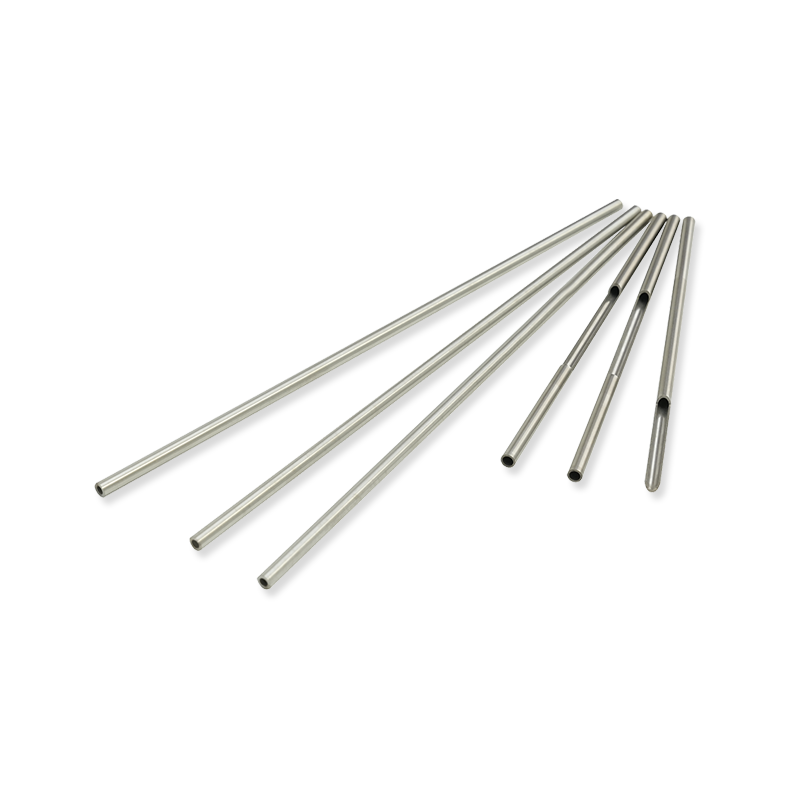 TP316/316L/316H/316Ti Austenitic Stainless Steel PipeMolybdenum-bearing austenitic pipe with 316, 316L, 316H and 316Ti variants for welded tube, heat exchanger and chemical service.View Product →
316L remains a strong choice for food and beverage lines, pharmaceutical clean service, general chemical transfer, heat exchangers with low chloride cooling water, and architectural or instrument tubing where the environment is controlled. It is also easier to source in thin-wall, small-diameter and precision bright-annealed forms. For coastal or marine exposure, review the actual chloride level and consider a 316L marine-grade stainless steel tube only after confirming that the application is not exposed to stagnant seawater or high-temperature chloride brines.
Chemistry and PREN: where duplex pulls ahead
The first clear difference is alloy design. A 2205 duplex grade typically contains about 22 to 23 percent chromium, 4.5 to 6.5 percent nickel, 3.0 to 3.5 percent molybdenum and 0.14 to 0.20 percent nitrogen. The nickel is lower than 316L because the ferrite phase helps stabilize the structure, while nitrogen strengthens the alloy and raises pitting resistance. Super duplex 2507 moves further with about 24 to 26 percent chromium, 6 to 8 percent nickel, 3 to 5 percent molybdenum and 0.24 to 0.32 percent nitrogen.
| Grade | Structure | Chromium | Nickel | Molybdenum | Nitrogen | PREN |
|---|---|---|---|---|---|---|
| 316L | Austenitic | 16.0 to 18.0 percent | 10.0 to 14.0 percent | 2.0 to 3.0 percent | Not specified | About 24 to 26 |
| 2205, S31803 or S32205 | Duplex | 21.0 to 23.0 percent | 4.5 to 6.5 percent | 2.5 to 3.5 percent | 0.08 to 0.20 percent | About 32 to 36 |
| 2507, S32750 | Super duplex | 24.0 to 26.0 percent | 6.0 to 8.0 percent | 3.0 to 5.0 percent | 0.24 to 0.32 percent | Above 40 |
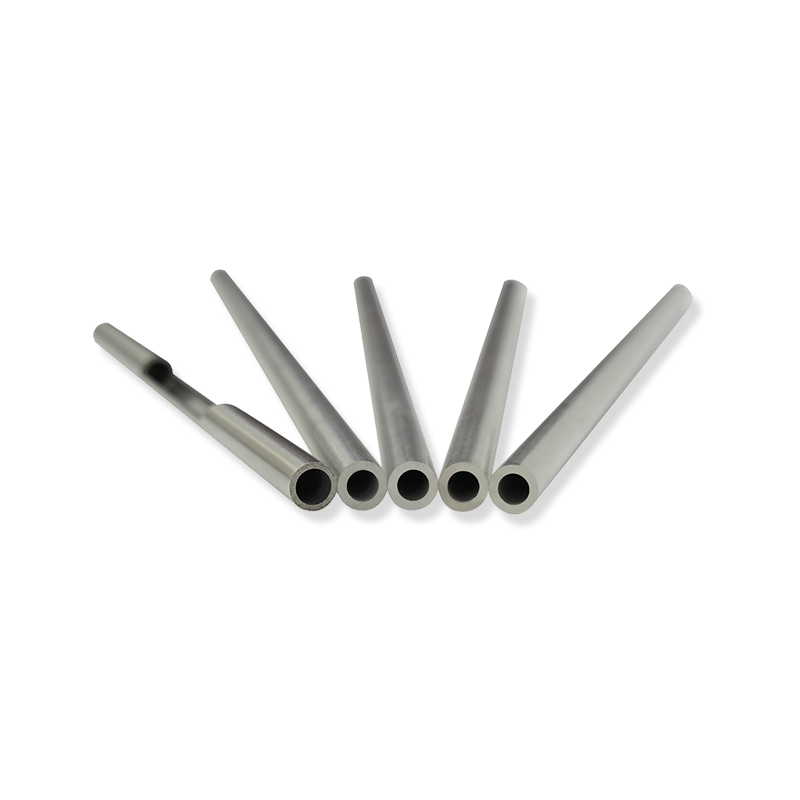 S31803 Duplex Stainless Steel Alloy PipeDuplex stainless pipe for chloride-containing and stress-cracking service, with a ferritic-austenitic structure and pitting resistance for demanding applications.View Product →
PREN is usually calculated as chromium plus 3.3 times molybdenum plus 16 times nitrogen. It is a ranking tool, not a guarantee. A higher PREN generally means better pitting resistance, but crevice geometry, surface finish, oxygen level, temperature, flow velocity and the presence of chlorides or oxidizers can change the outcome. Two alloys with similar PREN can behave differently in a real heat exchanger because the tube-to-tubesheet crevice is more aggressive than a polished test coupon.
This is why a duplex specification should state the exact UNS number, not just “2205.” S31803 and S32205 are often dual-certified, but S32205 has a narrower nitrogen range and is preferred when consistent pitting resistance is needed. For a new project, ask for the grade plus the standard edition: ASTM A789 covers seamless and welded ferritic-austenitic stainless steel tubing, while ASTM A790 covers duplex pipe. The certificate should show heat number, chemistry, tensile properties, yield strength, elongation and any required impact or corrosion test.
Strength, weight and pressure design
The strength gap is large enough to change a tube design. 316L is an austenitic grade with a relatively low yield strength, so pressure-containing parts often need a thicker wall. 2205 duplex typically reaches a minimum yield strength of about 450 MPa, and 2507 super duplex reaches about 550 MPa. That does not simply mean the wall can be halved. Stiffness is still controlled by the elastic modulus, which is similar for stainless steels, and thin walls can be governed by vibration, handling damage, external pressure, buckling or corrosion allowance rather than by internal pressure alone.
For high-pressure hydraulic lines, fuel injection hardware, instrumentation and small-diameter control tubing, the higher allowable stress of duplex can reduce wall thickness or increase the safety margin at the same OD. For heat exchanger tubes, the benefit is different: a thinner wall improves heat transfer and reduces weight, but the tube still needs enough wall to survive rolling, expansion, vibration and cleaning. A designer should check the applicable code allowable stress, then compare the duplex and 316L cases at the same design pressure, temperature and corrosion allowance.
Where duplex wins
High-pressure tubing, weight-sensitive offshore lines, long unsupported spans and components where a thicker 316L wall would add cost and mass.
Where 316L wins
Low-pressure lines, small fittings, thin-wall instrument tube and projects where the design is already proven and the chloride risk is modest.
The hidden check
Verify thread and fitting compatibility, galling risk, fatigue and impact toughness before changing the grade. A stronger tube does not automatically make a stronger connection.
Impact toughness deserves attention in low-temperature or dynamic service. Duplex has good toughness, but the ferrite phase and the thermal history can affect the ductile-to-brittle transition. If the tube will see subzero conditions, offshore motion, pressure cycling or shock loading, specify the test temperature and acceptance criteria rather than assuming that higher strength covers every mechanical requirement.
Corrosion resistance: chloride pitting, crevice attack and stress cracking
In neutral chlorides, the main difference between 316L and duplex is the margin against pitting and crevice corrosion. 316L performs well in many fresh-water, food, pharmaceutical and mild chemical environments, but it can pit in stagnant chloride solutions, especially when the temperature rises. 2205 raises the PREN to roughly 34 to 36 and is often selected for coastal atmospheres, brackish cooling water, moderate seawater exposure and chemical streams where 316L has shown pitting or rust staining.
Critical pitting temperature is a useful ranking, but published values vary with test method and surface condition. As a practical guide, 316L may show pitting in chloride solutions around 15 to 25 degrees Celsius under certain test conditions, 2205 often resists up to about 35 to 45 degrees Celsius, and 2507 can push beyond 60 degrees Celsius. These are not design limits. They are indicators that must be confirmed by a corrosion test or by service experience in the actual medium.
| Environment | 316L | 2205 | 2507 | Selection note |
|---|---|---|---|---|
| Clean fresh water and food processing | Good | Good | Good | 316L is usually sufficient and easier to fabricate. |
| Coastal atmosphere with occasional salt deposit | Limited | Good | Very good | Washdown and surface finish matter as much as grade. |
| Flowing seawater | Not recommended | Limited | Good | Super duplex or a higher alloy may be needed for stagnant or crevice conditions. |
| Hot chloride stress cracking | High risk | Lower risk | Lower risk | Duplex is not immune; temperature and stress must be reviewed. |
| Dilute sulfuric or phosphoric acid | Conditional | Often good | Often good | Oxidizer level and temperature can reverse the ranking. |
| Hot concentrated sulfuric acid | Not first choice | Not first choice | Not first choice | A nickel alloy or special austenitic grade may be required. |
Chloride stress corrosion cracking is another dividing line. Austenitic 316L can crack under tensile stress in hot chloride environments, particularly where chlorides concentrate and evaporate. Duplex grades are much more resistant because the ferrite phase interrupts crack propagation, but they are not immune. High stress, severe chloride concentration, low pH and high temperature can still create cracking risk. If the service includes hot chloride brines, steam condensate with chloride carryover or insulated surfaces that can collect salt, specify the worst-case condition and review the risk with a corrosion engineer.
Pitting
Local breakdown of the passive film. PREN helps rank alloys, but crevices and deposits often trigger attack before the bulk solution does.
Crevice corrosion
Tube-to-tubesheet joints, gasket faces and under-deposit areas are more demanding than open pipe. A grade that works in open flow may fail in a crevice.
Stress cracking
Duplex offers a wide margin over 316L in hot chlorides, but it should not be treated as an unlimited solution for concentrated brines.
Acid attack
Acid service requires specific testing. A high PREN alloy can still be the wrong choice in reducing acids or wet chlorine.
Temperature limits and why 316 can still win
Duplex is not a high-temperature alloy in the way that 310S, 321H or 347H can be. Long-term service above roughly 300 degrees Celsius is generally avoided for 2205 because of 475-degree embrittlement and the formation of sigma phase, which reduces toughness and corrosion resistance. Super duplex has its own limits and should not be used in hot furnace sections simply because it has high strength at room temperature.
316L is often the more practical choice for elevated-temperature chemical service where chlorides are absent and the mechanical strength is adequate. It also remains useful over a broad temperature range, including cryogenic service, because the austenitic structure avoids the ductile-to-brittle transition that ferritic and duplex grades can show. The decision is therefore not “duplex is better.” It is “duplex is better only where its strength and chloride resistance are needed and its temperature limits are respected.”
If a line operates above 300 degrees Celsius, check the actual material data and the applicable code before assuming that duplex will work. In many cases, a stabilized austenitic grade or a higher-nickel alloy is the safer route. The same logic applies to cyclic service: repeated thermal expansion and contraction can cause fatigue at welds, and the weld metal, heat-affected zone and parent tube should be evaluated together.
Welding, bending and heat treatment: the fabrication gap
316L is comparatively forgiving. It can be welded with common austenitic fillers, generally does not require preheat, and usually does not need post-weld heat treatment for thin-wall tube. Duplex requires more discipline. The welder must control heat input, interpass temperature and shielding gas, because an unbalanced thermal cycle can produce too much ferrite, too little austenite, or harmful secondary phases. A typical 2205 weld uses an ER2209 filler and a controlled purging practice for the root.
Heat input is usually kept in a moderate range, often around 0.5 to 2.0 kJ/mm depending on thickness and procedure qualification, and interpass temperature is commonly limited to about 150 degrees Celsius. Preheating is not normally used. The weld should be clean, oxide-free and protected from nitrogen loss and hydrogen pickup. After welding, duplex is not generally stress-relieved by a simple low-temperature treatment, because that can precipitate sigma phase or cause embrittlement. If heat treatment is required, it is normally a solution anneal followed by rapid cooling, and it must be qualified for the specific grade and thickness.
Welding 316L
Broad filler availability, forgiving arc stability and less sensitivity to interpass temperature. Still needs clean surfaces and appropriate purge on thin-wall tube.
Welding duplex
Controlled heat input, balanced filler, ferrite check and qualified procedure. Root oxidation can reduce corrosion resistance.
Bending and forming
Duplex has higher springback and needs more force. Bend radius, ovality and strain should be checked against the specification.
Heat treatment
Solution annealing is not a shop-floor stress relief. It requires accurate temperature, atmosphere and rapid quench.
Bending also differs. Duplex tube can be bent, but the higher strength means more springback and a greater risk of ovality or strain-induced phase changes if the bend radius is tight. For precision instrument tubing, the bend schedule should be proven on the actual heat of material, not copied from a 316L procedure. For 316L, the main concerns are surface contamination, lubricant residue and chloride-bearing cleaning agents that can leave the tube vulnerable to pitting.
Post-fabrication cleaning matters for both grades. Free iron, grinding dust, weld spatter and carbon steel particles can create local corrosion cells. Pickling and passivation may be specified for 316L after welding, while duplex often needs pickling or mechanical cleaning to remove heat tint. The cleaning method should not leave chloride residues or smears that obscure a surface defect.
Applications where duplex tube earns its cost
Duplex tube is usually selected when the combination of strength and chloride resistance changes the total installed cost. Offshore topside piping, chemical processing lines, desalination equipment, pulp and paper bleach plants, flue gas desulfurization systems, cargo tanks and marine exhaust components are common examples. In these duties, 316L may need a thicker wall, more supports or a shorter replacement interval, which can erase the lower purchase price.
For offshore flowlines, risers, utility lines and instrument tubing, duplex steel offshore oil and gas tubing is often specified because the material must handle pressure, vibration, salt spray and occasional wet chloride exposure. The higher strength allows a thinner wall in some designs, and the corrosion margin reduces the risk of pitting during shutdowns or stagnant periods. The welding procedure, however, becomes part of the quality system: a good tube with a poor weld can fail before the parent metal.
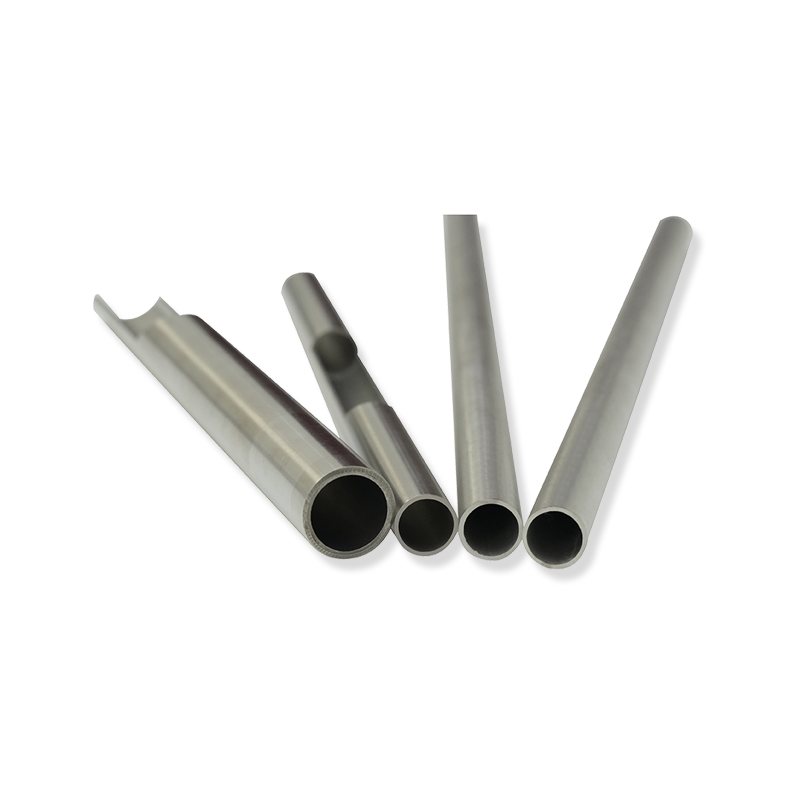 Duplex 2205 Corrosion-Resistant Stainless Steel PipeDuplex 2205 pipe for oil and gas, marine, chemical and heat exchanger service, combining corrosion resistance with high strength and stress-fatigue resistance.View Product →
In chemical processing, duplex is used for heat exchanger tubes, reactor internals, transfer lines and piping where 316L has shown pitting, crevice attack or chloride stress cracking. It is not a universal acid alloy. Hot concentrated sulfuric acid, hydrofluoric acid, wet chlorine and some oxidizing chloride streams may require a super austenitic or nickel-based alloy. The correct approach is to define the chemistry, temperature, pressure, flow and cleaning cycle before choosing the grade.
Offshore and marine
Salt spray, wet surfaces, vibration and pressure. Duplex offers a useful margin where 316L may pit in stagnant areas.
Chemical processing
Heat exchangers, transfer lines and reactor piping. Confirm the specific acid, chloride and temperature before release.
Desalination
Brackish and seawater duties need careful crevice review. Duplex may be suitable in some streams, while super duplex is used in more severe ones.
Pulp and paper
Chloride and bleaching chemicals can make 316L marginal. Duplex is often considered for washer, digester and bleach plant lines.
The cost case should be built on life-cycle data, not price per kilogram. A duplex tube may cost more per meter, but if it allows a thinner wall, fewer supports, a longer service interval or a lower risk of unplanned shutdown, the installed cost can be lower. The comparison should include welding qualification, inspection, lead time and the cost of a weld repair in a difficult location.
Lean duplex, 2205 and super duplex: choosing the right level
“Duplex” covers a wide range. Lean duplex S32304 is a lower-alloy grade with PREN around 24 to 28. It can be a cost-effective alternative to 316L in some moderate chloride duties, especially where higher strength is useful and the corrosion demand is not extreme. Standard 2205 remains the general-purpose choice for many chemical, marine and pressure applications. Super duplex 2507 is reserved for severe chloride, high-pressure or seawater duties where the extra PREN and strength justify the tighter welding and quality controls.
| Family | Typical grade | PREN | Typical yield strength | Best fit | Watch-out |
|---|---|---|---|---|---|
| Lean duplex | S32304 | About 24 to 28 | About 400 MPa | Moderate chloride service, structural tube, cost-sensitive replacements for thick 316L sections. | Lower pitting margin than 2205; not a seawater grade for severe crevices. |
| Standard duplex | S31803 or S32205, 2205 | About 32 to 36 | About 450 MPa | Chemical processing, offshore utility lines, heat exchangers, cargo tanks and marine exhaust. | Temperature limit near 300 degrees Celsius; welding procedure is critical. |
| Super duplex | S32750, 2507 | Above 40 | About 550 MPa | Severe chloride, seawater, high-pressure offshore and demanding heat exchanger duties. | Higher alloy cost, tighter welding window and greater need for qualified heat treatment. |
A common error is to compare 316L with 2507 and conclude that duplex is either too expensive or unnecessary. The proper comparison is duty by duty. For a low-chloride food line, 316L may be the lowest-risk choice. For a brackish cooling water heat exchanger, 2205 may be the practical middle ground. For a severe seawater system with stagnant crevices, 2507 or a higher alloy may be the only sensible option. Each step up should be justified by a specific corrosion mechanism, not by a general preference for “better” material.
Purchase specifications that prevent surprises
Most failures in duplex and 316L tube procurement start with an incomplete purchase description. The buyer specifies a grade name, but not the standard, the heat treatment condition, the surface finish, the test schedule or the documentation. The mill then supplies a product that meets a general grade but not the intended service. A useful purchase order ties the tube to the design case and the inspection plan.
| Requirement | Why it matters | Example to state |
|---|---|---|
| Exact UNS number and standard | “Duplex” alone does not define chemistry or mechanical properties. | S32205 to ASTM A789, solution annealed and pickled. |
| Heat treatment condition | Duplex properties depend on solution annealing and rapid cooling. | Solution annealed at the qualified temperature and water quenched. |
| Chemical and mechanical certificate | Confirms the heat chemistry, yield, tensile and elongation. | EN 10204 3.1 certificate with heat number traceability. |
| Ferrite content or phase balance | An unbalanced structure can reduce toughness and corrosion resistance. | Ferrite check on the tube and weld procedure, with agreed method. |
| Corrosion or PMI testing | Prevents grade mix-ups and verifies alloy content. | Positive material identification on 100 percent of tubes or a defined sample. |
| Non-destructive testing | Finds seams, cracks and wall defects that visual inspection misses. | Eddy current, hydrostatic test or ultrasonic test as specified. |
| Surface finish and cleanliness | Heat tint, iron contamination and roughness can start pitting. | Pickled and passivated, chloride-free cleaning, protected ends. |
| Dimensional tolerances | Wall eccentricity and ovality affect pressure rating and fit-up. | OD, wall, length, straightness and ovality to the agreed standard. |
For duplex tube, the mill certificate should be reviewed against the standard edition used in the design. A tube made to an older edition may not meet a newer nitrogen range or test requirement. For 316L, verify that the carbon level is truly low enough for the welding process and that the molybdenum content is within the specified range. A generic “316” certificate is not the same as 316L when impact toughness, sensitization or corrosion resistance matters.
Jend Tube produces seamless stainless steel and nickel alloy tube in a range that covers small-diameter instrument tube through large industrial sizes, with outside diameters from 3.18 mm to 406.4 mm, wall thickness from 0.3 mm to 20 mm and lengths up to 25,000 mm. The mill works to ASTM, EN, DIN, JIS, GOST and GB standards and holds ISO 9001, TS and PED certification. Those capabilities are useful only when the purchase specification is clear: grade, standard, heat treatment, test schedule and documentation should be fixed before the heat is released.
Common comparison mistakes
Comparing price per kilogram only
Duplex often costs more per kilogram, but a thinner wall, fewer supports or a longer replacement interval can change the installed cost. Compare the finished component, not just the raw tube.
Using PREN as a design guarantee
PREN ranks alloys. It does not account for crevices, deposits, flow, pH or temperature. A high-PREN tube can still fail in a poorly designed joint.
Assuming duplex is always weldable
Duplex can be welded well, but it needs a qualified procedure, balanced filler and controlled heat input. A 316L procedure cannot simply be copied.
Ignoring the temperature ceiling
Duplex is not a furnace alloy. Long-term service near or above 300 degrees Celsius can embrittle 2205 and reduce toughness.
Expecting 316L to handle hot chlorides
316L is a workhorse, not a seawater alloy. Hot chloride brines, stagnant deposits and high stress can cause pitting or stress cracking.
Buying “duplex” without a UNS number
Lean, standard and super duplex behave differently. The grade, standard and heat treatment should be written into the order.
A useful habit is to write the failure mode you are trying to prevent. If the risk is chloride pitting under a tube sheet, specify the alloy and the crevice test. If the risk is weld heat tint, specify pickling and passivation. If the risk is grade mix-up, specify PMI. If the risk is low-temperature brittle fracture, specify impact testing. That approach produces a better purchase decision than a generic argument about which stainless steel is “better.”
FAQ: duplex stainless steel vs 316
Is duplex stainless steel stronger than 316?
Yes, in yield strength. Standard 2205 duplex typically has a minimum yield strength around 450 MPa, while 316L is often in the 170 to 210 MPa range depending on product form and standard. The practical benefit is a higher allowable stress, which can reduce wall thickness in pressure designs. It does not mean that every part should be thinner, because stiffness, vibration, corrosion allowance and connection design still set the minimum wall.
Is duplex always more corrosion resistant than 316?
Not in every environment. Duplex usually has a higher PREN and better resistance to chloride pitting, crevice attack and chloride stress cracking. However, 316L can perform better in some high-temperature or strongly oxidizing acid duties, and duplex has temperature limits that 316L does not share. The correct comparison uses the actual chemistry, temperature, flow, crevice geometry and cleaning cycle.
Can 316L and duplex be used at the same temperature?
No. Duplex 2205 is generally limited to long-term service around 300 degrees Celsius because of embrittlement and sigma-phase formation. 316L can be used at higher temperatures where chlorides are absent and the mechanical design allows. If the line runs hot, check the applicable code and material data before selecting duplex.
Is duplex harder to weld than 316L?
Yes. Duplex welding requires controlled heat input, interpass temperature, balanced filler and clean purging. The weld must maintain a suitable austenite-ferrite balance. 316L is more forgiving and has a wider range of proven procedures. A duplex weld procedure should be qualified on the actual grade and thickness, not borrowed from a 316L job.
Does duplex stainless steel rust?
It can, if the passive film is damaged or the environment exceeds its resistance. Free iron contamination, weld heat tint, chloride deposits and stagnant water can all cause rust or pitting. Duplex is not a maintenance-free material. Surface cleanliness, drainage and regular inspection remain important, especially in marine and coastal service.
When should I choose 316L instead of duplex?
Choose 316L when the chloride risk is modest, the temperature is outside the comfortable duplex range, the fabrication shop has limited duplex experience, or the design already has a proven 316L wall thickness and corrosion allowance. Food, pharmaceutical, low-chloride chemical and general instrument tubing often fall into this category.
When is super duplex better than 2205?
Super duplex such as 2507 is considered when 2205 does not provide enough pitting or crevice resistance in severe chloride or seawater service, or when higher strength is needed. It is not a default upgrade. Super duplex has a tighter welding window, higher alloy cost and a greater need for qualified heat treatment and inspection.
What should be on a duplex tube certificate?
The certificate should show the exact grade and UNS number, standard edition, heat number, chemical analysis, tensile and yield strength, elongation, heat treatment condition and any required impact, corrosion, hydrostatic or non-destructive test results. For critical service, add PMI, ferrite check and traceability requirements. The certificate should match the purchase order, not just the general grade name.
A selection sequence that works
- Define the service: medium, chloride level, pH, temperature, pressure, flow, cleaning chemicals and shutdown conditions.
- Identify the dominant failure mode: pitting, crevice corrosion, stress cracking, erosion, high-temperature oxidation or mechanical fatigue.
- Set the design wall and allowable stress using the applicable code, then compare 316L, lean duplex, 2205 and 2507 at the same design conditions.
- Check fabrication: welding procedure, filler, heat input, bend radius, heat treatment and inspection access.
- Write the purchase specification with the exact UNS number, standard, heat treatment, surface finish, test schedule and certificate requirements.
- Review the mill certificate and test results before release, then protect the tube during storage and installation from chloride contamination and mechanical damage.
The shortest path to a reliable decision is to stop treating duplex and 316 as simple alternatives. Duplex is a structural and corrosion upgrade with specific fabrication rules. 316L is a mature austenitic grade with broad availability and predictable behaviour. The right choice depends on the duty, the weld, the temperature and the inspection plan, not on a single property table.