Search

 한국어
 русский
 عربى
Choosing between 304 and 316 stainless steel tube usually comes down to three practical questions: where the tube will be installed, how much chloride it will face, and whether the extra cost of molybdenum is justified. For most dry, indoor, or low-corrosion duties, 304 is enough. For coastal processing, pharmaceutical washdown, marine equipment, or chemical lines that contact chlorides, 316 is the safer choice. This guide explains the metallurgical reasons, the performance differences, and the purchasing factors that matter when specifying seamless or welded tube.
What actually separates 304 and 316 stainless steel tube?
The core difference between 304 and 316 stainless steel tube is chemical composition. Both are austenitic grades, but 316 contains molybdenum, and that single addition changes corrosion resistance, pitting resistance, high-temperature strength, and long-term durability in chloride environments.
304 is an 18/8 stainless steel: approximately 18% chromium and 8% nickel. It is the most widely used stainless steel grade because it offers a good balance of formability, weldability, and corrosion resistance at a moderate cost. 316 replaces part of that composition with 2% to 3% molybdenum, and usually has slightly higher nickel content as well. Molybdenum stabilizes the oxide film and makes it much harder for chloride ions to break through and initiate pitting or crevice corrosion.
| Grade | C max | Mn max | Si max | P max | S max | Cr | Ni | Mo |
|---|---|---|---|---|---|---|---|---|
| 304 | 0.08 | 2.00 | 0.75 | 0.045 | 0.030 | 18.0–20.0 | 8.0–11.0 | — |
| 304L | 0.035 | 2.00 | 0.75 | 0.045 | 0.030 | 18.0–20.0 | 8.0–12.0 | — |
| 316 | 0.08 | 2.00 | 0.75 | 0.045 | 0.030 | 16.0–18.0 | 10.0–14.0 | 2.00–3.00 |
| 316L | 0.035 | 2.00 | 0.75 | 0.045 | 0.030 | 16.0–18.0 | 10.0–14.0 | 2.00–3.00 |
The “L” in 304L and 316L means low carbon. Low-carbon versions are important for welded tube because they reduce the risk of chromium carbide precipitation at grain boundaries during welding. For most continuous tube applications, 304L and 316L are preferred when the tube will be welded, especially in thicker sections or when sensitization in the heat-affected zone is a concern.
Why molybdenum gives 316 an advantage in corrosion resistance
The main reason buyers choose 316 over 304 is corrosion resistance in chloride-bearing environments. Chlorides attack the passive oxide film on stainless steel, and 304 is particularly vulnerable in wet coastal air, de-icing salts, seawater splash, and chemical process streams containing chloride ions.
Molybdenum improves resistance to localized corrosion in three ways: it strengthens the passive film, slows down the breakdown that leads to pitting, and reduces the rate of crevice attack. That is why 316 is often described as marine-grade, although even 316 is not completely immune to seawater corrosion, especially in stagnant conditions or at elevated temperatures.
Pitting resistance equivalent number: PREN
Procurement teams often use the pitting resistance equivalent number to compare grades before committing to a specification. A common formula is:
PREN = %Cr + 3.3 × %Mo + 16 × %N
Using the typical composition of tube produced to ASTM A269 or A312, 304 has a PREN around 18 to 20, while 316 has a PREN around 24 to 26. The difference is meaningful because a higher PREN generally indicates greater resistance to pitting and crevice corrosion in chloride service.
The practical result is easier to see with a real environment. A 304 stainless steel tube may show pitting within months on an outdoor railing near a marine coast, especially where salt spray collects under fittings. That same location may accept 316 for decades if the surface is properly maintained. In chemical plants, the choice may come down to whether the tube carries dilute sulfuric acid, caustic solutions, or cooling water with residual chlorine.
If your process involves chlorinated water, high humidity, salt air, or repeated washdown with cleaning chemicals, 316 is the more dependable starting point. For more severe conditions, super-austenitic or duplex grades are worth evaluating. A detailed comparison of material behavior in corrosive environments can be found in our article on 304 versus 316 expert tubing comparison.
Mechanical properties: tensile strength, yield strength, and hardness
304 and 316 stainless steel tubes are both austenitic and have broadly similar mechanical properties. For most structural and pressure applications, either grade can handle the same design stress levels, provided the wall thickness has been calculated correctly.
The most commonly quoted values for seamless tube are minimum tensile strength of 515 MPa and minimum yield strength of 205 MPa. Elongation is usually around 40% for both grades, which means they can be bent, flared, and formed without excessive springback. Hardness values are similar, though 316 can test slightly higher because of its alloy content.
| Property | 304 | 316 |
|---|---|---|
| Tensile strength | 515 MPa min | 515 MPa min |
| Yield strength | 205 MPa min | 205 MPa min |
| Elongation | 40% min | 40% min |
| Hardness | ≤ 200 HB | ≤ 217 HB |
| Modulus of elasticity | 193 GPa | 193 GPa |
There is a common misconception that 316 is always stronger than 304. In the annealed condition, the tensile and yield values are effectively the same. The real advantage of 316 is not strength but corrosion endurance. At elevated temperatures, 316 retains better creep strength because molybdenum helps stabilize the microstructure, but this depends on the exact temperature range and the duration of exposure.
For high-pressure systems, both grades can be manufactured as seamless tube with controlled grain size and mechanical properties. If the application requires a higher-strength lean duplex or super duplex grade, you should compare those materials separately, especially when pressure or fatigue resistance is the limiting factor.
Heat resistance and temperature limits
304 and 316 stainless steel tubes both perform well in high-temperature service, but their continuous and intermittent service limits are not the same. 304 is generally suitable for continuous service up to about 870 °C and intermittent service up to about 925 °C. 316 behaves similarly in air, although its higher molybdenum and nickel content improves creep resistance, which matters for long-term load-bearing service at temperatures above 550 °C.
The selection between 304 and 316 for heat exchanger tubes, furnace components, or boiler instrumentation lines should not be based only on maximum temperature. Oxidation resistance, carburization, thermal cycling, and the presence of sulfur or chlorides at temperature all influence tube life. For high-temperature applications where 304 or 316 cannot provide enough stability, TP310S, TP321H, or nickel-based alloy tubes are more appropriate.
If your requirement involves heat exchanger service, you may also need to consider tube wall thickness and joint design. The expansion of austenitic stainless steel is higher than carbon steel, so thermal expansion compatibility must be reviewed when the tube is bundled with carbon steel structures.
Weldability, forming, and fabrication
Both 304 and 316 stainless steel tubes are austenitic, and both are considered weldable with standard TIG, MIG, and orbital welding processes. They do not require preheating. Post-weld heat treatment is generally not required for tube joints, but full solution annealing may be specified for severe corrosion service.
The low-carbon versions, 304L and 316L, are preferred for welded systems. Sensitization occurs when chromium combines with carbon at grain boundaries, leaving the adjacent metal depleted in chromium. This makes the weld zone more vulnerable to corrosion. Because 304L and 316L limit carbon to 0.035% maximum, they reduce that risk. For this reason, most welded stainless tubing specifications call for the L grades when service conditions include moisture, chlorides, or food contact.
Forming behavior is also similar. 304 is slightly more work-hardenable in some fabrication operations, but the difference is rarely decisive. Both grades can be cold drawn, bright annealed, spun, and bent into U-tubes or coil forms. If the tube will be electropolished, 316 usually produces a more corrosion-resistant surface after polishing because the molybdenum remains in the passive film.
Where 304 stainless steel tube is the right choice
304 stainless steel tube is a strong, well-rounded option for applications where chlorides are not a major factor. It is widely used in food processing, brewing, dairy equipment, indoor architectural structures, furniture, handrails, heat exchangers with clean water, and general mechanical tubing. In these environments, 304 provides long service life, easy cleaning, and lower material cost.
Many food-contact regulations accept 304 for surfaces that come into contact with acidic foods, provided the surface is smooth and regularly cleaned. It is also a common choice for beverage lines, brewing systems, and commercial kitchen equipment because it does not affect taste and resists organic acids well.
304 works well for
- Indoor handrails and architectural tube
- Food and beverage processing lines
- Clean water and low-chloride cooling systems
- Automotive exhaust components
- General mechanical and instrumentation tubing
316 works better for
- Coastal and marine equipment
- Chemical processing with chlorides
- Pharmaceutical and biotechnology washdown areas
- Seawater cooling lines and heat exchangers
- Paper, textile, and dyeing machinery
If the tube will be used in a controlled environment and the cost difference is a serious constraint, 304 is still a responsible choice. The key is to confirm the service environment will not expose the tube to concentrated chlorides, salt spray, or high-humidity condensation for long periods.
For manufacturers and project engineering teams that need both grades in one supply schedule, it is practical to stock 304 for general fabrication and 316 for the high-corrosion part of the same plant. This approach keeps material costs manageable without forcing a single compromise grade on every line.
Where 316 stainless steel tube is the safer investment
316 stainless steel tube is the default specification when the tube may contact seawater, brine, road salts, swimming pool chemicals, bleach, or pharmaceutical cleaning agents. It is also preferred for implant-grade medical instruments, marine sensors, offshore hydraulic lines, and food equipment that is sanitized with chemical sterilizers.
The initial cost of 316 is higher than 304, but the lifecycle cost can be lower in corrosive environments. A 316 tube that lasts twenty years without pitting or crevice corrosion may be cheaper than a 304 tube that needs replacement after four or five years. Downtime, installation labor, safety risk, and lost production usually dwarf the material price difference.
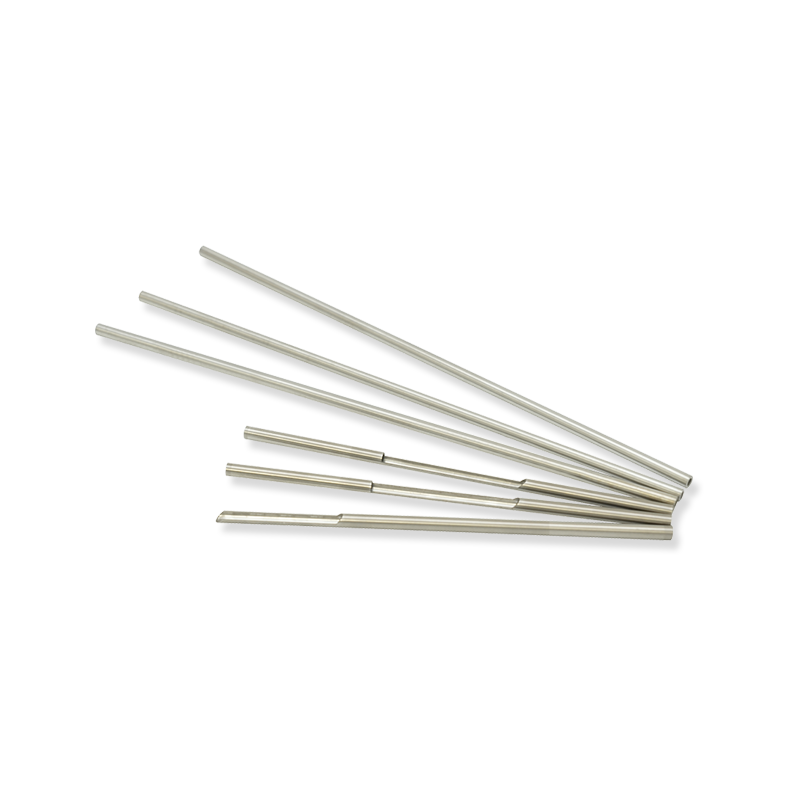 TP304/TP304L/TP304H Stainless Steel Seamless PipesExplore this 304 family of seamless pipes, offering excellent weldability and cryogenic toughness, ideal for cost-sensitive yet corrosion-resistant applications.View Product →
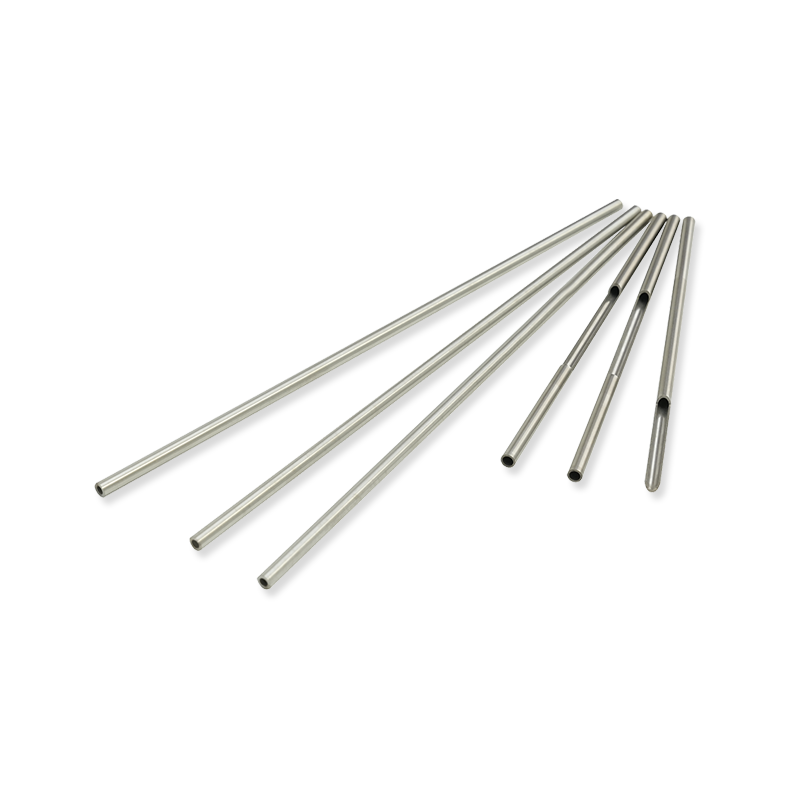 TP316/TP316L/TP316H/TP316Ti Stainless Steel Alloy PipesThis molybdenum-bearing 316 family provides superior pitting and crevice corrosion resistance, justifying its higher initial cost with longer service life in harsh environments.View Product →
At Jend Tube, we produce both 304 and 316 families as seamless tube using cold rolling, cold drawing, solution annealing, and finishing processes. The 316 product family includes TP316, TP316L, TP316H, and TP316Ti, so the specification can be matched to the exact temperature, corrosion, and fabrication requirements of the project.
Standards, specifications, and manufacturing tolerances
Stainless steel tube is rarely purchased without a standard. The most common specifications for 304 and 316 seamless tube are ASTM A269, ASTM A312, ASTM A213, and their European, German, Japanese, and Russian equivalents. Each standard defines chemical composition, mechanical properties, dimensions, and testing requirements differently, so the correct standard must be selected before production.
For general tubing and instrumentation lines, ASTM A269 is commonly used. For pressure pipe, ASTM A312 is more common. For boiler and heat exchanger service, ASTM A213 applies. On international projects, EN 10216-5, DIN 17456, JIS G3459, and GOST 9941 may be specified instead.
At our factory, production follows ASTM, EN, DIN, JIS, GOST, and GB requirements. The seamless tube range covers outer diameters from 3.18 mm to 406.4 mm, wall thicknesses from 0.3 mm to 20 mm, and lengths up to 25,000 mm. This range covers small-diameter precision tubing, thin-wall instrument tubes, heavy-wall process pipe, and extra-long heat exchanger tubes.
| Standard | Typical product scope |
|---|---|
| ASTM A269 | Seamless and welded tubing for general service |
| ASTM A312 | Seamless and welded austenitic pipe for pressure service |
| ASTM A213 | Seamless boiler, superheater, and heat exchanger tubes |
| EN 10216-5 | Seamless stainless steel tubes for pressure purposes |
| DIN 17456 | Seamless circular stainless steel tubes for general requirements |
| JIS G3459 | Stainless steel pipes for corrosion-resistant piping |
| GOST 9941 | Seamless steel tubes for general purpose and high-pressure service |
When ordering from a mill, you should confirm the delivery condition, surface finish, and testing requirements. Tube that is intended for a pressure system may require hydrostatic testing, eddy current testing, or ultrasonic testing. Tube for high-purity gas lines may require bright annealing and electropolishing. Tube for marine use should be supplied with full material traceability and mill test certificates.
One common mistake is to choose the same grade but forget the low-carbon version. If the tube will be welded in the field or used in a temperature range where sensitization can occur, 304L or 316L is usually the right specification. The higher carbon versions, 304H and 316H, are selected only when high-temperature creep strength is critical.
Cost comparison: 304 versus 316 stainless steel tube
316 costs noticeably more than 304 on a per-ton basis. The price gap fluctuates with the global prices of molybdenum and nickel. As a general rule, expect 316 to cost roughly 20% to 40% more than 304, depending on market conditions, tube size, and surface finish.
This means cost should not be treated as a fixed number. A better approach is to calculate the total installed cost: material, cutting, welding, testing, surface treatment, and expected maintenance over the service life. In a dry environment, 304 often wins on initial cost. In a chloride environment, 316 usually wins on total ownership cost.
If the project is contracted with long-term performance guarantees, specifying 316 from the beginning protects against premature pitting. It also simplifies spare-part inventory when the same material family is already used elsewhere in the plant.
For more detailed guidance on comparing the two grades, see the buying-focused article on how to choose between 304 stainless steel pipe and 316.
Seamless versus welded tube: another selection variable
The difference between 304 and 316 grade is separate from the difference between seamless and welded construction, but both decisions must be made together. A welded 316 tube can sometimes outperform a seamless 304 tube in chloride service because the material composition is more important than the manufacturing route in most corrosion applications. However, welded tube may have a longitudinal weld seam that can become a weak point if the weld is poorly formed or the filler metal is not matched correctly.
Seamless tube is often preferred for high-pressure hydraulic lines, boiler systems, and critical chemical service because it has no seam to inspect. Welded tube is more economical for long runs and large diameters in less severe service. For high-precision instrumentation lines, seamless tubing made from 304L or 316L is a common choice because of its dimensional consistency and smooth surface.
Do not assume that “seamless” automatically means better material. A quality seamless tube depends on the billet quality, forging ratio, heat treatment, and final cold drawing. A quality welded tube depends on the weld process, filler material, and post-weld treatment. Both can be fully acceptable if produced to the correct standard.
Surface finish and cleanliness
Surface finish affects corrosion resistance, cleanliness, and product life. A rough or scaled surface can hold chloride deposits and water, which leads to pitting even on 316. For this reason, most 304 and 316 stainless steel tubes are supplied in one of several finishes: solution annealed and pickled, bright annealed, or electropolished.
Pickled surfaces have a dull grey appearance and are common on process pipe. Bright annealed surfaces are smooth and reflective, with a clean surface that is easier to sanitize. Electropolished surfaces are the smoothest and are used in pharmaceutical, biotechnology, semiconductor, and ultra-pure water systems.
If you are buying 316 for food or pharmaceutical use, make sure the surface roughness and passivation state are clearly defined. A smooth electropolished 316 tube may be required for bioprocessing lines, while a standard bright annealed 304 tube may be sufficient for general beverage piping. These surface choices can affect delivery time and price, so they should be fixed before the order is placed.
Small-diameter, thin-wall, and extra-long tubes
Both 304 and 316 can be produced in small-diameter and thin-wall versions for instrument lines, capillary tubes, and control panels. Small-diameter stainless steel tube is often used in pneumatic systems, hydraulic lines, and temperature sensor pockets. Because these tubes are long and flexible in thin-wall form, precise dimensional control is essential for compression fittings and ferrules.
Extra-long stainless steel tubing, up to 25 meters, reduces the number of joints in a system. Fewer joints means fewer leak paths, lower installation labor, and faster welding inspection. This is especially important for heat exchangers and trace-heated lines where welds are difficult to maintain.
When a project requires a specific outside diameter, wall thickness, and length combination, the grade selection should be confirmed against the applicable tolerance class. If you customize the length, you may also affect the amount of waste, cutting time, and shipping cost. A tube manufacturer with a flexible cold-drawing process can adjust dimensions without changing the grade.
How to decide: a practical selection checklist
Use the checklist below as a quick reference before issuing a purchase specification.
Identify the environment: indoor, outdoor, coastal, marine, or chemical process.
Determine whether chlorides are present in the liquid, gas, or surrounding atmosphere.
Check operating temperature and whether the tube will be welded.
Choose the base grade: 304 for clean environments, 316 for chloride exposure.
Select the carbon version: 304L or 316L for welded service, H versions for creep resistance.
Confirm the standard: ASTM, EN, DIN, JIS, GOST, or GB.
Define manufacturing route: seamless or welded, cold drawn, bright annealed, or electropolished.
Set tolerances, lengths, surface finish, and required testing and certifications.
If the environment is not clearly defined, request a review of the chemical composition limits, temperature profile, and expected cleaning agents. Many premature failures of 304 tube come from applying the grade outside its intended corrosion envelope. And many unnecessary projects use 316 where a duplex steel would actually be more resistant to chloride stress corrosion cracking.
Frequently asked questions about 304 and 316 stainless steel tube
Which is better, 304 or 316 stainless steel tube?
Neither grade is universally better. 304 is more economical and adequate for general, low-chloride environments. 316 is more corrosion-resistant and is the safer choice for coastal, marine, chemical, and pharmaceutical applications. Choose based on the environment, not on marketing labels.
Does 316 stainless steel tubing rust?
316 has excellent corrosion resistance, but it can still corrode under severe conditions such as stagnant seawater, high chloride concentrations, or long-term exposure to acids at elevated temperatures. Proper surface finish, correct material grade, and good system design are all necessary to prevent corrosion.
Is 316 stainless steel tube stronger than 304?
In annealed condition, 304 and 316 have essentially the same tensile and yield strength. At high temperatures, 316 may show better creep strength because of molybdenum. Strength should not be the main reason to choose between the two; corrosion resistance should be.
When should I use 304L instead of 304?
Use 304L whenever the tube will be welded or exposed to a temperature range that could cause sensitization. The lower carbon content reduces the risk of chromium carbide precipitation at grain boundaries, which protects the weld heat-affected zone from intergranular corrosion.
Can 316 stainless steel tube be used for food processing?
Yes. 316 is often used in food processing equipment, especially where acidic foods, salt brines, or chemical sanitizers are present. The molybdenum content improves resistance to pitting and makes the surface easier to keep clean when the tube is electropolished or bright annealed.