Search

 한국어
 русский
 عربى
A solution-annealed TP304L austenitic stainless steel tube normally shows a relative magnetic permeability below 1.05. That single number separates the austenitic family from martensitic or duplex grades and helps mills set their process controls. In practice, buyers also need to confirm chemical composition, mechanical properties, heat-treatment records, and dimensional tolerances. The following guide looks at austenitic stainless steel tube from a manufacturer's standpoint: what changes during production, what you can expect from each grade, and what should be written into an order.
What Defines an Austenitic Stainless Steel Tube
An austenitic stainless steel tube is defined by the austenite phase at room temperature. Instead of a body-centred cubic ferrite lattice, the material keeps a face-centred cubic structure. This structure is responsible for the combination of ductility, impact toughness, weldability, and non-magnetic behavior that makes austenitic tubes suitable for pressure systems, cryogenic lines, heat exchangers, and food processing equipment.
Austenite stability depends on the balance of alloying elements. Chromium, molybdenum, and silicon tend to promote ferrite. Nickel, manganese, carbon, and nitrogen promote austenite. The mill must control that balance not only in the final chemistry but also during hot working and final annealing, because partial transformation can change mechanical properties and corrosion performance.
| Element | Main contribution |
|---|---|
| Chromium | Forms the passive oxide film and provides resistance to oxidizing media and high-temperature oxidation. |
| Nickel | Stabilizes the austenitic structure, improves ductility, toughness, and resistance to chloride stress corrosion in many service conditions. |
| Molybdenum | Increases resistance to pitting and crevice corrosion, especially in chloride-bearing fluids. |
| Titanium | Combines with carbon to prevent chromium carbide precipitation in stabilized grades such as TP321 and TP321H. |
| Niobium | Combines with carbon in stabilized grades such as TP347 and TP347H, reducing sensitization risk after welding. |
| Nitrogen | Raises proof strength and improves localized corrosion resistance without reducing ductility. |
| Manganese | Improves austenite stability and hot workability during billet conversion and tube rolling. |
From a production point of view, the austenitic structure also makes cold work more effective. Cold rolling and cold drawing can increase yield strength significantly, but they also reduce elongation. That is why a finished austenitic stainless steel tube should normally be supplied in the solution-annealed condition unless the order specifically calls for a cold-worked temper with defined mechanical limits.
Common Austenitic Stainless Steel Tube Grades and Chemical Composition
Most project specifications start with a grade such as TP304, TP304L, TP316L, TP321, or TP310S. The grade defines the nominal composition, but the real production challenge is holding that composition within tight limits while maintaining a sound tube surface. Slight differences in carbon, chromium, nickel, and molybdenum can change the service temperature range, corrosion resistance, and response to welding.
| Grade | C % | Cr % | Ni % | Mo % | Stabilizing element |
|---|---|---|---|---|---|
| TP304 | 0.08 max | 18.0 to 20.0 | 8.0 to 10.5 | -- | -- |
| TP304L | 0.03 max | 18.0 to 20.0 | 8.0 to 12.0 | -- | -- |
| TP304H | 0.04 to 0.10 | 18.0 to 20.0 | 8.0 to 10.5 | -- | -- |
| TP310S | 0.08 max | 24.0 to 26.0 | 19.0 to 22.0 | -- | -- |
| TP316 | 0.08 max | 16.0 to 18.0 | 10.0 to 14.0 | 2.0 to 3.0 | -- |
| TP316L | 0.03 max | 16.0 to 18.0 | 10.0 to 14.0 | 2.0 to 3.0 | -- |
| TP316Ti | 0.08 max | 16.0 to 18.0 | 10.0 to 14.0 | 2.0 to 3.0 | Titanium |
| TP321 | 0.08 max | 17.0 to 19.0 | 9.0 to 12.0 | -- | Titanium |
| TP321H | 0.04 to 0.10 | 17.0 to 19.0 | 9.0 to 12.0 | -- | Titanium |
| TP347H | 0.04 to 0.10 | 17.0 to 19.0 | 9.0 to 13.0 | -- | Niobium |
| TP317L | 0.03 max | 18.0 to 20.0 | 11.0 to 15.0 | 3.0 to 4.0 | -- |
| 904L | 0.02 max | 19.0 to 23.0 | 23.0 to 28.0 | 4.0 to 5.0 | -- |
| S31254 | 0.02 max | 19.5 to 20.5 | 17.5 to 18.5 | 6.0 to 6.5 | Nitrogen |
For an engineering department, the practical difference between these grades is not only the type number. Low-carbon grades reduce the risk of chromium carbide precipitation during welding. Stabilized grades do the same through titanium or niobium additions. High-carbon H grades improve creep strength in elevated-temperature service, even though they are more sensitive to sensitization in the 425 to 850 degree Celsius range.
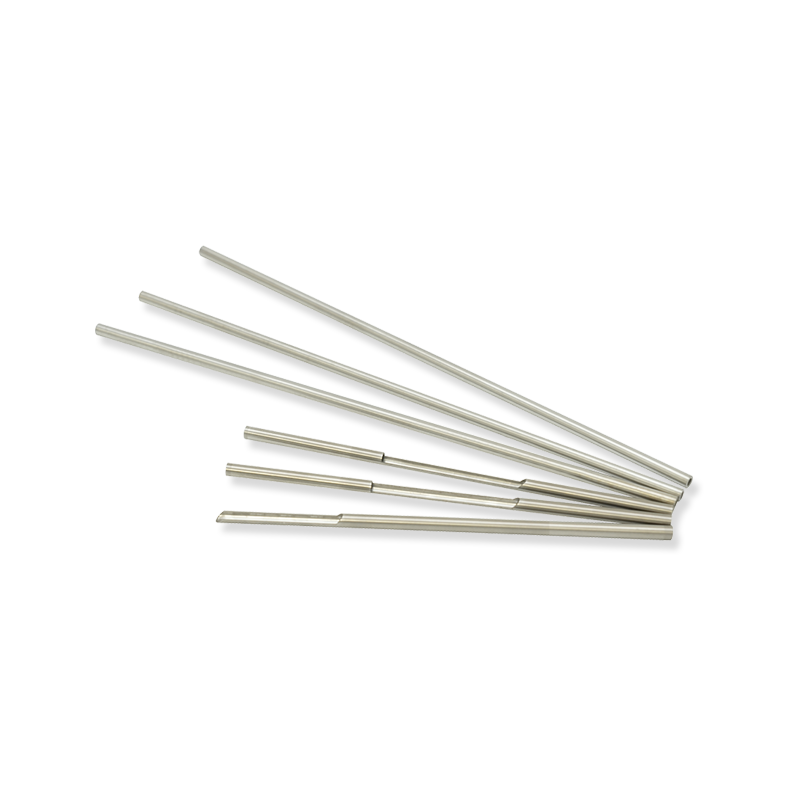 TP304/TP304L/TP304H Austenitic Stainless Steel Seamless PipesEngineers comparing low-carbon, stabilized, and high-carbon grades will find this series particularly relevant for weldability and elevated-temperature strength, with specifications covering cryogenic toughness and industrial applications.View Product →
The mill must also confirm that the actual heat has the correct nickel balance. Some buyers specify a minimum nickel content because a lower nickel content can increase the amount of ferrite or martensite after cold work, which affects magnetic response and low-temperature toughness.
Mechanical Properties and What They Mean in Fabrication
Mechanical properties are usually taken from the final solution-annealed tube. A tensile test at room temperature gives proof strength, tensile strength, and elongation, but the forming and service behavior depends on more than a single table value. For example, a TP316Ti tube may show the same tensile strength as a TP304L tube, yet behave differently during bending due to its higher proof strength and different work-hardening rate.
| Grade | 0.2% proof stress MPa | Tensile strength MPa | Elongation % |
|---|---|---|---|
| TP304L | 170 | 485 | 40 |
| TP304H | 205 | 515 | 40 |
| TP310S | 205 | 520 | 40 |
| TP316L | 170 | 485 | 40 |
| TP316Ti | 205 | 515 | 40 |
| TP321 | 205 | 515 | 40 |
| TP321H | 205 | 515 | 40 |
| TP347H | 205 | 515 | 40 |
| 904L | 220 | 490 | 35 |
| S31254 | 300 | 650 | 35 |
Low-carbon grades for welded lines
TP304L and TP316L are preferred where the tube is welded and then used without post-weld heat treatment. Lower carbon reduces the precipitation of chromium-rich carbides in the heat-affected zone.
Stabilized grades for thermal cycling
TP321H and TP347H are used when the tube will stay in the carbide precipitation range for a long time, especially in steam service and refinery furnaces.
Cold-worked small-bore tubing
Instrumentation and hydraulic lines are often made from cold-drawn austenitic tube with a controlled proof strength. The cold work must be balanced against elongation and pressure rating.
In a manufacturing plant, the practical check is not limited to tensile values. Flattening, flaring, and reverse bending tests show whether the tube surface is free of cracks and laps. These tests become more important for thin-wall and small-diameter tubes, where slight tool marks can turn into service failures.
Corrosion Resistance and Localized Attack
An austenitic stainless steel tube does not resist corrosion simply because it is stainless. The level of resistance depends on the alloy content, surface condition, media composition, temperature, and whether the tube is exposed to stagnant or flowing conditions. Pitting resistance is often estimated using PREN, or pitting resistance equivalent number, calculated as chromium plus 3.3 times molybdenum plus 16 times nitrogen.
Molybdenum is the most practical alloying element for chloride service. TP316L has better pitting resistance than TP304L because of its 2.0 to 3.0 percent molybdenum. TP317L and 904L offer a higher margin. S31254 goes further with molybdenum and nitrogen, making it an option for seawater and aggressive chloride process streams.
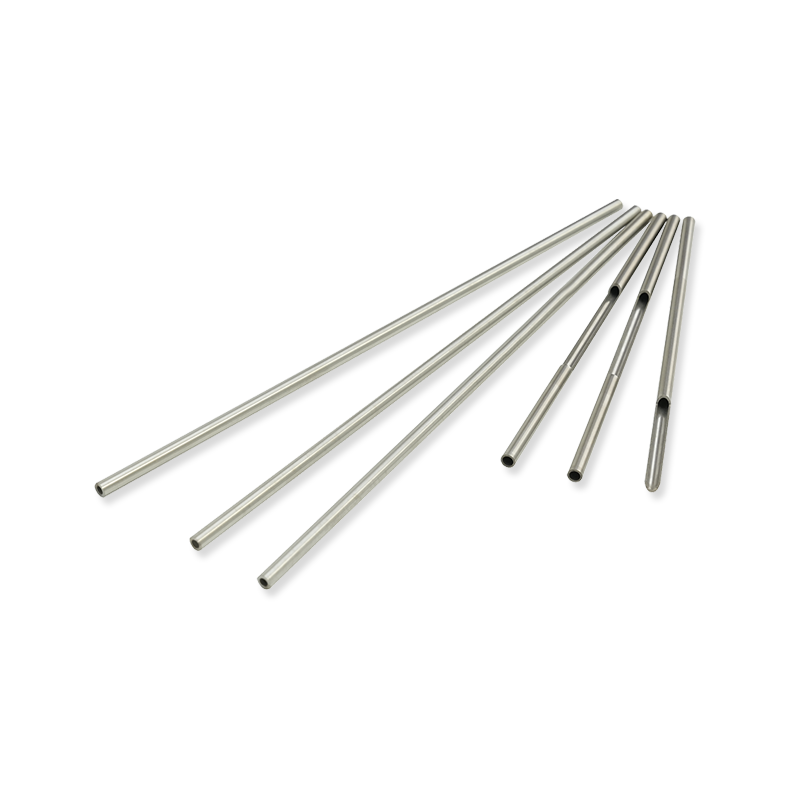 TP316/TP316L/TP316H/TP316Ti Alloy Seamless PipesThis molybdenum-bearing series offers improved pitting and crevice corrosion resistance in chloride environments, making it a practical choice when service conditions demand higher reliability than TP304.View Product →
| Corrosion concern | Typical cause | Grade direction |
|---|---|---|
| Pitting | Chloride ions breaking through the passive film | TP316L, TP317L, 904L, S31254 |
| Crevice corrosion | Stagnant liquid under gaskets, scale, or deposits | TP317L, 904L, S31254 |
| Intergranular corrosion | Chromium carbide precipitation during welding or heating | TP304L, TP316L, TP321, TP347 |
| Oxidizing acid attack | Nitric acid, hot oxidizing chemical service | TP304L, high-chromium grades, 904L |
| Stress corrosion cracking | Tensile stress plus chloride and high temperature | Higher nickel alloys; design review required |
For welded systems, the annealing condition is as important as the grade. A tube that was overheated during forming or badly annealed can show sensitized grain boundaries even if the chemistry is correct. The mill should verify the final heat-treatment condition and, when required by the specification, carry out intergranular corrosion testing.
High-Temperature Performance of Austenitic Stainless Steel Tube
High-temperature selection for an austenitic stainless steel tube depends on oxidation resistance, creep strength, and the stability of the metallurgical structure. At temperatures above roughly 425 degrees Celsius, carbon can combine with chromium and reduce corrosion resistance at grain boundaries. This is why low-carbon and stabilized grades are often selected for continuous service in that range.
The chart above is indicative and intended for material preselection, not for design calculations. Actual allowable stress depends on the standard, wall thickness, temperature, and service life.
| Grade | Temperature guide | Selection note |
|---|---|---|
| TP304H | High-temperature creep range | Higher carbon improves creep strength compared with TP304L. |
| TP310S | Oxidizing conditions up to about 1000 to 1050 degrees Celsius | High chromium and nickel give strong oxidation resistance. |
| TP321H | Thermal cycling service up to about 850 degrees Celsius | Titanium prevents chromium carbide formation in the heat-affected zone. |
| TP347H | Welded furnace tubing in creep service | Niobium stabilizes carbon and helps weldability. |
 TP310S Austenitic Stainless Steel Seamless PipeFor furnace coils and reformer lines, this grade balances corrosion resistance and toughness at elevated temperatures; the low-carbon version helps reduce intergranular corrosion risk during welding.View Product →
For furnace coils, superheater tubes, and reformer outlet lines, the order should state the expected metal temperature, steam pressure, and any oxidizing or sulfidizing components in the process gas. That information allows the mill to recommend the correct heat-treatment condition and to judge whether a standard grade is adequate.
How Manufacturing Steps Affect Tube Quality
Two tubes with the same grade and dimensions can behave differently if one has been properly annealed and the other has not. The production route for a seamless austenitic stainless steel tube generally starts with billet inspection, hot piercing, cold rolling or cold drawing, solution annealing, pickling, straightening, cutting, and final nondestructive testing. Each step influences a specific quality parameter.
| Stage | What it controls |
|---|---|
| Billet inspection | Internal soundness, segregation, and surface quality before piercing. |
| Hot extrusion or piercing | Initial wall consistency and freedom from ruptured surfaces. |
| Cold rolling and cold drawing | Outer diameter accuracy, wall thickness uniformity, and surface finish. |
| Solution annealing | Dissolves precipitated carbides and restores the austenitic structure. |
| Pickling or bright annealing | Removes oxide scale and leaves a clean corrosion-resistant surface. |
| Straightening | Controls bow and ensures the tube passes through the next production stage. |
| Eddy current and hydrostatic testing | Detects surface defects, wall irregularities, and leakage paths. |
For small-diameter and thin-wall austenitic tubes, the cold-drawing process has a direct effect on tolerances. A mill that controls the number of passes, the reduction ratio, and the annealing temperature can produce tubing with a smooth bore and consistent wall thickness. For more detail on the production route, see the common manufacturing processes for austenitic stainless steel.
Surface condition is also part of quality. A solution-annealed and pickled tube has a matte surface, while a bright-annealed tube is produced in a protective atmosphere and has a clean, oxide-free finish. Electropolishing can further remove a thin layer of material and reduce surface roughness. These options matter for hygienic lines, high-purity gas systems, and applications where deposits must be avoided.
Available Dimensions, Tolerances, and Production Limits
An austenitic stainless steel tube should be ordered with clearly defined outer diameter, wall thickness, length, and tolerance system. Some buyers specify minimum wall thickness; others specify average wall thickness. The difference affects the actual weight, internal diameter, and pressure calculation, so it must be stated before production.
| Parameter | Available range |
|---|---|
| Outer diameter | 3.18 mm to 406.4 mm |
| Wall thickness | 0.3 mm to 20 mm |
| Length | Up to 25,000 mm |
| Delivery condition | Solution annealed and pickled, bright annealed, electropolished |
| Surface finish | Industrial matte, bright, or polished finish depending on application |
| Dimension | Typical commercial tolerance |
|---|---|
| Outer diameter up to 25.4 mm | Plus or minus 0.10 mm |
| Outer diameter 25.4 mm to 38.1 mm | Plus or minus 0.15 mm |
| Outer diameter 38.1 mm to 50.8 mm | Plus or minus 0.20 mm |
| Wall thickness | Typically plus 20 percent, minus 10 percent unless minimum wall is specified |
| Length tolerance | Usually plus 6 mm with no minus tolerance for fixed-length orders |
These values are general guidelines. The actual tolerance should be checked against the governing standard, because ASTM A312, ASTM A269, EN 10216-5, and JIS G3459 can have different requirements. Mill-acceptance tolerances can be tighter when the tube is intended for precision instrumentation, hydraulic systems, or highly machined components.
How to Select an Austenitic Stainless Steel Tube Grade
Selection starts with the process environment, not with the grade name. The temperature, chemical media, pressure, and fabrication route should be defined first. Once those inputs are clear, the number of suitable grades becomes much smaller.
- List the chemical media and its concentration, including any possible upset conditions.
- Define the design temperature range and whether the tube will face cyclic thermal loading.
- Define the internal and external pressure, and confirm whether the tube must meet a pressure equipment code.
- Confirm the fabrication route, especially welding and possible heat treatment after forming.
- Check surface requirements and cleaning procedures before commissioning.
- Compare corrosion resistance, strength, availability, and cost of shortlisted grades.
| Service condition | Grades to evaluate | Reason |
|---|---|---|
| Chloride cooling water | TP316L, TP317L, 904L | Molybdenum increases resistance to pitting and crevice attack. |
| Low-temperature storage and transport | TP304L, TP316L | Austenitic structure keeps good impact toughness at cryogenic temperatures. |
| Furnace and radiant tube service | TP310S | High chromium and nickel content provide oxidation resistance. |
| Steam superheater and reheater lines | TP304H, TP321H, TP347H | Creep strength and carbide stabilization are important. |
| Seawater and offshore equipment | 904L, S31254 | Higher PREN values improve resistance in saline environments. |
| Food and sanitary process lines | TP304L, TP316L | Good cleanability, smooth surface, and corrosion resistance to mild acids. |
A common mistake is choosing a grade only because it has a higher number. TP310S has excellent oxidation resistance but lower room-temperature proof strength than S31254. TP321H has good high-temperature stability but does not resist chlorides as well as TP316L. The evaluation must be made against the actual operating envelope.
Applications and Industry Use
Austenitic stainless steel tube appears in a wide range of industrial equipment because it can be produced in small, thin-wall, thick-wall, and extra-long configurations. The following cards show representative applications of austenitic seamless pipes supplied by mills with full manufacturing control.
Chemical processing
Reactor coils, heat exchangers, and transfer lines carry acids, solvents, and chlorides. Molybdenum-bearing grades are selected when pitting resistance is required.
Boilers and superheaters
TP304H, TP321H, and TP347H are used in steam systems where metal temperatures exceed the normal water-side temperature.
Food and beverage lines
TP304L and TP316L provide a clean surface, good weldability, and resistance to organic acids and cleaning agents.
Automotive exhaust systems
Small-diameter and thin-wall austenitic tubes resist condensation, vibration, and moderate exhaust temperatures.
Instrumentation and hydraulic tubing
Precision cold-drawn tubes are used in pressure instruments, sampling lines, and hydraulic control systems where tight tolerances matter.
LNG, CNG, and heat exchange equipment
Extra-long tubes reduce the number of welds in coil systems and heat exchangers, improving reliability and installation speed.
In every application, the tube is part of a larger reliability system. A change in media temperature or chloride concentration can turn a standard TP304L line into a maintenance problem. Mills that manufacture and test their own product can respond faster when the customer needs a grade adjustment or a special size.
Manufacturer-Level Inspection and Procurement Notes
Qualified suppliers should have a documented quality system and production equipment that supports traceability from raw material to final tube. Before accepting a lot, the buyer should confirm the chemical certificate, the heat number, mechanical test results, and the annealing record.
| Test method | Purpose |
|---|---|
| Chemical analysis | Confirms the alloy composition against the grade specification. |
| Tensile test | Verifies proof strength, tensile strength, and elongation. |
| Hardness test | Indicates whether the final heat treatment was consistent. |
| Hydrostatic test | Confirms leak tightness under internal pressure. |
| Eddy current test | Detects surface and near-surface discontinuities without damaging the tube. |
| PMI testing | Uses X-ray fluorescence to verify the grade before installation. |
| Intergranular corrosion test | Checks whether the tube is susceptible to sensitization, usually for low-carbon or stabilized grades. |
For international projects, the purchaser often requires a 3.1 inspection certificate in line with EN 10204. Some pressure equipment applications also need PED or TS certification. The supplier should be able to state which certificates can be issued and whether a third-party inspection is possible.
Packing and marking are not secondary details. An austenitic stainless steel tube with a damaged surface can lose its corrosion resistance in that area. Order instructions should mention end protection, bundling, separation between grades, and marking requirements for heat numbers. This reduces sorting time and prevents mix-ups at the job site.
Frequently Asked Questions
Is austenitic stainless steel tube magnetic?
In the fully annealed condition, austenitic grades such as TP304, TP304L, TP316L, and TP321 have very low magnetic permeability. Cold work can cause partial transformation to martensite, which raises magnetic response. Heavy forming, expanding, or bending can therefore make part of the tube slightly magnetic even though the grade remains austenitic.
What is the difference between TP304 and TP316L austenitic tube?
TP316L has a molybdenum addition of about 2.0 to 3.0 percent, which improves resistance to pitting and crevice corrosion in chloride media. TP304 is less expensive and gives good general corrosion resistance, but it is not a direct substitute in marine, chemical, or other chloride-containing service.
What does solution annealing do to an austenitic stainless steel tube?
Solution annealing heats the tube to a high temperature, typically above 1000 degrees Celsius depending on the grade, and then cools it quickly. This dissolves chromium carbides that may have formed during processing and restores a uniform austenitic structure with good corrosion resistance and ductility.
Which austenitic tube grade is best for high-temperature service?
There is no single best grade. TP310S is selected for oxidation resistance up to around 1000 to 1050 degrees Celsius. TP304H, TP321H, and TP347H are selected for creep strength in steam and furnace service. The exact choice depends on metal temperature, pressure, atmosphere, and expected life.
How can I verify the quality of an austenitic stainless steel tube on delivery?
Check the material certificate, heat number, and marking. Perform a visual inspection of the surface for scratches, pits, handling damage, and repair marks. Confirm the outer diameter, wall thickness, and length. If the grade is critical, use PMI testing to verify the chemistry quickly before installation.
A Final Check Before You Send Your Enquiry
A complete pipe specification reduces delays and prevents confusion during production. When you request a quotation for an austenitic stainless steel tube, include the target standard, grade, outer diameter, wall thickness or schedule, length, finish, quantity, and end use. State whether the wall is minimum wall or average wall. Add the design temperature, pressure, and process media if they are available.
By defining these parameters clearly, you help the mill select the correct heat treatment, surface preparation, and inspection level. The grade name is only one part of the specification. The real quality lies in the consistency of chemistry, dimensional control, surface condition, and traceability from the first melt to the final delivered tube.