Search
 한국어
한국어 русский
 عربى
عربى304 Stainless Steel Price Per Pound in October 2026: The Numbers First
Here is the short answer before anything else. As of October 2026, 304 stainless steel moving out of mills in Asia and Europe converts to roughly these levels: 2B finish cold rolled coil at 1.55 to 2.10 USD per pound, No.1 finish hot rolled coil at 1.35 to 1.80 USD per pound, solution annealed and pickled seamless tube at 3.10 to 4.60 USD per pound, and bright annealed or electropolished seamless tube at 3.90 to 5.60 USD per pound. Non-magnetic 304 scrap is being bought at 0.38 to 0.60 USD per pound in most US yards, which tells you where the alloy value floor sits.
The conclusion that matters: the same heat of 304 leaves the mill as coil and arrives at your dock as tube with the per-pound figure more than doubled, and sometimes tripled. Nothing about the chemistry changed. What changed is that a coil gets pierced, drawn, annealed, pickled, straightened, tested, cut and packed, and every one of those steps carries yield loss, energy, tooling wear and labor that must be recovered from the weight that actually ships.
| Product form and finish | Indicative price per pound (USD) | What is driving the number |
|---|---|---|
| 304 hot rolled coil, No.1 finish | 1.35 - 1.80 | Minimum surface processing, often sold as feedstock for further reduction |
| 304 cold rolled coil, 2B finish | 1.55 - 2.10 | Cold reduction plus annealing and pickling, standard workshop stock |
| 304 cold rolled coil, BA finish | 1.75 - 2.35 | Controlled atmosphere annealing, brighter surface, tighter surface inspection |
| 304 seamless tube, pickled | 3.10 - 4.60 | Hot piercing, cold drawing, solution annealing, straightening, hydrostatic or eddy current test |
| 304 seamless tube, bright annealed | 3.90 - 5.60 | Controlled atmosphere furnace, tighter dimensional control, lower yield per tonne |
| 304 electropolished tube | 4.50 - 7.50 | Additional electrochemical removal, high purity requirements, full traceability |
Notice what the table does not show: any single fixed number. Anyone quoting you one flat price per pound for 304 without asking about outer diameter, wall thickness, length, tolerance class, surface finish, test method and documentation package is quoting you a number that will change before the purchase order is signed.
A buyer comparing a 1.62 USD per pound coil quotation against a 4.10 USD per pound tube quotation is not comparing two suppliers. They are comparing two different products that happen to share a grade name. That mistake costs more money than any negotiation tactic ever saves.
Why 304 Has No Single Price Per Pound
The conclusion first: 304 stainless steel is traded on a two-layer structure made of an alloy surcharge plus a conversion price. Without separating those two layers, no per-pound figure is comparable across suppliers, countries or delivery dates.
The alloy surcharge tracks what the nickel, chromium and iron inside the steel are worth on any given settlement date. The conversion price, sometimes called the base price or mill extra, covers everything needed to turn that alloy into the shape you ordered. When a trader quotes you one blended number, the two layers are hidden inside it, and the supplier keeps the flexibility to shift the balance between them as raw material markets move.
In practice, a full 304 quotation is built from these blocks:
- Alloy surcharge - calculated monthly from published nickel, chromium and iron reference prices, weighted by the mass fraction of each element in the 304 specification.
- Conversion or base price - the mill's charge for melting, casting, piercing, rolling and finishing the material into the ordered form.
- Surface and tolerance extras - bright annealing, electropolishing, tighter wall thickness deviation, tighter ovality, extra straightness, longer random lengths.
- Testing and documentation extras - third party inspection, hydrostatic testing, ultrasonic testing, intergranular corrosion testing, EN 10204 3.1 certificates, pressure equipment directive witness points.
- Logistics and packing extras - seaworthy wooden cases, end caps, nitrogen purging, VCI wrapping, inland haulage, port charges and the Incoterms basis you agreed on.
The practical consequence is straightforward. When you receive two quotations for the same nominal pipe, convert both into the same delivery basis, the same test scope and the same documentation level. Only then does the per-pound comparison carry meaning.
Breaking Down What Sits Inside Each Pound of 304 Tube
Start with the conclusion: on a pickled 304 seamless tube invoiced at roughly 3.80 USD per pound, about 2.20 USD is alloy value and about 1.60 USD is everything that happened to that alloy after it was melted.
The alloy share is the part of the price nobody can argue away. It moves with the London Metal Exchange nickel settlement and with ferrochrome contracts, and it is the same for every mill on earth. The remaining 42 percent is where suppliers genuinely differ, and it is where a supplier can quietly cut corners.
Consider what happens when a mill shortens the solution annealing cycle to save gas. The tube still meets dimensional requirements. It still passes a hardness spot check. But the chromium carbide that should have been dissolved back into solid solution stays at the grain boundaries, and the tube becomes susceptible to intergranular corrosion in service. The per-pound saving is a few cents. The cost of a premature failure in a heat exchanger bundle is measured in thousands.
Solution annealing followed by pickling is the baseline condition for corrosion resistant service, and it is worth confirming that this step is actually included rather than assumed.
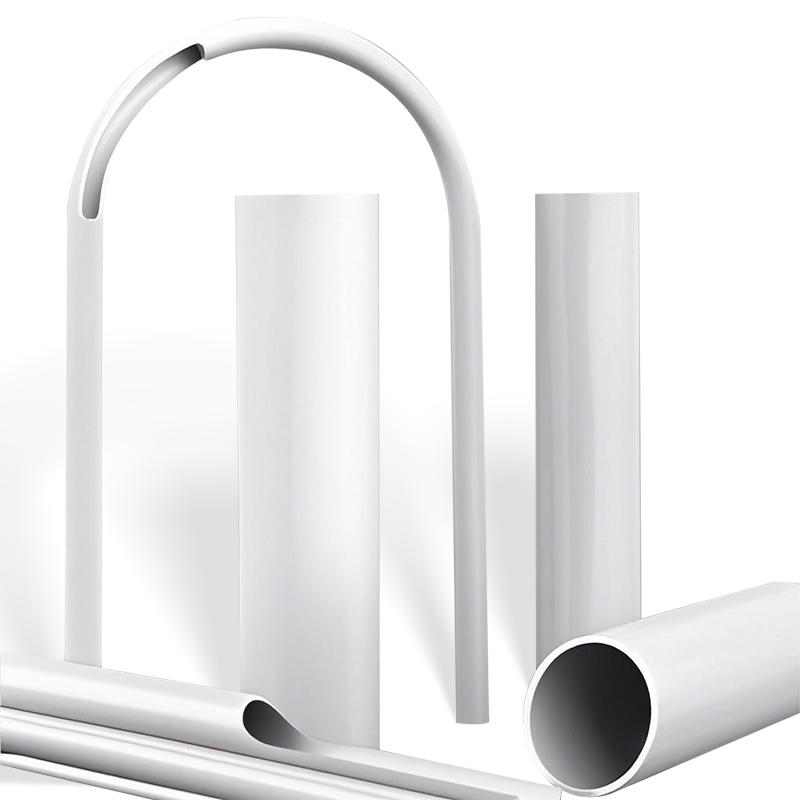 Solid Solution Pickling Pipe for Corrosion Resistant ServiceSolution-treated and pickled stainless or alloy pipe that removes surface oxides; useful when corrosion resistance and confirmed process inclusion matter.View Product →
Energy is the second largest controllable input after alloy. A cold drawn seamless line running at full utilisation spreads its furnace and drawing bench costs across more tonnes, which is exactly why order size and delivery scheduling influence the per-pound figure more than most purchasers expect.
How the Alloy Surcharge Works and Why Nickel Moves the Number
Conclusion first: nickel is only about 8 percent of the weight of 304, but a one dollar move in the nickel price shifts the alloy value of 304 by roughly eight cents per pound. On a ten tonne order, that is close to 1,760 USD appearing or disappearing without a single minute of extra work.
Type 304 contains roughly 18 percent chromium, 8 percent nickel, up to 0.08 percent carbon, with the balance iron and small amounts of manganese and silicon. The alloy surcharge formula used across the industry follows that same composition.
A simplified alloy surcharge calculation, expressed per pound of finished 304:
- Nickel: 0.08 multiplied by the nickel reference price
- Chromium: 0.18 multiplied by the chromium reference price
- Iron balance: approximately 0.735 multiplied by the iron reference price
- Manganese and silicon: a small percentage of the mix, usually applied as a flat allowance
Run a worked example using nickel at 7.20 USD per pound, chromium at 1.30 USD per pound and iron at 0.04 USD per pound. Nickel contributes 0.576 USD, chromium contributes 0.234 USD and the iron balance contributes about 0.029 USD. The alloy value lands near 0.84 USD per pound of metal, or roughly 1,680 USD per tonne of 304 before any conversion cost is applied.
That figure is the floor, not the price. Add melting, casting, billet conditioning, piercing, drawing, annealing, pickling, testing and packing, and a pickled seamless tube reaches the three to four dollar range per pound.
The sensitivity is what matters commercially. Because nickel dominates the surcharge, a nickel price swing of 0.50 USD per pound moves the alloy value of 304 by about 0.04 USD per pound, which on a container load of 20 tonnes is roughly 1,760 USD. This is why mills publish monthly surcharges and why long validity periods on quotations carry risk for whichever party accepts them.
Chromium moves less dramatically but has trended upward since 2024 as smelters in South Africa and Kazakhstan faced power supply constraints. Iron and scrap move in a narrow band and rarely change the picture by more than a cent or two.
Seamless versus Welded, Hot Finished versus Cold Drawn
Conclusion first: the manufacturing route changes the per-pound price more than the grade does. A welded 304 tube and a seamless 304 tube of the same size can differ by 30 to 60 percent on a per-pound basis, and a cold drawn seamless tube can sit 15 to 25 percent above a hot finished seamless tube of the same outside diameter.
Seamless tube starts as a solid billet that is pierced, elongated on a mandrel mill or plug mill, and then either finished hot or cold drawn to final size. Nothing is welded, so there is no weld seam to inspect and no heat affected zone. The price reflects the fact that the entire cross section has been deformed and heat treated.
Welded tube starts as strip that is formed and longitudinally welded, then optionally cold worked. The strip is cheaper than billet, the forming operation is faster, and yield loss is lower. For general service at moderate pressure the welded product performs well, provided the weld is properly annealed and tested.
| Route | Typical price relationship to welded 304 | Where it belongs |
|---|---|---|
| Welded, as welded | Baseline | Low pressure lines, structural and decorative tube, general utilities |
| Welded, annealed and pickled | 1.15 to 1.30 times welded baseline | Process piping where the weld seam must be corrosion resistant |
| Seamless, hot finished | 1.35 to 1.60 times welded baseline | Higher pressure service, thicker walls, larger diameters |
| Seamless, cold drawn | 1.55 to 1.85 times welded baseline | Tight tolerance, thin wall, small diameter, heat exchanger and instrumentation duty |
| Seamless, cold drawn bright annealed | 1.80 to 2.20 times welded baseline | Clean service, food and pharmaceutical contact, precise dimensional control |
Three specific size effects push cold drawn tube further up the curve. First, thin walls relative to diameter demand more drawing passes and a higher scrap rate. Second, very small outside diameters below about 12 mm require specialised benches and slower throughput. Third, very long lengths above 12 metres reduce the number of tubes that fit a heat treatment batch and increase handling cost per pound.
For critical pressure and temperature duty, the seamless route is usually the only defensible choice, and the per-pound premium is small compared with the cost of a weld seam failure.
 TP304, TP304L and TP304H Seamless Stainless Steel PipeSeamless 304-family pipe for critical pressure and temperature duty, with low-carbon and high-temperature grades available.View Product →
Where the flat product already exists and pressures stay modest, welded and annealed tube remains the economical answer, and buyers should not be pushed into seamless simply because the price difference looks small on paper.
Surface Finish and Heat Treatment Can Move the Pound Price by 40 Percent
Conclusion first: from the same cold drawn seamless tube, the difference between pickled, bright annealed and electropolished condition is routinely 1.20 USD to 2.50 USD per pound, and none of that shows up in the dimensional inspection report.
Pickled condition is produced by solution annealing followed by acid pickling in a nitric and hydrofluoric acid bath, which removes the oxide scale formed during heat treatment. It is the standard supply condition for corrosion resistant and high temperature service and it is the correct choice for most process piping.
Bright annealed condition replaces the pickling step with a controlled atmosphere furnace using hydrogen or a hydrogen nitrogen mixture. The surface comes out bright and oxide free, free of the slight dimensional reduction that pickling causes at the outside surface, and with better surface quality for clean service. It costs more because the furnace consumes protective gas, requires tighter atmosphere control and accepts a lower batch density.
Electropolished condition goes one step further and removes a controlled few microns of material electrochemically, producing a passive, ultra clean surface. It is used in semiconductor, pharmaceutical and high purity food service. The per-pound premium is the largest of the three because the process is slow and requires careful bath chemistry control.
For clean service applications where surface contamination matters, bright annealing keeps the surface oxide free without the dimensional loss that pickling introduces.
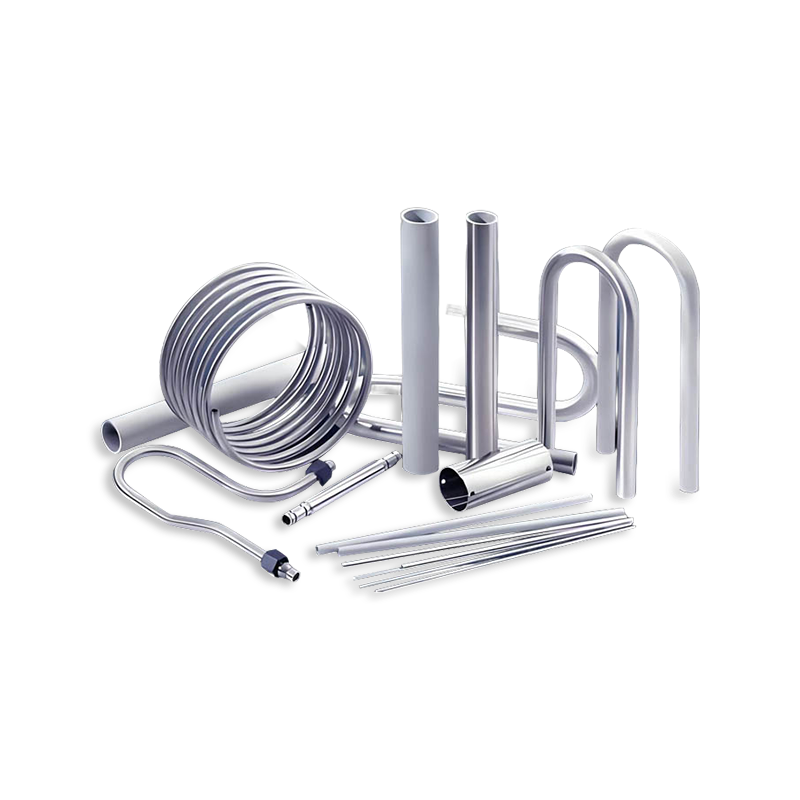 Stainless Steel Bright Annealed Tube for Clean ServiceBright annealed stainless tube that avoids pickling dimensional loss; verify furnace records for oxide-free finish in clean applications.View Product →
There is an easy way to check whether the finish you paid for is actually the finish you received. Ask for the surface roughness reading and the annealing furnace record with the mill certificate. A supplier who has genuinely bright annealed the tube can produce a furnace chart with time, temperature and atmosphere dew point. A supplier who has simply passed pickled tube through a polishing station cannot.
How Outer Diameter, Wall Thickness and Length Alter the Per Pound Quote
Conclusion first: for the same 304 grade, moving from a 60.3 mm outside diameter with 3.91 mm wall down to a 12.7 mm outside diameter with 1.24 mm wall can add 35 to 50 percent to the per-pound price, because thin wall small diameter tube carries far more drawing passes, more breakage and lower output per hour.
Before comparing quotes, calculate the theoretical weight per foot yourself. For stainless steel tube, the working formula in metric units is weight per metre equals outside diameter minus wall thickness, multiplied by wall thickness, multiplied by 0.0248, with diameters expressed in millimetres. To convert to pounds per foot, multiply the result by 0.672.
Worked example. A tube with 25.4 mm outside diameter and 2.0 mm wall: 25.4 minus 2.0 equals 23.4. Multiply by 2.0 to get 46.8. Multiply by 0.0248 to get 1.161 kilograms per metre. Multiply by 0.672 to get 0.780 pounds per foot. At 4.20 USD per pound, that tube costs about 3.28 USD per foot, or roughly 10.76 USD per metre.
Now consider what changes the answer:
- Wall thickness tolerance - a wall specified as plus or minus 10 percent allows the mill to ship at the low end, which reduces weight and therefore revenue per piece. A tolerance of plus or minus 5 percent costs more per pound but guarantees a more consistent pressure rating.
- Outside diameter tolerance - tight tolerances below plus or minus 0.10 mm require additional sizing passes and a higher rejection rate.
- Ovality and eccentricity - important for heat exchanger tube that has to be rolled into a tube sheet, and eccentric wall means the thin side determines the pressure rating.
- Length - random lengths of 5 to 7 metres are the cheapest. Fixed lengths above 12 metres require special racks, more furnace space and more handling per pound.
- Straightness - specified as millimetres per metre of deviation, and tighter straightness means additional rotary straightening passes.
A practical tip that saves real money: give the mill your actual design pressure, temperature and corrosion allowance rather than a fully specified wall. In many cases the minimum wall that satisfies the calculation is one standard gauge thinner than what is currently on the drawing, and the weight reduction flows directly through to the price per pound.
Inspection and Certification Costs That Never Appear on the Quote
Conclusion first: a full test and documentation package on 304 seamless tube typically adds 3 to 8 percent to the per-pound price, and if third party inspection at a designated agency is required, that can reach 12 percent.
These are the items that turn a cheap per-pound figure into an expensive delivered product when they are not written into the purchase order from the start.
- Mill test certificate to EN 10204 type 3.1, issued by the manufacturer's independent inspection department, with heat number traceability and full chemical and mechanical results.
- Hydrostatic pressure test to the specified test pressure, with hold time and witness records.
- Eddy current testing for surface and near surface defects, standard for heat exchanger and instrumentation tube.
- Ultrasonic testing for internal defects and wall thickness verification, common for high pressure and boiler applications.
- Intergranular corrosion testing to ASTM A262 practice E or the equivalent, essential for welded and sensitisation prone service.
- Positive material identification by optical emission spectrometry on the finished tube, not just on the incoming billet.
- Third party inspection by a nominated agency such as SGS, BV, TUV or Intertek, including document review and witness of the pressure test.
- Pressure equipment directive conformity assessment for European pressure applications, with notified body involvement.
The trap is that these items are quoted as options and are often declined on price, only for the buyer to discover at the port of discharge that the end user's engineering contractor will not accept the material without them. Re-testing after shipment is expensive, and in some cases the material simply cannot be recovered.
The safer approach is to state the full test scope in the enquiry. A supplier who quotes a properly scoped package is comparable to another supplier quoting the same package. A supplier quoting a bare minimum will always look cheaper until the moment the documents are checked.
Where 304 Pricing Is Heading in 2026 and Beyond
Conclusion first: the direction in 2026 is sideways with a mild upward bias, driven by firm nickel costs and energy, offset by large Indonesian and Chinese melting capacity that keeps any spike short lived.
Nickel supply has been structurally comfortable since Indonesian capacity expanded aggressively, and the market has stayed in surplus for several consecutive quarters. That caps how far the alloy surcharge can run. Against that, European and Japanese smelters face high power costs and have idled some capacity, so the conversion price component has drifted upward.
Indicative 304 cold rolled 2B coil, USD per pound, ex-works Asia. Figures are rounded for illustration of direction and are not a quotation.
Three further forces shape the outlook. Freight rates between Asian ports and Europe or North America have been volatile, and container availability tightens in the fourth quarter. Tariff structures in the United States continue to push landed costs above mill prices, and anti-dumping reviews in Europe and India create periodic uncertainty for importers. Finally, demand from LNG infrastructure, hydrogen projects and data centre cooling systems has been growing, which supports the higher value seamless and precision product lines more than commodity coil.
304 Against Other Grades: What the Extra Cents Per Pound Actually Buy
Conclusion first: 316L usually carries a 25 to 40 percent premium over 304 on a per-pound basis, and that premium is only justified when chlorides are genuinely present. Many specifications call for 316L out of habit rather than necessity.
| Grade | Relative price per pound | Reason to pay the difference |
|---|---|---|
| 201 austenitic | 0.70 to 0.80 times 304 | Lower nickel content, suitable for dry indoor service only |
| 304 / 304L | Baseline | General corrosion resistance, food service, most industrial utilities |
| 321 | 1.20 to 1.30 times 304 | Titanium stabilised, continuous service above 425 degrees Celsius |
| 316 / 316L | 1.25 to 1.40 times 304 | Molybdenum addition for chloride and marine exposure |
| 2205 duplex | 1.65 to 1.95 times 304 | Roughly double the yield strength, so thinner walls carry the same load |
| 430 ferritic | 0.75 to 0.90 times 304 | No nickel, good for mild indoor environments and appliance work |
| 904L super austenitic | 2.40 to 3.10 times 304 | Sulphuric and phosphoric acid service, severe chloride environments |
The duplex grades deserve a special mention because the per-pound number is misleading. A 2205 duplex tube costs more per pound than 304, but because its minimum yield strength is roughly twice as high, the required wall thickness for the same pressure is often 30 to 40 percent less. The installed cost per metre can end up lower than 304, and the corrosion performance in chloride service is far better.
Choosing between 304 and the molybdenum bearing grades is a recurring question in petrochemical and food processing work, and the deciding factor is almost always the chloride level and temperature of the actual service environment.
If chloride content stays under about 200 ppm and temperatures stay under 60 degrees Celsius, 304 is normally the right and cheaper answer. Above those levels, molybdenum bearing grades stop being optional.
For a closer look at how the two most common grades compare on corrosion performance, strength and cost, this practical 304 versus 316 seamless tube comparison covers the selection logic in detail.
Checking a Quote: How to Convert Any Price into a True Cost Per Pound
Conclusion first: convert every quotation to an ex-works, theoretical weight, delivered basis before comparing anything. Skipping this step is the single most common reason purchasers overpay.
Follow these steps in order for every supplier.
- Confirm the pricing basis. Is the price per kilogram, per metre, per piece or per pound? Is it actual weight or theoretical weight? On a 20 tonne order, the difference between theoretical and actual weight can exceed 800 USD.
- Convert kilogram prices to pounds by dividing by 0.4536. A price of 8.40 USD per kilogram equals 3.81 USD per pound.
- Add the alloy surcharge basis and the validity period. A quotation with a 30 day validity and no surcharge mechanism carries the full nickel risk for the mill, so it is usually priced higher than a quotation with a monthly surcharge.
- Identify the delivery basis. Ex-works, FOB, CFR and DDP differ by freight, insurance, port charges and duty, and on long routes the spread can exceed 0.35 USD per pound.
- Normalise the test scope. Add the cost of any testing the supplier has excluded.
- Compare the yield. A supplier quoting a 5 percent wall tolerance may deliver material that weighs less than the theoretical figure, which mechanically reduces the delivered pounds and hides a price increase.
Run the numbers on a real example. Supplier A quotes 3.60 USD per pound ex-works with pickled finish and a 3.1 mill certificate. Supplier B quotes 3.35 USD per pound ex-works but excludes hydrostatic testing at 0.09 USD per pound and requires a plus or minus 10 percent wall tolerance. Once the test is added, Supplier B sits at 3.44 USD per pound, and the looser wall tolerance reduces delivered weight by roughly 4 percent, which raises the effective cost per usable pound back above Supplier A.
The cheapest quotation is almost never the cheapest material. It is simply the quotation with the most items left out.
Four Traps That Cost Money When You Negotiate on Price Per Pound
Conclusion first: in 304 tube purchasing, the four recurring losses come from substitution, negative wall tolerance, missing heat treatment and mismatched documentation. Each one is invisible on the invoice and visible on the shop floor.
Trap one: grade substitution
A 201 or 204 grade tube has a lower nickel content and can be finished to look identical to 304. It machines similarly, passes a magnet test in the same way because both are austenitic, and costs 20 to 30 percent less to produce. The only reliable check is positive material identification on the finished tube with a spectrometer, not a visual inspection and not a certificate alone.
Trap two: negative wall tolerance
When the specification allows plus or minus 10 percent on wall thickness, the mill can ship at minus 10 percent and remain compliant. The pressure rating calculated on nominal wall is then no longer valid, and the actual corrosion allowance is reduced. On a 3 mm nominal wall, that is 0.3 mm of lost material.
Trap three: skipped solution annealing
Cold drawn tube that has been drawn but not properly annealed retains high residual stress and sensitised grain boundaries. It looks acceptable, cuts easily and often passes a simple hardness check. It fails in service. The defence is to require the annealing furnace record with time, temperature and atmosphere details alongside the mill certificate.
Trap four: documentation that does not match the goods
A certificate issued for the heat number of the billet does not prove what was shipped. Ask for heat number stamping or marking on each tube, and cross check the mill certificate heat number against the markings on the delivered material. Any discrepancy means the traceability chain is broken.
Each of these traps is worth more than the entire negotiation margin on a typical order. A purchaser who focuses only on the headline price per pound and ignores the technical specification is negotiating over the small number and ignoring the large one.
Practical Ways to Reduce the Per Pound Cost Without Shortening Service Life
Conclusion first: consolidating sizes, relaxing unnecessary tolerances and purchasing on a longer planning horizon typically delivers 6 to 12 percent savings without changing the material grade or the safety factor.
- Consolidate outside diameters and walls. Mills price individual sizes based on tooling and furnace batch efficiency. Reducing eight sizes to five across a year of consumption often earns a better per-pound rate on every line.
- Order full manufacturing lengths. Random lengths matching the standard production run avoid cutting loss at the mill, and the saving is passed on.
- Re-examine the corrosion allowance. If the calculation uses a wall that was chosen years ago for a different process condition, recalculating against current operating parameters frequently allows one gauge thinner.
- Choose the correct finish, not the best finish. Electropolished tube in a caustic soda line is an unnecessary expense. Pickled tube in a pharmaceutical clean line is a compliance risk. Match the finish to the service.
- Use a monthly alloy surcharge with a defined reference. Accepting a fixed price with a long validity means paying a risk premium that is rarely recovered.
- Plan ahead. Emergency orders of two or three tubes carry the worst per-pound pricing because setup, testing and documentation costs are spread over a tiny weight.
- Consider duplex where pressure is the constraint. A thinner 2205 wall can sometimes beat a thicker 304 wall on total installed cost while improving chloride resistance.
None of these steps require lowering the quality standard. They require matching the specification to the actual duty instead of to habit.
How Jend Tube Manufactures and Controls 304 Seamless Tube
Jiangsu Jend Tube Co., Ltd. operates from a 30,015 square metre facility in Jiangsu Province, China, with a workforce of over 100 people and an annual output capacity of 3,800 tonnes. The plant runs a complete manufacturing cycle from raw material selection through to finished product delivery, which means the alloy surcharge, the conversion cost and the inspection scope all sit inside one organisation rather than being split across several subcontractors.
The dimensional range for hot finished and cold drawn seamless tube covers outside diameters from 3.18 mm to 406.4 mm, wall thicknesses from 0.3 mm to 20 mm, and lengths up to 25,000 mm. Production follows ASTM, EN, DIN, JIS, GOST and GB standards, so a single specification can be fulfilled whether the end user's engineering contractor works to A213, A269, A312, EN 10216-5, DIN 17456, GOST 9941 or JIS G3459.
Quality management is certified to ISO 9001:2015, with a domestic pressure vessel special equipment licence and European pressure equipment directive approval in place. Material is supplied with EN 10204 3.1 certification, positive material identification on finished tube, and the full range of non-destructive testing options including hydrostatic, eddy current and ultrasonic methods.
For buyers who need a specific alloy surcharge basis, a fixed delivery window or a non-standard length above 12 metres, the enquiry stage is the right moment to raise it. Requirements can be built into the quotation rather than negotiated after the order is placed.
If you have a current enquiry with a defined outer diameter, wall thickness, grade and test scope, you can request a quotation and receive a breakdown showing the alloy surcharge and conversion components separately, which makes comparison against other suppliers straightforward.
Frequently Asked Questions About 304 Stainless Steel Prices
What is a fair price per pound for 304 stainless steel in 2026?
For coil, 1.55 to 2.10 USD per pound for 2B finish is a reasonable working range. For seamless tube, 3.10 to 4.60 USD per pound for pickled condition and 3.90 to 5.60 USD per pound for bright annealed. Anything significantly below those bands should prompt questions about thickness tolerance, heat treatment and the test scope included.
Why is 304 seamless tube so much more expensive per pound than 304 sheet?
Because the sheet has already been rolled and annealed, while a tube starts from billet that has to be pierced, extended, cold drawn through several passes, annealed, pickled, straightened and tested. Each of those operations consumes energy and generates scrap, and the yield loss is charged against the weight that actually ships.
Does the per pound price include the alloy surcharge?
It depends on the supplier. Some publish a single number that includes everything. Others separate the alloy surcharge and the conversion price. Always confirm which basis you are being quoted, and confirm the reference prices and settlement date used for the surcharge calculation.
How much does nickel add to the price of 304?
304 contains approximately 8 percent nickel by weight, so each 1.00 USD per pound movement in the nickel reference price changes the alloy value of 304 by roughly 0.08 USD per pound. On a 20 tonne shipment, that is about 3,500 USD.
Is 316L worth the extra cost over 304?
Only where chlorides or specific acids are present. In chloride free service below about 60 degrees Celsius, 304 performs well and the 25 to 40 percent premium paid for 316L buys nothing. In coastal, marine or chloride bearing process service, the molybdenum in 316L is essential.
Can I get a lower price per pound by accepting a looser wall tolerance?
Yes, typically 3 to 6 percent lower, because the mill ships less metal per metre. The trade off is a reduced corrosion allowance and a pressure rating that no longer matches a calculation based on nominal wall. For pressure retaining components this is usually not an acceptable saving.
What is the difference between theoretical weight and actual weight pricing?
Theoretical weight is calculated from nominal dimensions. Actual weight is what the scale reads. On thin wall and tight tolerance tube the two can differ by several percent, and on a full order that difference is worth more than most price negotiations achieve.
How long should a 304 tube quotation remain valid?
With a monthly alloy surcharge mechanism, 15 to 30 days is normal. With a fully fixed price, mills typically hold validity for 7 to 15 days because the nickel exposure is carried entirely by the supplier.
Does bright annealing really justify the extra cost per pound?
It does when surface cleanliness or dimensional precision matters, such as in food, pharmaceutical, semiconductor and instrumentation service. For general process piping in a chemical plant, pickled condition performs identically at a lower cost.
What paperwork should arrive with a 304 seamless tube shipment?
An EN 10204 type 3.1 mill test certificate with full chemical and mechanical results, heat number traceability, the applicable test reports for hydrostatic, eddy current or ultrasonic testing as specified, a packing list with heat numbers and dimensions, and where relevant a pressure equipment directive declaration of conformity.