Search
 한국어
한국어 русский
 عربى
عربىSuppose you are preparing a purchase order for 2,000 meters of seamless stainless steel tube for a food plant expansion. The line will carry warm water, light cleaning chemicals, and occasional chlorinated rinse water. Your project team asks a simple question: is 304 or 316 stainless better? The honest answer is that 316 is not automatically better. 316 is better when chlorides, salt, or aggressive chemical exposure are present. 304 is often the better commercial choice when the environment is indoor, freshwater-based, or generally mild.
The difference comes down to molybdenum. Type 316 stainless steel contains 2.0 to 3.0 percent molybdenum, which improves resistance to pitting and crevice corrosion in chloride-bearing environments. That extra alloy comes at a cost. In many markets, 316 or 316L tube carries a 30 to 60 percent price premium over 304 or 304L, depending on nickel and molybdenum prices, size, wall thickness, quantity, and certification requirements.
This guide gives you the practical selection logic used by tube manufacturers, project engineers, and maintenance teams. It covers composition, corrosion, temperature, strength, fabrication, cost, purchasing risk, application examples, and common specification mistakes. It also explains when a duplex grade such as S2205 becomes a stronger option than either 304 or 316.
Quick Verdict: Choose 316 for Chlorides, 304 for Value
If you want the short version before the technical detail, use this rule: 304 is better for general indoor service, fresh water, food contact with mild cleaning, architectural trim away from the coast, and ordinary industrial piping. 316 is better for marine atmospheres, coastal installations, chloride sanitizers, chemical processing, pharmaceutical clean service, and any application where pitting or crevice corrosion would create a safety, hygiene, or maintenance problem.
That rule is not a marketing slogan. It reflects the actual role of molybdenum in the passive film. Type 304 relies on chromium and nickel for corrosion resistance. Type 316 adds molybdenum, which helps the passive film resist breakdown when chloride ions are present. Once the passive film breaks down locally, pitting can begin. In a tube or pipe, a pit can become a leak, a contamination point, or a crack initiation site.
| Service condition | Better starting grade | Main reason |
|---|---|---|
| Dry indoor architecture | 304 | Lower cost and adequate corrosion resistance |
| Fresh water, low chloride | 304 | No molybdenum needed in most cases |
| Food and beverage, mild cleaning | 304 or 316 | 316 if chlorinated cleaners or salty products are common |
| Coastal or marine atmosphere | 316L | Molybdenum improves chloride pitting resistance |
| Chemical processing | 316L | Better resistance to many acids and chlorides |
| High-temperature boiler tube | 304H, 316H, 321H, 347H | Carbon content and stabilisation matter more than Mo alone |
| Severe chloride or seawater | 2205, 2507, or nickel alloy | 316 may still pit under high chloride and temperature |
The rest of this article explains where that table comes from, how to verify it for your own process, and how to write a purchase order that protects you from receiving the wrong grade or the wrong condition.
What 304 and 316 Actually Contain
Type 304 is the standard 18-8 austenitic stainless steel. It typically contains 18 to 20 percent chromium, 8 to 10.5 percent nickel, a maximum of 0.08 percent carbon, and no intentional molybdenum. Type 304L lowers carbon to 0.03 percent maximum for improved weldability and reduced risk of sensitisation. Type 304H raises carbon to 0.04 to 0.10 percent for higher creep strength at elevated temperature.
Type 316 uses a similar austenitic structure but adds 2.0 to 3.0 percent molybdenum. It also usually contains 16 to 18 percent chromium and 10 to 14 percent nickel. Type 316L limits carbon to 0.03 percent maximum. Type 316H raises carbon for high-temperature service. Type 316Ti adds titanium to stabilise carbon and improve resistance to intergranular corrosion in some elevated-temperature environments.
| Grade | UNS | Chromium | Nickel | Molybdenum | Carbon max |
|---|---|---|---|---|---|
| 304 | S30400 | 18.0-20.0% | 8.0-10.5% | None | 0.08% |
| 304L | S30403 | 18.0-20.0% | 8.0-12.0% | None | 0.03% |
| 304H | S30409 | 18.0-20.0% | 8.0-10.5% | None | 0.04-0.10% |
| 316 | S31600 | 16.0-18.0% | 10.0-14.0% | 2.0-3.0% | 0.08% |
| 316L | S31603 | 16.0-18.0% | 10.0-14.0% | 2.0-3.0% | 0.03% |
| 316H | S31609 | 16.0-18.0% | 10.0-14.0% | 2.0-3.0% | 0.04-0.10% |
The molybdenum addition in 316 is the main reason for the higher price. Molybdenum is a costly alloying element, and 316 also generally carries more nickel than 304. When nickel and molybdenum prices rise, the gap between 304 and 316 widens. When alloy prices fall, the gap narrows, but 316 rarely becomes cheaper than 304.
Corrosion resistance is often estimated using the pitting resistance equivalent number, or PREN. A common formula is PREN equals chromium plus 3.3 times molybdenum plus 16 times nitrogen. For 304, the PREN is usually around 18. For 316, it is usually around 24 to 25. That difference does not mean 316 is twice as corrosion resistant. It means 316 has a higher threshold before pitting begins in chloride environments.
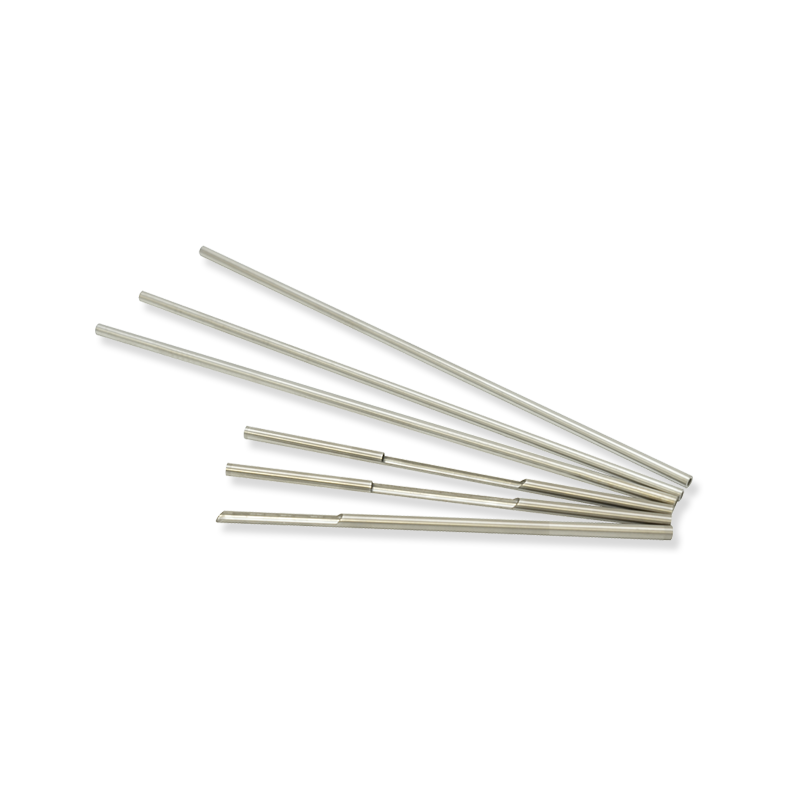 TP304/TP304L/TP304H austenitic stainless steel pipeGrade 304 stainless steel is essentially a standard 18/8 austenitic stainless steel, widely used in stainless steel (SS) applications and available in various surface ...View Product →
Corrosion Resistance: Where 304 Fails and 316 Survives
In clean, dry, indoor service, 304 can last for decades. It resists atmospheric corrosion, many organic chemicals, fresh water, and mild acids. The problem begins when chlorides are present. Chlorides include salt, seawater, bleach, hydrochloric acid, and some process streams. Chloride ions attack the passive chromium oxide film on stainless steel. If the film breaks down locally, a pit can form.
Type 316 resists chloride pitting better because molybdenum helps stabilise the passive film. This is why coastal architecture, marine hardware, and chemical process tubing often specify 316 or 316L. However, 316 is not immune to seawater. In warm, stagnant seawater or high-chloride brine, even 316L can pit and suffer crevice corrosion. Under those conditions, duplex stainless steel such as S31803, S2205, or 2507 is often a better choice.
Crevice corrosion is another risk. A crevice can form under a gasket, weld spatter, deposit, or poorly designed joint. In a crevice, oxygen cannot refresh the passive film, and chloride concentration can increase. Type 316 performs better than 304 in crevice conditions, but both grades can fail if the crevice is tight and the environment is aggressive.
Chloride stress corrosion cracking is a different failure mode. It usually requires chlorides, tensile stress, and elevated temperature. Austenitic grades such as 304 and 316 are both susceptible, although 316 is somewhat more resistant in many environments. In hot chloride service, duplex or higher-alloy materials are often selected.
| Environment | 304 performance | 316 performance | Practical note |
|---|---|---|---|
| Rural or indoor atmosphere | Excellent | Excellent | 304 is usually sufficient |
| Fresh water, low chloride | Good | Excellent | 316 adds margin but may not be necessary |
| Coastal atmosphere | Poor to fair | Good | 316L is common for coastal tube |
| Chlorinated cleaning solutions | Fair | Good | Concentration, temperature, and time matter |
| Warm seawater | Poor | Fair | Duplex or higher alloy is often better |
| Many organic acids | Good | Very good | Verify concentration and temperature |
The key purchasing lesson is that the environment must be defined by chemistry, chloride level, temperature, flow, cleaning practice, and stagnation risk. A vague requirement such as "corrosion resistant" can lead to either overpaying for 316 or under-specifying 304 in a chloride application.
Mechanical Strength, Temperature, and Fabrication Differences
At room temperature, 304 and 316 have similar minimum mechanical properties. Both grades commonly show a minimum tensile strength of about 515 MPa, a minimum yield strength of about 205 MPa, and a minimum elongation of about 40 percent in the annealed condition. This means 316 is not chosen because it is dramatically stronger than 304. It is chosen for corrosion resistance.
At elevated temperature, grade selection becomes more complex. Type 304 has a slightly higher melting range than 316, but melting range is not the only factor. Creep strength, oxidation resistance, thermal expansion, and phase stability matter. For boiler and heat exchanger tubes, grades such as 304H, 316H, 321H, and 347H are often specified because carbon content and stabilising elements are controlled for high-temperature service.
| Property | 304 / 304L | 316 / 316L | Selection impact |
|---|---|---|---|
| Tensile strength, min | 515 MPa | 515 MPa | Similar for most tube designs |
| Yield strength, min | 205 MPa | 205 MPa | Do not assume 316 is stronger |
| Elongation, min | 40% | 40% | Both are ductile and formable |
| Melting range | Approx. 1400-1450 C | Approx. 1375-1400 C | 316 melts slightly lower |
| Magnetic response | Usually non-magnetic after anneal | Usually non-magnetic after anneal | Cold work can increase magnetic response |
Fabrication behaviour also matters. Both grades weld well with the correct filler. Type 304 is commonly welded with 308L filler. Type 316 is commonly welded with 316L filler. For 316Ti, welding procedures must account for titanium stabilisation. For 304L and 316L, low carbon reduces the risk of sensitisation during welding, which is important for corrosion resistance in the heat-affected zone.
Machining behaviour is similar, but 316 can be slightly more difficult because molybdenum increases toughness and work hardening. Cold forming is generally good for both grades, although 304 work hardens faster and may require more intermediate annealing in severe forming operations. For small-diameter precision tube, bright annealing and dimensional control often matter more than the base grade difference.
Cost, Availability, and Procurement Risk
Type 316 is more expensive because of molybdenum and, in many cases, higher nickel. The cost difference is not fixed. It changes with alloy surcharges, mill product availability, order size, wall thickness, tolerance, surface finish, testing, and delivery urgency. A 316L tube with tight tolerance, bright annealed surface, and full traceability can cost significantly more than a basic 304 tube.
Procurement risk goes beyond the headline price. If a project specifies 316L but accepts undocumented material, the buyer may receive 304 or a non-compliant heat. In corrosive service, that substitution can lead to premature failure, warranty disputes, and safety incidents. The correct protection is a clear purchase specification, heat number traceability, mill test certificates, and positive material identification when required.
| Factor | Effect on 304 | Effect on 316 | Purchasing action |
|---|---|---|---|
| Molybdenum content | None | 2-3% typical | Expect 316 to carry alloy premium |
| Nickel content | Usually lower | Usually higher | Check alloy surcharge at quotation |
| Availability | Widely stocked | Also common, but less broad | Confirm mill lead time for special sizes |
| Surface finish | Pickled, bright annealed, polished | Same options | Specify finish because it affects corrosion |
| Testing | MTC, hydro, eddy current | MTC, PMI, corrosion tests | Define test scope before order |
| Substitution risk | Lower cost temptation | Higher value, higher risk | Require heat traceability and PMI |
There is also a hidden cost to over-specifying. If 304 is fully adequate, choosing 316 increases material cost, may extend lead time, and can complicate welding procedure qualification. The goal is not to buy the most alloyed grade. The goal is to buy the lowest-cost grade that will meet the service life, safety, and maintenance requirements.
Application Guide by Industry
Application context is where the 304 versus 316 decision becomes clear. The same grade can be correct in one plant and wrong in another because chloride level, temperature, cleaning chemicals, and stagnation differ.
Food and Beverage Processing
Food and beverage plants often use both 304 and 316. Type 304 is common for dry product contact, sugar handling, grain processing, and mild dairy service. Type 316 or 316L is preferred when the product contains salt, when chlorinated sanitizers are used frequently, when the line is warm and stagnant, or when the surface must resist pitting for hygiene reasons. In brewing, cheese making, brine handling, and seafood processing, 316L is often the safer specification.
For food contact, the important factors include surface finish, weld quality, cleanability, and compliance with the relevant sanitary standard. A rough 316 surface can be worse than a smooth 304 surface because it traps product and bacteria. If you need sanitary tube, review food-grade stainless steel tubing requirements before choosing the grade. In many food plants, 304 is acceptable for utility lines, while 316L is used for product contact in high-chloride zones.
Marine and Offshore
Marine environments are the classic reason to choose 316. Salt spray, seawater splash, and humid coastal air contain chlorides that attack 304. For boat fittings, offshore instrumentation, coastal architecture, and seawater exposure, 316L is a minimum starting point. In warm seawater or high-flow seawater systems, even 316L may not be enough. Duplex S31803, S2205, or super duplex S32750 often provide better resistance to pitting, crevice corrosion, and chloride stress corrosion cracking.
For marine-grade tube, specify the exact UNS number, surface condition, and testing. A generic "316" description is not enough for critical offshore service. If your project requires a marine-grade austenitic tube, review TP316L marine-grade stainless tube as a reference specification. Verify chloride level, temperature, and oxygen content before finalising the grade.
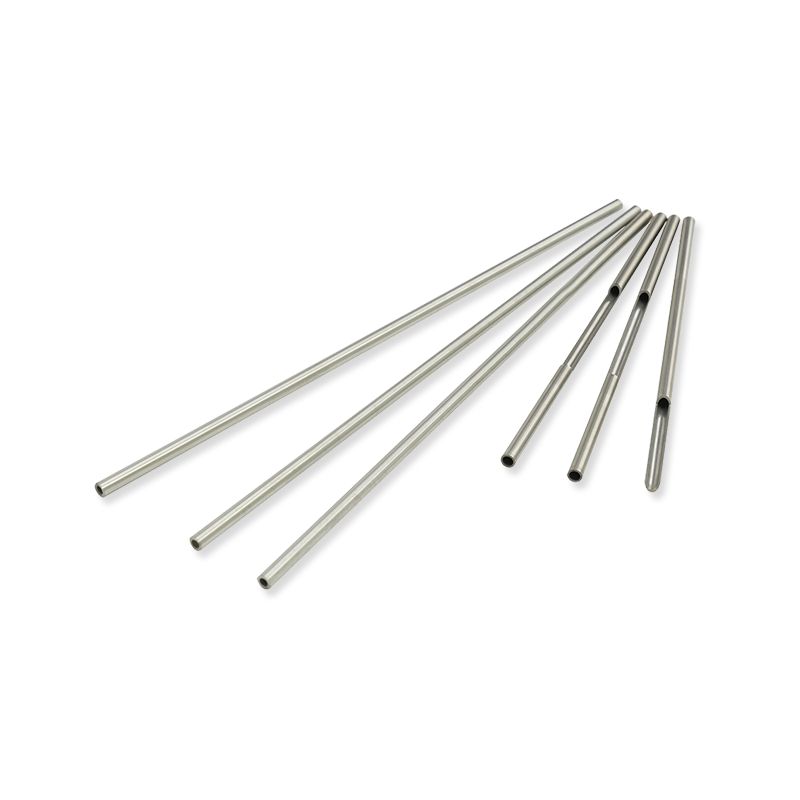 TP316/TP316L/TP316H/TP316Ti austenitic stainless steel alloy pipeGrade 316 stainless steel is the standard molybdenum-bearing austenitic stainless steel, ranking just below Grade 304 in overall importance among austenitic stainless ...View Product →
Chemical and Pharmaceutical Processing
Chemical plants often select 316L for process piping, reactors, heat exchangers, and instrumentation because it handles many acids, caustic solutions, and chloride-bearing streams better than 304. Pharmaceutical and biotech facilities frequently specify 316L for clean steam, Water for Injection, and product contact surfaces because it offers good corrosion resistance and cleanability. However, 316L is not universal. Strong chlorides, hot concentrated acids, and oxidising conditions may require 904L, S31254, Alloy 625, or another nickel alloy.
Architecture and General Industry
For indoor architectural trim, handrails, structural covers, and general fabrication, 304 is usually the economic choice. For coastal buildings, swimming pool areas, road salts, and industrial atmospheres with chlorides, 316 is preferred. In general industrial piping, 304 is common for compressed air, fresh water, and non-aggressive fluids. 316 is common for chemical transfer, dye lines, and wash-down areas.
High-Temperature and Boiler Service
High-temperature tube selection cannot rely only on the 304 versus 316 comparison. Boiler tubes, superheater tubes, and heat exchanger tubes are often specified by standard and grade together. ASTM A213 covers 304H, 316H, 321H, 347H, and other grades. ASTM A312 covers austenitic seamless and welded pipe. EN 10216-5 covers stainless steel tubes for pressure purposes. The correct choice depends on metal temperature, steam oxidation, creep, thermal cycling, and code requirements.
When Duplex Becomes the Better Step
If the environment contains chlorides but 316L is not strong enough, duplex stainless steel is often the next step. S2205 duplex offers roughly twice the yield strength of 304 or 316 and much better chloride pitting resistance. It is widely used in offshore oil and gas, chemical processing, desalination, and high-chloride water systems. The trade-off is that duplex requires qualified welding procedures and careful heat treatment control. It is not a direct drop-in replacement for 316 in every fabrication shop.
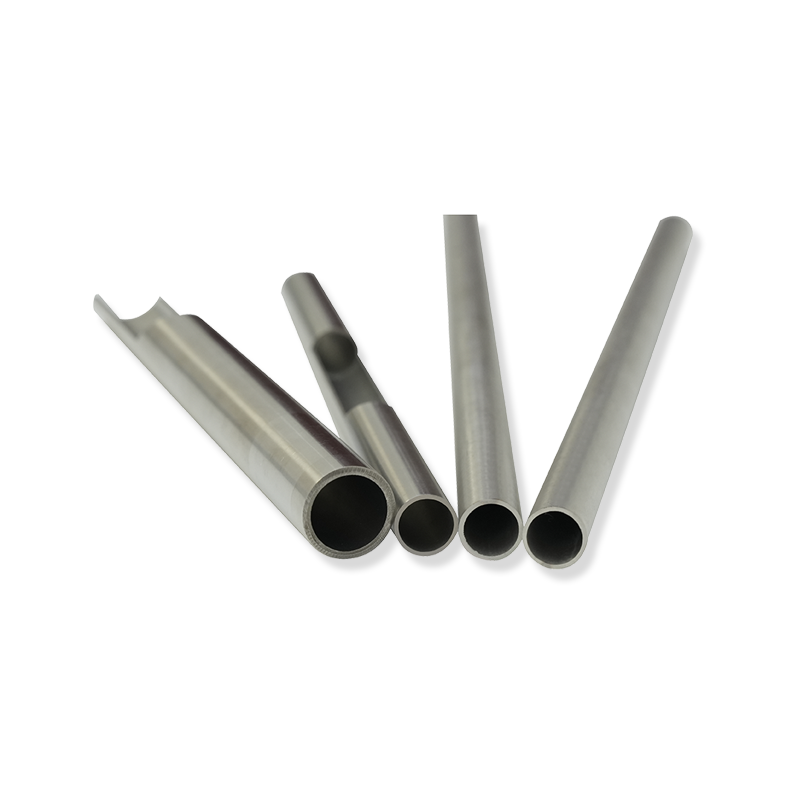 S2205 corrosion resistant duplex stainless steel pipeDuplex 2205 is a duplex stainless steel offering a combination of superior corrosion resistance, mechanical strength, excellent weldability, high toughness, and good d...View Product →
How to Specify 304 or 316 Correctly on a Purchase Order
A good purchase order prevents grade confusion. The grade name alone is not a specification. For example, "316 stainless tube" could mean 316, 316L, 316H, 316Ti, welded, seamless, bright annealed, pickled, or polished. It could be produced to ASTM A269, ASTM A312, ASTM A213, EN 10216-5, DIN 17456, JIS G3459, or GOST 9941. Each standard sets different dimensions, tolerances, tests, and markings.
- State the exact grade and UNS number, such as 304L UNS S30403 or 316L UNS S31603.
- State the product form: seamless tube, welded tube, U-tube, coil tube, or precision tube.
- State the governing standard, such as ASTM A269, ASTM A312, ASTM A213, or EN 10216-5.
- State outside diameter, wall thickness, length, and tolerance class.
- State surface finish: pickled, bright annealed, electropolished, or as-welded.
- State heat treatment condition: solution annealed or bright annealed.
- State testing: hydrostatic, eddy current, ultrasonic, flattening, flaring, hardness, or PMI.
- State documentation: mill test certificate to EN 10204 3.1, heat number traceability, and compliance marks.
- State packaging, marking, and protection requirements for transportation and storage.
| Purchase detail | Example | Why it matters |
|---|---|---|
| Grade and UNS | 316L UNS S31603 | Prevents receiving 316, 304, or non-compliant material |
| Standard | ASTM A269 | Defines tolerances, tests, and marking |
| Dimensions | 19.05 mm OD x 1.65 mm WT | Ensures fit with fittings and supports |
| Tolerance | Cold drawn, controlled OD and WT | Reduces installation and welding risk |
| Surface | Bright annealed | Affects corrosion and cleanliness |
| Testing | Eddy current plus PMI | Detects defects and verifies alloy |
| Documentation | EN 10204 3.1 MTC | Supports quality and regulatory review |
If the tube will be used in pressure service, the standard and grade must also satisfy the local design code. In Europe, PED compliance may be required. In China, TS certification may apply. In the United States, ASME code requirements may govern. The purchasing team should confirm the design pressure, design temperature, corrosion allowance, and governing code before releasing the order.
Common Mistakes and Misconceptions
Many 304 versus 316 problems come from assumptions rather than alloy limitations. The following mistakes appear often in project reviews and supplier discussions.
- Assuming 316 is always stronger. In the annealed condition, 304 and 316 have similar yield and tensile strength. Duplex or cold-worked grades are used when higher strength is needed.
- Using 304 near the coast. Coastal atmospheres contain chlorides. Type 304 may show tea staining, pitting, or rust bleeding, especially in sheltered areas where salt accumulates.
- Using 316 in warm seawater without testing. Type 316L can still pit in warm, stagnant seawater. Duplex or higher-alloy tube may be required.
- Ignoring crevices. A gasket, weld undercut, or deposit can create a crevice where corrosion starts even if the open surface looks fine.
- Specifying 316L but accepting 304 documentation. Heat number traceability and PMI are essential when the grade affects safety or product quality.
- Forgetting cleaning chemicals. Chlorinated foam cleaners, bleach, and acidic sanitisers can be more aggressive than the process fluid.
- Over-specifying without checking fabrication. Duplex and high-alloy grades may require different welding, bending, and heat treatment procedures.
The practical fix is a short corrosion review before the order is placed. List every fluid, cleaning agent, temperature, concentration, and stagnation period. Then compare that list with the grade's resistance limits. If the data is uncertain, choose the higher grade or request corrosion testing rather than guessing.
Frequently Asked Questions
Is 316 stainless steel always better than 304?
No. Type 316 is better in chloride-bearing or chemical environments because molybdenum improves pitting and crevice corrosion resistance. In mild indoor, freshwater, and general industrial service, 304 provides excellent performance at a lower cost. Choosing 316 everywhere can increase project cost without adding meaningful service life.
Can 304 stainless steel rust?
Yes. Type 304 can rust if the passive film breaks down. Common causes include chlorides, salt spray, acid cleaning, iron contamination from carbon steel tools, weld heat tint, and stagnant water. In clean indoor conditions, 304 is highly resistant to rust, but it is not rust-proof in every environment.
Is 316 stainless steel food safe?
Both 304 and 316 are commonly used for food contact when they meet the relevant sanitary finish, weld, and cleanliness requirements. Type 316 is often preferred for salty foods, brine, dairy, brewing, and frequent chlorinated cleaning because it resists pitting better. Type 304 is widely used for dry foods, sugars, and mild utility service.
Which grade is better for marine use, 304 or 316?
Type 316 is better for marine atmospheres and splash zones. However, 316L is not a guarantee in warm seawater or high-chloride immersion. For offshore, desalination, and seawater piping, duplex S2205 or super duplex S32750 may be more suitable. The final choice depends on chloride level, temperature, flow, and oxygen content.
Is 316 stainless steel magnetic?
Annealed 304 and 316 are generally austenitic and usually non-magnetic or only slightly magnetic. Cold working, forming, welding, or machining can increase magnetic response. Magnetism alone is not a reliable grade identification method. Positive material identification or chemical analysis should be used for verification.
Can 304 and 316 be welded together?
They can be welded together using a compatible filler such as 308L or 316L, depending on the service. The weld procedure should consider dilution, carbon content, and corrosion resistance. In chloride service, welding 304 to 316 may create a galvanic or corrosion risk if the 304 side is exposed. A qualified welding procedure and post-weld cleaning are important.
Does 316 stainless steel work at high temperature?
Type 316 and 316H are used at elevated temperature, but high-temperature selection depends on creep strength, oxidation, and code rules. For boiler and heat exchanger service, grades such as 304H, 316H, 321H, and 347H are often specified. Do not rely on room-temperature corrosion data alone for high-temperature design.
What is the price difference between 304 and 316?
The price difference varies with nickel and molybdenum surcharges, size, wall thickness, quantity, surface finish, and certification. In many markets, 316 or 316L tube costs 30 to 60 percent more than 304 or 304L. The premium can be higher for special sizes, tight tolerances, and full traceability requirements.
When should I choose duplex instead of 316?
Choose duplex when you need higher strength, better chloride pitting resistance, or improved resistance to chloride stress corrosion cracking. S2205 is common for offshore, chemical, and high-chloride water service. Duplex requires qualified welding and careful fabrication, so confirm supplier capability before ordering.
How can I verify that I received 316 instead of 304?
Review the mill test certificate and heat number, then verify with positive material identification or laboratory chemical analysis. A PMI test can identify molybdenum content, which is the key difference between 304 and 316. For critical service, require PMI on incoming material and keep records linked to heat numbers.
Product Support for 304, 316, and Higher-Alloy Tube Projects
Jiangsu Jend Tube Co., Ltd. produces seamless stainless steel and nickel-alloy tube from its facility in Jiangsu, China. The company was established in 2011, operates a 30,015 square meter plant, and reports an annual capacity of 3,800 tons. Its quality system includes ISO 9001:2015, domestic pressure vessel TS certification, and European PED certification.
For 304 and 316 projects, the relevant product families include TP304, TP304L, TP304H, TP316, TP316L, TP316H, and TP316Ti austenitic stainless steel pipe. The company also produces ferritic, martensitic, super austenitic, duplex, and nickel-based alloy tube. Production can follow ASTM, EN, DIN, JIS, GOST, and GB standards, which helps international project teams align material certificates with local design codes.
Size capability is important when selecting between 304 and 316 because thinner walls and smaller diameters can be harder to source in specialty grades. Jend Tube reports a seamless tube range from 3.18 mm to 406.4 mm outside diameter, wall thickness from 0.3 mm to 20 mm, and maximum length up to 25,000 mm. Available finishes and processing include solid solution pickling, bright annealing, electropolishing, coil tube, U-shaped tube, and precision tube for automotive and instrumentation use.
Grade verification
Heat number traceability, mill test certificates, and PMI support grade confirmation for 304, 316L, and higher-alloy tube.
Standard compliance
Production can be aligned with ASTM A269, ASTM A312, ASTM A213, EN 10216-5, DIN 17456, JIS G3459, and GOST 9941 requirements.
Custom dimensions
Small diameter, thin wall, heavy wall, and extra-long tube options help match specific project designs and fabrication needs.
Surface and heat treatment
Pickled, bright annealed, and electropolished finishes are available for corrosion, hygiene, and clean service demands.
For buyers comparing 304 and 316, the most useful supplier conversation is specific. Share the fluid, chloride level, temperature, pressure, standard, dimensions, surface finish, and testing requirements. A supplier who understands both alloy behaviour and tube manufacturing can help confirm whether 304 is sufficient, whether 316L is the safer choice, or whether a duplex grade should be evaluated.
When the application involves chlorides, salt, aggressive cleaning chemicals, or high reliability, do not treat 304 and 316 as interchangeable. Use the lower-cost grade only when the environment supports it. Use 316 when molybdenum is needed. Use duplex or nickel alloy when 316 reaches its limit. That approach controls cost without compromising service life.