Search
 한국어
한국어 русский
 عربى
عربىThe project engineer stopped at the material selection sheet for a new chemical transfer line and asked a direct question: is stainless stronger than copper? The direct answer is yes. Stainless steel has higher yield strength, higher tensile strength, and higher hardness than copper in nearly every condition used for industrial tube and pipe. This is not a marketing claim. The difference is written into material standards, and it changes the way engineers specify wall thickness, choose corrosion allowance, plan pipe supports, and estimate life cycle cost.
That strength advantage matters for more than the material datasheet. A stronger tube can carry pressure with a thinner wall, resist mechanical damage during installation, survive vibration in compressor circuits, and hold its shape at elevated temperatures. This article compares stainless steel and copper using mechanical properties, real service conditions, fabrication behavior, and purchase considerations that matter when selecting seamless tube for a plant. The goal is to give you a clear material comparison that can be applied directly to your next specification.
The Short Answer: Stainless Steel Is Stronger Than Copper
When a buyer asks "is stainless stronger than copper?" the practical answer depends on grade and temper. Annealed copper has a tensile strength between 220 and 250 MPa. Cold-drawn copper can reach 365 to 415 MPa. Standard 304 stainless steel has a minimum tensile strength of 515 MPa, and 316 stainless steel has a similar value. Yield strength is even more important for tubing because it defines the point where permanent deformation starts. Grade 304 has a minimum yield strength of around 205 MPa. Annealed copper has a yield strength of 70 to 90 MPa. Put directly: stainless steel is roughly twice as strong in tensile strength and about two and a half to three times stronger in yield strength than annealed copper.
| Material and condition | Tensile strength (MPa) | Yield strength (MPa) | Hardness (HBW) |
|---|---|---|---|
| 304 stainless steel annealed | 515-620 | 205 | 201-229 |
| 316 stainless steel annealed | 515-620 | 205 | 201-229 |
| Copper C12200 annealed | 220-250 | 70-90 | 40-50 |
| Copper C12200 cold drawn | 365-415 | 250-300 | 80-110 |
| S2205 duplex stainless steel | 620-790 | 450 | 293 |
The last row shows why high-strength stainless grades exist. Duplex stainless steel such as S2205 provides more than double the yield strength of 304 stainless and about six times the yield strength of annealed copper. For pressurized systems, this strength translates into substantial material savings. A specifier can choose a thinner wall, reduce weight, reduce the number of supports, or keep the same wall thickness and gain a much higher safety margin.
Why Yield Strength Matters More Than Tensile Strength for Tubing
Tubing is not a tie rod or a lifting lug. Its main job is to contain pressure. Yield strength, not ultimate tensile strength, is the property used in most pressure design calculations. When an engineer writes a wall thickness calculation, the allowable stress is usually based on yield strength divided by a safety factor. A high yield strength means the material resists plastic deformation under internal pressure, external loads, bending, and thermal expansion.
The simplified form of the pressure calculation looks like this: P = 2 S t / D, where P is internal pressure, S is allowable stress, t is wall thickness, and D is outside diameter. For a fixed outside diameter and wall thickness, the pressure rating depends directly on S. If stainless steel has a yield strength of 205 MPa and annealed copper has a yield strength of 70 MPa, the stainless tube has roughly three times the pressure capacity of the copper tube, before considering any additional corrosion allowance.
That is why material selection in tube specifications is rarely a simple tensile number. A copper tube that is expected to match the pressure rating of a stainless steel tube must have a much thicker wall. In many cases, the wall must be roughly three times thicker. This makes the copper assembly heavier, more expensive in raw material, harder to bend, and more restrictive in internal flow area. When you add the density difference, the weight gap becomes even larger. Stainless steel is not only stronger, it is also about 10 to 12 percent lighter than copper on a volume basis.
Mechanical Strength Beyond the Data Sheet
Yield strength and tensile strength are the two numbers that appear most often in datasheets, but there are other mechanical properties that define real-world performance.
Hardness and Surface Integrity
Annealed copper has a Brinell hardness of roughly 40 to 50 HBW. Annealed 304 stainless steel is normally 201 to 229 HBW. Hardness controls how the outside surface behaves during handling, installation, and service. Stainless steel resists dents, scratches, tool marks, and vibration wear much better than copper. In a crowded pipe rack where tubes are pulled through holes, clamped, bent, and occasionally knocked by tools, a harder surface reduces the chance of localized damage that can become a leak point later. Copper is softer and more likely to deform under the weight of the tube or an external impact.
Toughness and Temperature Limits
Copper is a ductile metal, but its strength drops rapidly once the temperature rises. Cold-worked copper begins to anneal at temperatures above roughly 190°C. That means a drawn copper tube can lose a significant part of its strength after it is exposed to a high temperature. Austenitic stainless steel retains useful mechanical strength at much higher temperatures. Standard 304 and 316 grades can be used in intermittent service up to about 870°C, while stabilized or high-carbon grades such as 321H and 347H are specified for elevated temperature service where creep strength matters. For boiler lines and steam systems, the strength comparison at room temperature is less relevant than the ability to keep strength at operating temperature.
Fatigue Strength Under Cyclic Loading
Compressors, pumps, engine exhaust systems, and thermal cycles create repeated stress. Under fatigue, a soft material can fail at stress levels far below its static yield strength. Stainless steel, especially austenitic and duplex stainless, has better resistance to cyclic loading than copper. The higher stiffness and hardness of stainless steel reduce the amount of strain caused by each cycle. For hydraulic lines and instrument impulse lines, that difference can be the reason one tube survives millions of pressure cycles while another begins to crack at a bend or a clamped fitting. Copper is still used in some oscillating service, but stainless steel is generally the safer choice when vibration or frequent thermal cycling is expected.
What Copper Still Does Better
A balanced material comparison should not ignore copper's advantages. Copper is not selected in plumbing, refrigeration, heat exchange, and electrical systems by accident. It has real properties that stainless steel cannot easily replace.
Thermal Conductivity
Copper has a thermal conductivity of about 385 to 401 W/m·K. Austenitic stainless steel has a thermal conductivity of only 15 to 17 W/m·K. That is a massive difference for heat transfer equipment. In a heat exchanger where the primary goal is moving heat quickly, copper or copper alloys are often more efficient. However, stainless steel heat exchanger tubes can compensate with thin walls and multiple passes. The strength of stainless steel also allows thin-wall designs that reduce thermal resistance. This is why the choice depends more on the media and the required service life than on a single conductivity number.
Electrical Conductivity
Copper is the standard material for electrical conductors. Its resistivity is far lower than stainless steel. This matters for busbars, grounding, and conductors, but it is less relevant for tube and pipe. If a tubing system is selected primarily for electrical performance, stainless steel is not a substitute.
Formability and Joining
Copper is easy to bend, flare, swage, and solder. It has been used for decades with simple hand tools and compression fittings. Stainless steel is harder, has a higher springback, and usually requires more force, better tooling, and careful lubrication. Tube bending of stainless may require mandrel bending and power benders, especially in smaller diameters with tight radii. For field installation and repair, copper can be joined with brazing or soldering at lower temperatures. Stainless steel welding requires more skill, proper gas shielding, and sometimes post-weld cleaning. This installation difference can affect project schedules and labor cost, especially in complex piping layouts.
Antimicrobial Surface
Copper and copper alloys have known antimicrobial properties. That is one reason copper surfaces are still found in food handling areas and some healthcare environments. Stainless steel also has a hygienic, easy-to-clean surface, but copper has a measurable biological effect. In some drinking water systems, copper has traditionally been used because it limits biological growth on the surface. That benefit must be weighed against corrosion and strength issues. The selection should be based on a full review of the fluid, temperature, pressure, and hygiene requirements.
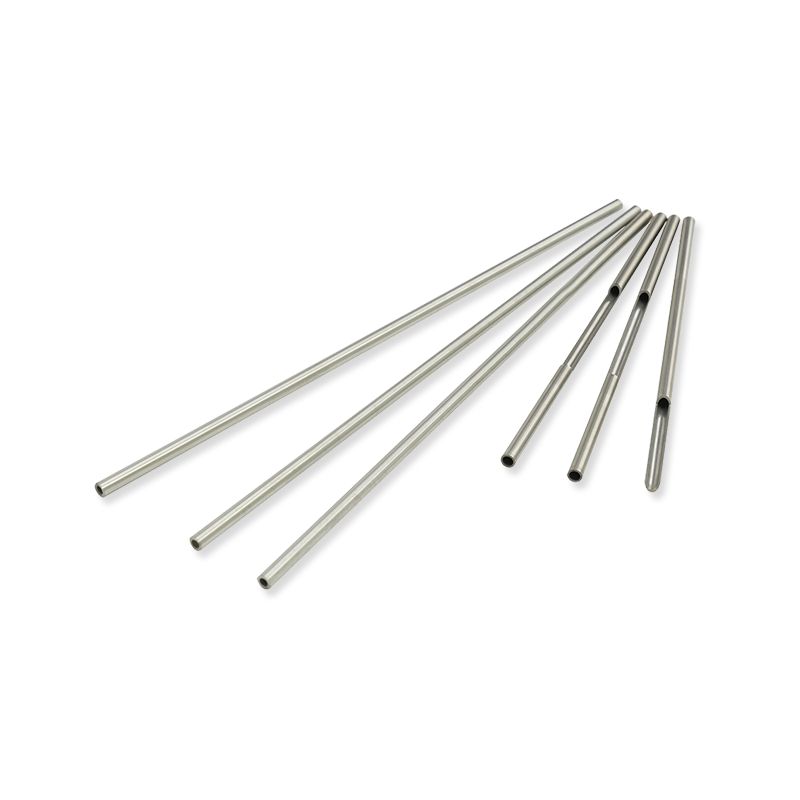 TP316/316L/316H/316Ti Austenitic Stainless Steel Alloy PipeThis molybdenum-bearing austenitic stainless steel offers improved pitting and crevice corrosion resistance over 304, with variants for low-carbon, high-temperature, or stabilized service. Its strength and corrosion performance make it a strong alternative to copper for industrial piping.View Product →
Corrosion Resistance: Strength That Has to Last
Internal pressure creates stress. Corrosion reduces the wall thickness that carries that stress. A strong material that corrodes quickly is no better than a weak material. This is where stainless steel shows a major advantage in most industrial environments.
For seawater service, 304 stainless can be vulnerable to chloride pitting. Grade 316L, with molybdenum, provides better resistance and is a common marine-grade stainless steel. For deeper offshore or highly corrosive applications, duplex grades and super duplex grades are chosen. Copper resists some seawater environments, but it can suffer from high velocity erosion and pitting in polluted water. Copper-nickel alloys are another option, but they are a different family from pure copper.
General Corrosion and Chemical Resistance
Stainless steel owes its corrosion resistance to a passive chromium oxide layer. This layer forms naturally and repairs itself when the surface is clean and oxygen is available. Copper forms a protective patina in some environments, but it is more sensitive to oxidizing acids, ammonia, and sulfide environments. For chemical transfer lines carrying acids, bases, or solvents, stainless steel is usually the first choice. Special grades extend the range further. 904L is a high-alloy austenitic stainless steel that provides good resistance to sulfuric acid and chloride-containing media. The exact grade must be validated against the chemical composition, concentration, temperature, and impurities in the process fluid.
Seawater and Chloride Exposure
In seawater, the corrosion comparison is not about which metal looks new. It is about pitting rate, crevice corrosion, and stress corrosion cracking. Copper has a long history in seawater piping, but it is sensitive to flow velocity. Stainless steel grades with molybdenum, such as 316L, 317L, 2205, and 2507, are used in marine environments where high strength and corrosion resistance are needed together. For offshore oil and gas tubing, duplex stainless steel has become common because it offers higher strength than 304 or 316 and better resistance to chloride stress corrosion cracking.
High-Temperature Oxidation
Copper oxidizes quickly at high temperature. As the temperature increases, the surface oxide layer grows and the material weakens. Stainless steel forms a tightly adherent chromium oxide scale that slows further oxidation at high temperatures. That is why stainless steel boiler tubes and superheater tubes are used at temperatures far above the range where copper tubing would be considered. If you need a tubing material for exhaust, steam, or heat tracing, stainless steel has a clear mechanical and oxidation advantage.
| Environment | 304 Stainless Steel | 316L Stainless Steel | Copper |
|---|---|---|---|
| Fresh water | Good | Good | Good |
| Seawater | Moderate pitting risk | Good | Moderate / velocity sensitive |
| Oxidizing acid | Limited | Better | Poor |
| Ammonia / sulfide | Good | Good | Poor |
| High-temperature oxidation | Good | Good | Poor above 200°C |
How Strength Changes the Cost and Weight of a Tubing System
Material Weight and Wall Thickness
Let's take a 25.4 mm outside diameter tube and assume a design pressure that requires stainless steel with a 1.5 mm wall. A copper tube with similar pressure rating may need a 4.4 mm wall because of lower yield strength. The copper tube has almost two and a half to three times more metal cross-section. When copper's density is added, the copper pipe can be roughly three times heavier. For long piping runs, this means more raw material, more crane time, more support steel, and more shipping cost. Strength is not just a property on a datasheet; it is a direct weight factor.
Fabrication and Installation Cost
Stainless steel is easier to weld than copper if the correct procedures are followed, but it is not easier to solder. Copper systems require brazed or soldered joints, which can be done at lower temperatures. However, a thicker copper wall may require larger bending radii and stronger supports. A stainless steel tube with a thinner wall can be bent using appropriate tooling and secured at wider intervals. Installation cost depends strongly on layout complexity, access, labor skill, and local code requirements. A proper comparison must include the complete installed system, not just the price per meter.
Life Cycle Cost
The initial material cost comparison between copper and stainless steel can shift rapidly because copper prices are tied to commodity markets and can move sharply. Stainless steel prices are also affected by nickel and molybdenum, but the overall material quantity needed for a stainless system is often lower because of the higher strength and thinner walls. Over the service life, maintenance cost matters more. Harder surfaces and better corrosion resistance reduce leaks, tube replacements, and downtime. For critical process lines where failure causes lost production, the stronger material often wins the life cycle analysis even if the per-meter price is higher.
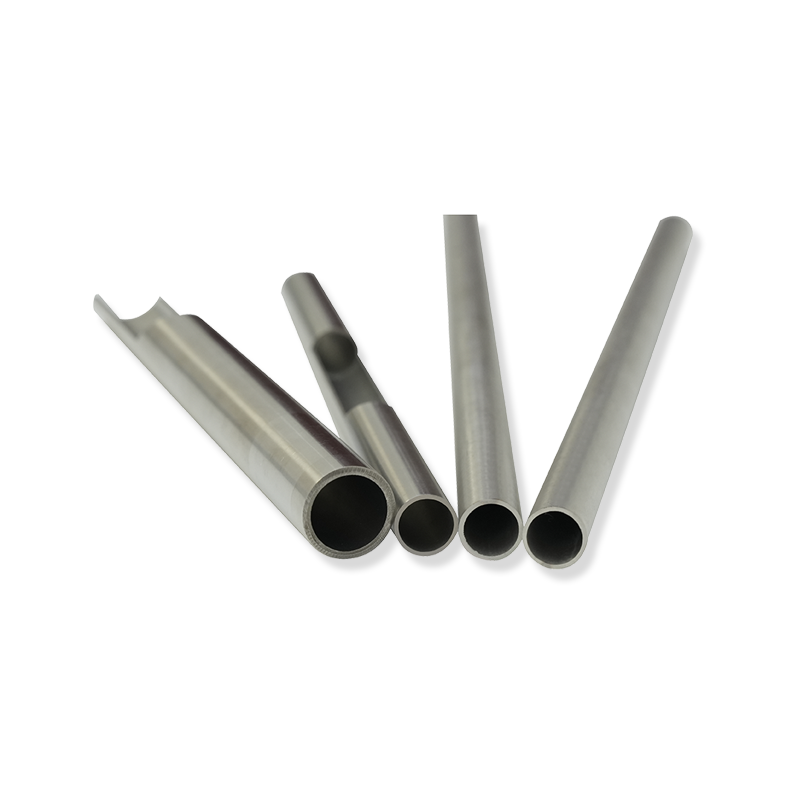 S2205 Duplex Stainless Steel Pipe with High StrengthDuplex 2205 combines superior corrosion resistance with high mechanical strength and excellent resistance to stress fatigue cracking. It is well suited for demanding marine and offshore environments where copper's lower strength and corrosion resistance fall short.View Product →
Tubing Applications Where Strength Makes the Difference
Different industries select tube materials for different reasons, but strength is a common denominator. The following applications show how the mechanical difference between stainless steel and copper changes real-world performance.
Hydraulic and Instrumentation Tubing
Hydraulic systems require tube materials that can handle high working pressures and pressure spikes without permanent deformation. Stainless steel's high yield strength allows compact tubing sizes and thin walls while maintaining safety. It resists vibration fatigue and supports instrumentation lines that are routed near pumps and compressors.
Boiler and High-Temperature Steam Lines
Boiler tubes and steam lines operate under pressure and elevated temperature. Standard carbon or copper materials cannot meet the strength retention required at 400 to 600°C. Stainless grades such as TP304H, TP321H, and TP347H are selected for creep resistance and oxidation resistance. Copper loses strength quickly in this range.
Chemical Transfer and Acid Handling
Chemical processing lines often combine medium pressure with aggressive media. Stainless steel provides a strong pressure boundary and corrosion resistance. For concentrated acids, 904L or nickel alloys are used. The wall does not need to be overdesigned for corrosion because the appropriate corrosion allowance is specified by the designer.
Marine and Offshore Oil and Gas
Seawater service used to rely on copper-nickel alloys, but modern offshore platforms also specify stainless steel for its strength and chloride resistance. A good option for subsea and topside service is duplex steel offshore oil and gas tubing, which offers both high yield strength and resistance to stress corrosion cracking.
Food and Pharmaceutical Processing
Hygienic tube lines require smooth surfaces, cleanability, and resistance to cleaning chemicals. Stainless steel has a hard surface that does not release copper ions into the product. It can be electropolished, bright annealed, and welded with consistent quality. Strength also protects tube surfaces during repeated cleaning cycles and handling.
Heat Exchanger and Condenser Tubing
Heat transfer is important in condensers and heat exchangers. Copper has high thermal conductivity, but its softness can cause erosion and vibration problems in high-turbulence service. Stainless steel thin-wall tubes and nickel alloy heat exchanger tubing can provide a longer service life, with the strength to withstand thermal expansion and cleaning operations.
Copper-Nickel Alloys: The Strong Side of Copper
Pure copper is soft, but copper is not always used alone. Copper-nickel alloys are a separate family with much better mechanical properties. One common alloy, Monel 400, contains roughly 63 percent nickel and 28 to 34 percent copper. Its tensile strength is around 550 MPa in the annealed condition, which is comparable to 304 stainless steel. Its yield strength is around 240 MPa. That is far higher than pure copper and close to austenitic stainless steel. This is why Monel 400 copper-nickel pipe still appears in marine valves, pumps, shafts, and chemical equipment.
The existence of strong copper-nickel alloys means a material comparison should not be simplified as stainless steel versus all copper-based metals. The real task is to match the alloy family to the environment. Monel 400 has excellent resistance to hydrofluoric acid and seawater, and it remains ductile at low temperatures. However, it is more expensive and can behave differently from stainless steel in oxidizing media. Strength is one factor, but it has to be combined with corrosion data, price, availability, and fabrication method.
From a manufacturing perspective, the link between strength and formability is critical. High-strength alloys are harder to cold work, and they require more powerful equipment for bending and straightening. A seamless tube producer must control the forming process so that the final product meets the required mechanical properties and dimensional accuracy. This is one reason an experienced tube manufacturer will ask for the full operating condition before recommending a grade.
 904L Austenitic Stainless Steel Alloy Pipe for Corrosive Service904L is a high-alloy, low-carbon austenitic stainless steel with copper added for excellent resistance to strong reducing acids like sulfuric acid. Its high nickel content supports elevated temperatures, making it a robust choice where copper cannot withstand the corrosive conditions.View Product →
How to Choose the Right Stainless Steel Grade for Strength and Service
Selecting stainless steel is not a single material decision. The service pressure, temperature, fluid composition, expected life, and fabrication method determine the correct grade. Start with strength requirements, then add corrosion allowance, then verify weldability and availability.
| Service requirement | Suitable grade | Strength note |
|---|---|---|
| General pressure tubing | 304 / 304L | 205 MPa yield, widely available |
| Higher corrosion / marine | 316 / 316L | Same strength as 304, better pitting resistance |
| High-temperature service | 304H / 321H / 347H | Maintains strength at elevated temperature |
| High strength / offshore | 2205 duplex | Yield strength over 400 MPa |
| Highly corrosive chemical service | 904L | High-alloy austenitic with strong corrosion resistance |
Do Not Select Strength Alone
A high strength grade is useless if it is not suitable for the process fluid. A 2205 duplex tube has excellent strength and stress corrosion resistance, but it is not the right choice for every chemical. A 904L tube may have lower strength than 2205 but better resistance to certain acids. Always check the fluid, temperature, chloride content, and whether the line will be subject to external chloride sources such as saltwater splash or insulation wetting.
For a project that requires certified material, buy from a manufacturer that can provide material test certificates, traceability, hydrostatic testing, and non-destructive examination. This is especially important for seamless stainless steel tubes used in pressure systems.
Frequently Asked Questions
Is stainless steel stronger than copper?
Yes. Standard 304 and 316 stainless steel have a minimum tensile strength of roughly 515 MPa and a yield strength of about 205 MPa. Annealed copper has a tensile strength of 220 to 250 MPa and a yield strength of 70 to 90 MPa. Cold-drawn copper is stronger than annealed copper, but it is still not a match for stainless steel in most pressure boundary applications.
How much stronger is stainless steel than copper?
In tensile strength, stainless steel is about two times stronger than annealed copper. In yield strength, it is about two and a half to three times stronger. If you compare duplex stainless steel such as S2205, the difference is larger: its yield strength is about six times the yield strength of annealed copper. The exact ratio depends on the copper temper and the stainless grade.
Is 316 stainless steel stronger than copper?
Yes. 316 stainless steel has similar strength to 304 stainless steel, with a typical minimum yield strength of 205 MPa and tensile strength above 515 MPa. Cold-drawn copper can reach a tensile strength of 365 to 415 MPa and yield strength of 250 to 300 MPa, but it may soften if exposed to temperatures above 190°C. For long-term service at elevated temperatures or in corrosive media, 316 stainless steel is the stronger and more stable option.
Why is copper used if stainless steel is stronger?
Copper is used because of thermal conductivity, electrical conductivity, ease of joining, and antimicrobial behavior. It is an excellent material for heat transfer, electrical connections, and decorative work. However, for high-pressure industrial tubing, chemical transfer, high-temperature service, and seawater resistance, stainless steel is usually a better choice. The correct answer depends on the application and the full set of service conditions.
Can copper-nickel alloys compete with stainless steel?
In certain services, yes. Copper-nickel alloys such as Monel 400 have tensile strength close to 304 stainless steel and excellent resistance to seawater and hydrofluoric acid. However, they are a separate alloy family with different corrosion behavior and a higher price. They do not replace stainless steel in general; they fill a specific niche where their chemistry gives a clear advantage.
Does stainless steel lose strength at high temperature?
All metals lose some strength as temperature increases. Austenitic stainless steels retain useful strength at temperatures where copper cannot operate. For example, 304H, 321H, and 347H are used in boiler and high-temperature service because they have better creep strength and oxidation resistance. Copper begins to anneal and soften above roughly 190°C, so it is not normally considered for high-temperature pressure tubing.