Search
 한국어
한국어 русский
 عربى
عربىAre you choosing stainless steel tubing for a new product line, a repair, or a pressure-bearing assembly? If the drawing simply says “stainless steel tube,” the first decision is usually the material family. In most mills, engineering standards, and procurement documents, the three classic types of stainless steel tubing are austenitic stainless steel, ferritic stainless steel, and martensitic stainless steel. Each family has a different crystal structure, magnetic behavior, strength range, and corrosion profile. Choosing the right one before ordering is what separates a reliable tube from one that fails during forming, welding, or service.
At Jend Tube, we produce seamless stainless steel and nickel alloy tubing for customers across Europe, America, Southeast Asia, and the Middle East. Our daily work involves turning an application requirement into a specific grade, finish, and dimensional specification. In this article, we explain the three main types of stainless steel tubing, how they compare, and what you should check before placing an order.
The Three Stainless Steel Tubing Families at a Glance
Metallurgists divide stainless steel into several families, but for most tube applications the first three are austenitic, ferritic, and martensitic. They are sometimes called the three basic groups because they cover the majority of standard stainless steel tube grades used in industry.
| Aspect | Austenitic | Ferritic | Martensitic |
|---|---|---|---|
| Crystal structure | Face-centered cubic | Body-centered cubic | Body-centered cubic in annealed state; tetragonal after hardening |
| Magnetic response | Normally non-magnetic in annealed condition | Magnetic | Magnetic |
| Typical chromium content | 16 to 26 percent | 10.5 to 27 percent | 11.5 to 18 percent |
| Typical nickel content | 6 to 22 percent | Low or no nickel | Low or no nickel |
| Corrosion resistance | Excellent in most industrial environments | Good, especially against stress corrosion | Moderate |
| Strength | Good strength with high ductility | Moderate strength | High strength after heat treatment |
| Common grades | 304, 304L, 316, 316L, 321, 347, 310S | 405, 409, 430, 439, 444 | 410, 420, 431 |
| Typical standards | ASTM A269, ASTM A312, EN 10216-5, JIS G3459 | ASTM A268, DIN 17456 | ASTM A268, EN 10216-5 |
This table gives you the fast answer. In the sections below, we look at each family in more detail, including what you should specify when you order tubing.
Austenitic Stainless Steel Tubing
Austenitic stainless steel is the most widely used type of stainless steel tubing. It contains high levels of chromium and nickel, which stabilize the face-centered cubic structure at room temperature. Grade 304, also known as 18/8 stainless steel, is the most common. Grade 316 adds molybdenum for better resistance to chlorides and chemical media.
Composition and Behavior
In austenitic stainless steel, the microstructure remains austenitic from cryogenic temperatures up to the range where sensitization can occur. This structure gives the material excellent ductility, impact toughness, and weldability. Most austenitic tube grades are non-magnetic in the annealed condition, though cold working can produce slight magnetic response.
Because austenitic grades contain more alloying elements than ferritic or martensitic grades, they generally cost more per ton. The price difference is offset by performance. Austenitic tubing is easier to form, easier to weld, and more resistant to general corrosion across a broader range of media.
Common Austenitic Grades and Typical Uses
- TP304 and TP304L: General-purpose tubing, food processing, chemical processing, and instrumentation.
- TP316 and TP316L: Marine environments, pharmaceutical systems, chemical plants, and equipment exposed to chlorides.
- TP321 and TP347: High-temperature service where carbide precipitation resistance is needed.
- TP310S: High-temperature furnace parts and boiler applications.
- 904L and S31254: Highly corrosive environments that require super austenitic performance.
If you are writing a specification and you need a proven starting point, an ASTM A269 seamless stainless tubing specification covers many austenitic grades with tight dimensional and mechanical requirements. The standard works well for instrumentation lines, hydraulic systems, and general process tubing.
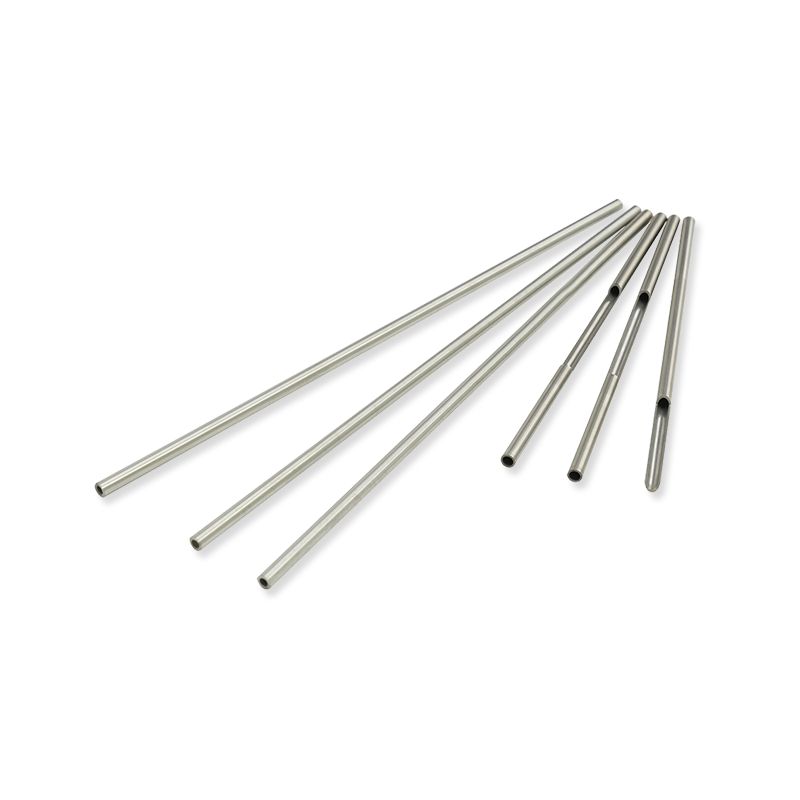 TP316/TP316L/TP316H/TP316Ti Austenitic Stainless Steel Alloy PipeThis molybdenum-bearing austenitic pipe family offers improved corrosion resistance over 304, especially in chloride environments. Its low-carbon and stabilized variants suit welded and high-temperature service, making it a reliable starting point for process tubing specifications.View Product →
From a manufacturing perspective, austenitic tubing is forgiving during cold drawing, annealing, and polishing. It is also the family most often ordered with bright annealing or electropolishing because those finishes are common in food, pharmaceutical, and semiconductor-related applications. When you need a tube that can be bent, welded, and used in a wide range of corrosive environments, austenitic stainless steel is normally the safest choice.
Ferritic Stainless Steel Tubing
Ferritic stainless steel tubing is less well known than austenitic, but it is an important option when corrosion resistance, magnetic response, and cost need to be balanced. Ferritic grades contain chromium as the main alloying element, with little or no nickel. Their body-centered cubic structure makes them magnetic at all temperatures.
Composition and Behavior
Ferritic stainless steels typically contain between 10.5 and 27 percent chromium. They do not respond to heat treatment in the same way martensitic grades do. Instead, their strength comes from solid solution strengthening and cold working. Ferritic tubing also has good resistance to stress corrosion cracking, which is a practical advantage in chloride-containing environments where austenitic grades can suffer.
Weldability varies by grade. Early ferritic grades like 430 are more difficult to weld because they can develop coarse grains and reduced toughness in the heat-affected zone. Stabilized grades such as 439 and 444 are better choices when welding is required.
Common Ferritic Grades and Typical Uses
- TP405: Low-carbon ferritic tubing for heat-resistant and welding-friendly applications.
- TP409: Automotive exhaust systems and heat exchangers.
- TP430: General-purpose ferritic tubing, decorative and light industrial use.
- TP439: Stabilized ferritic tubing with improved weldability and corrosion resistance.
- TP444: Low-carbon, molybdenum-alloyed ferritic tubing with good pitting resistance.
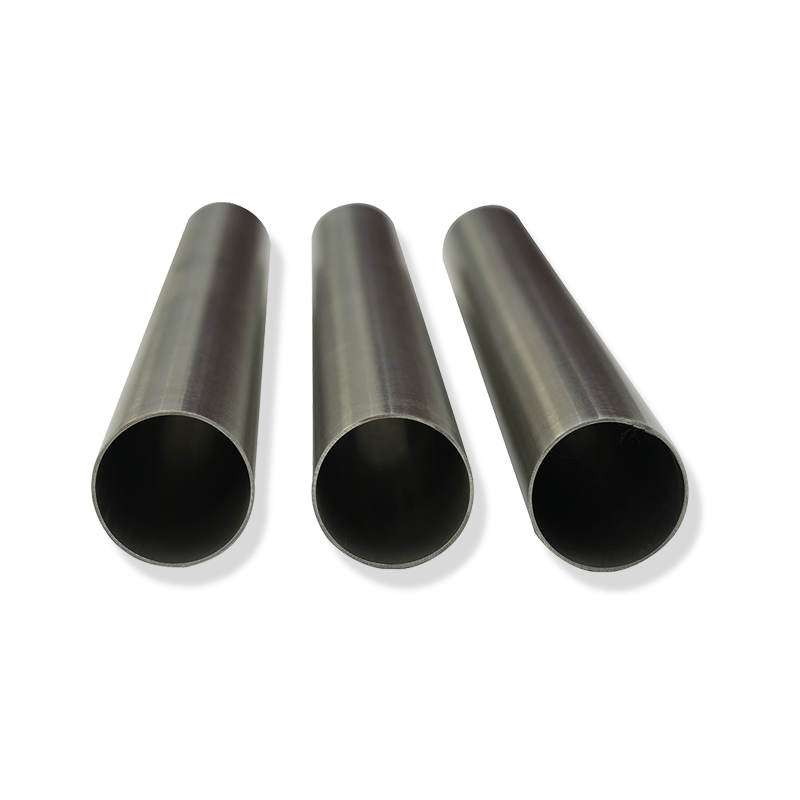 TP439 Titanium-Stabilized Ferritic Stainless Steel PipeA 17% chromium ferritic grade stabilized with titanium, providing better weldability and formability than 430. It is well suited for automotive exhaust systems and other elevated-temperature applications where welding without intergranular corrosion risk is needed.View Product →
Ferritic tubing is often selected for automotive exhaust systems, heat exchanger tubing, electrical enclosures, and interior architectural parts. Because it contains little or no nickel, its price is typically more stable than austenitic grades. If your application does not need the extremely high ductility or non-magnetic property of austenitic steel, ferritic tubing can perform just as well at a lower material cost.
Martensitic Stainless Steel Tubing
Martensitic stainless steel is the third classic type of stainless steel tubing. It is chosen when high strength, hardness, and wear resistance matter more than maximum corrosion resistance. Martensitic grades contain chromium, moderate to high carbon, and little or no nickel. This composition allows the material to be hardened by heat treatment.
Composition and Behavior
Martensitic stainless steels contain roughly 11.5 to 18 percent chromium and a higher carbon content than austenitic or ferritic grades. In the annealed condition, the structure is relatively soft and machinable. After quenching and tempering, the structure transforms into hardened martensite, giving the tube high tensile strength and resistance to abrasion.
The trade-off is clear. Martensitic tubing does not offer the same general corrosion resistance as austenitic tubing in aggressive chemical environments. It is also more difficult to weld without careful preheating and post-weld heat treatment. But for mechanical components that need a hard, strong surface, martensitic stainless steel is often the right answer.
Common Martensitic Grades and Typical Uses
- TP410: Valves, pump shafts, fasteners, and general wear-resistant components.
- TP420: Cutlery-grade martensitic steel used where higher hardness is needed.
- TP431: Combination of strength and moderate corrosion resistance for industrial components.
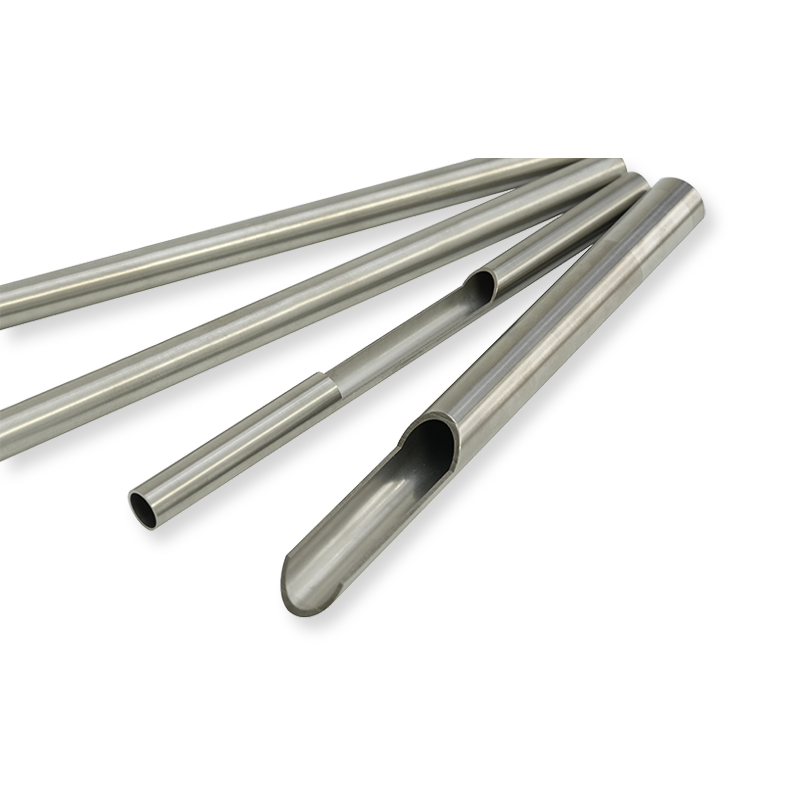 TP410 Engineering Martensitic Stainless Steel PipeA hardenable, magnetic martensitic grade offering high strength and wear resistance, though lower corrosion resistance than austenitic types. It suits mechanical components like hydraulic cylinders and valve parts, with heat treatment required for critical welded zones.View Product →
Martensitic tubing is common in rotating equipment, hydraulic cylinders, valve components, and instruments that require a hard wearing surface. If the tubing will be welded, the specification must include the appropriate heat treatment so the weld zone does not become too hard or brittle. A reputable mill should ask for the final hardness and mechanical requirements before recommending a specific martensitic grade.
Visual Comparison of the Three Families
The following chart gives a rough visual comparison for four buying criteria. The numbers are relative ratings, not exact engineering values. They help you see patterns quickly before you move to a detailed material data sheet.
Best for corrosion
Austenitic tubing is the default choice for chemical, food, marine, and pharmaceutical environments. Pick it when pitting, uniform corrosion, or contamination are the main risks.
Best for magnetic parts
Ferritic and martensitic tubing are magnetic. If your assembly uses magnetic sensors or requires a magnetic response, choose one of these families instead of austenitic.
Best for hardness and strength
Martensitic tubing provides the highest strength and hardness after heat treatment. Choose it for shafts, valve parts, and mechanical components exposed to wear.
How to Choose Among the Three Types
There is no single “best” stainless steel tubing grade. The right choice depends on the fluid, temperature, pressure, fabrication method, and expected service life. The fastest way to narrow the selection is to answer four questions in order.
1. Define the Working Environment
Start with the media that will contact the tube. Clean water, food products, steam, seawater, acids, caustic solutions, and high-chloride environments all place different demands on the material. If chlorides are present and stress corrosion cracking is a risk, austenitic grade 316 or a duplex grade may be safer than 304. If the medium is mildly corrosive and the tube is magnetic, ferritic grades can be a cost-effective option.
2. Determine Mechanical and Fabrication Requirements
Consider the final shape of the part. Will the tube be bent, flared, welded, or polished? Does it need to hold pressure at elevated temperature? Does the assembly require a hard wear-resistant surface? Austenitic tubing handles bending and welding better than the other two families. Martensitic tubing handles wear and high mechanical loads better. Ferritic tubing sits in between, with good strength and magnetic properties but more limited weldability.
3. Match the Exact Standard and Grade
International projects often specify an ASTM, EN, DIN, JIS, GOST, or GB standard. Each standard defines the chemical composition, mechanical properties, dimensions, and testing requirements. For example, a buyer in Europe may order EN 10216-5, while a buyer in North America may order ASTM A269 or ASTM A312. A manufacturer that produces to multiple standards will help you avoid confusion. We make tubing to ASTM, EN, DIN, JIS, GOST, and GB at our factory in Jiangsu, China.
4. Verify Dimensional Accuracy and Finish
Stainless steel tubing is ordered by outside diameter, wall thickness, length, and sometimes by internal surface finish. For instrumentation and hydraulic systems, dimensional tolerance and ovality matter as much as the grade. For sanitary and food-grade lines, surface roughness and cleanliness matter more. Always confirm the acceptable tolerance range before production starts, especially for small-diameter or thin-wall tubing.
Decision Checklist
- Identify the media and operating temperature.
- Check if chlorides, acids, or caustic chemicals are present.
- Confirm whether the tube must be magnetic.
- Define the required tensile strength, hardness, and impact toughness.
- Determine whether the tube will be welded, bent, or cold-formed.
- Select the governing standard and grade designation.
- Specify outside diameter, wall thickness, length, and finish.
- Request material certificates and any required inspection.
Beyond the Three Core Families
Although austenitic, ferritic, and martensitic are the three basic types, real-world specifications often move beyond them. As a mill, we see growing demand for duplex stainless steel, super austenitic stainless steel, and nickel-based alloy tubing. These materials solve problems that the three standard families cannot handle alone.
Duplex Stainless Steel Tubing
Duplex grades like S31803, S32205, S32304, S32750, and S32760 combine an austenitic-ferritic microstructure. They offer higher strength than most austenitic grades and excellent resistance to chloride stress corrosion cracking. Duplex tubing is widely used in offshore oil and gas, chemical processing, desalination, and heat exchanger applications.
Super Austenitic and Nickel Alloy Tubing
Super austenitic grades such as 904L and S31254 offer very high corrosion resistance in acids and seawater. Nickel alloys such as Monel 400, Inconel 625, Incoloy 800, and GH3030 provide exceptional performance at high temperatures or in aggressive chemical environments. These materials are more expensive and harder to produce, but they extend the possible service life of critical equipment.
When you work with a manufacturer that offers these materials, you can simplify your supply chain. Instead of using one supplier for austenitic tube and another for duplex or nickel alloy tube, you can place a range of material requirements with one production facility. That helps with consistent quality, traceability, and delivery coordination.
Production, Inspection, and Ordering Considerations
The grade is only part of the specification. How the tube is produced and inspected determines whether it will meet your real service requirements. Stainless steel tubing can be made seamless or welded, and each route has different advantages.
Seamless versus Welded Tubing
Seamless tubing is produced by extruding or rotary piercing a solid billet, then cold drawing or hot finishing to the required dimensions. It has no longitudinal weld seam, which makes it the preferred choice for high-pressure and high-temperature applications. Welded tubing is formed from strip and welded longitudinally. It can offer tighter wall tolerances and lower cost, but the weld zone must be considered for critical services.
Surface Condition and Finishing
The surface finish affects corrosion resistance, cleanliness, and appearance. The common finishes for stainless steel tubing include solid solution pickling, bright annealing, and electropolishing. Pickled tubes have a dull, clean surface without scale. Bright annealed tubes have a smooth, reflective surface produced by annealing in a controlled atmosphere. Electropolished tubes offer the lowest surface roughness and are often used in food, pharmaceutical, and precision instrumentation applications.
For applications that need a clean, oxide-free surface, precision bright annealed austenitic tubes are a reliable choice. We produce them in a range of small and medium diameters with close dimensional control.
Dimensional Range and Tolerances
A capable manufacturer should be able to tell you the exact production limits before you place an order. At Jend Tube, our seamless tube range covers outside diameters from 3.18 mm to 406.4 mm, wall thicknesses from 0.3 mm to 20 mm, and lengths up to 25,000 mm. These limits allow us to handle small-diameter instrument tube, heavy-wall pressure tube, and extra-long heat exchanger tubing.
| Parameter | Available range |
|---|---|
| Outside diameter | 3.18 mm to 406.4 mm |
| Wall thickness | 0.3 mm to 20 mm |
| Length | up to 25,000 mm |
| Surface condition | pickled, bright annealed, electropolished |
| Delivery form | straight length, U-bent, coil |
Testing and Documentation
For critical service, you should confirm what testing the mill will perform. Common inspections include chemical composition analysis, tensile testing, hardness testing, hydrostatic testing, eddy current testing, and PMI verification. You should also define whether you need an EN 10204 3.1 material certificate, a full mill test certificate, or third-party inspection. We hold ISO 9001, Chinese pressure equipment certification, and EU PED certification, which cover the quality systems most international buyers require.
Working Directly with the Manufacturer
When you order directly from a mill, you have more control over material selection, production scheduling, and inspection. You can ask for a specific heat lot, a tighter tolerance, a custom length, or a special surface finish. Direct communication also helps when a project changes because the mill can adjust the production plan faster than a trader or distributor.
Frequently Asked Questions
What are the three types of stainless steel tubing?
The three main types are austenitic, ferritic, and martensitic stainless steel tubing. Austenitic grades like 304 and 316 are non-magnetic and highly corrosion resistant. Ferritic grades like 430 and 439 are magnetic and contain little or no nickel. Martensitic grades like 410 are magnetic and can be hardened for high-strength applications.
Which type is best for seawater and chloride exposure?
Austenitic grade 316 and super austenitic grades such as 904L are more resistant to pitting and chloride attack than standard ferritic and martensitic grades. For severe seawater or offshore service, duplex stainless steel tubing is also a strong choice because it combines high strength with stress corrosion cracking resistance.
Is 304 stainless steel tubing magnetic?
In the annealed condition, austenitic 304 tubing is normally non-magnetic. After cold drawing or bending, some magnetic response can appear because the structure changes slightly under cold work. This is not a defect and does not reduce corrosion resistance in most applications.
Can ferritic stainless steel be welded?
Yes, but the grade matters. Stabilized ferritic grades like TP439 and TP444 are easier to weld than unstabilized 430. Welding procedures should be controlled to prevent excessive grain growth in the heat-affected zone. For welded ferritic tubing, always discuss the service conditions with the mill before production.
What does TP mean in grades like TP304 or TP316?
TP stands for tube product in many ASTM stainless steel specifications. It indicates that the grade designation applies to tubing or pipe products. You will often see it in standards like ASTM A269 and ASTM A312, where the chemical composition and mechanical requirements are defined for seamless and welded stainless tubing.
How do I know whether to order seamless or welded tubing?
Seamless tubing is the standard choice for high-pressure, high-temperature, and critical service applications because it has no longitudinal weld. Welded tubing is generally more economical and can offer tighter wall tolerances, but the weld area requires careful evaluation. When the fluid is corrosive or the pressure is high, most engineers choose seamless stainless steel tubing.
Bottom Line
Start with the service environment, then choose the material family, then refine the grade, standard, dimensions, and finish. Austenitic tubing gives you the broadest corrosion resistance and formability. Ferritic tubing gives you a magnetic, lower-nickel option for less aggressive service. Martensitic tubing gives you hardness and strength where wear resistance is the main requirement.
At Jend Tube, we help buyers and engineers turn these requirements into seamless stainless steel tubing. We produce austenitic, ferritic, martensitic, duplex, super austenitic, and nickel alloy tubes in a wide range of sizes and finishes. If you need a manufacturer that understands both metallurgy and practical production limits, we are ready to discuss your specification.