Search
 한국어
한국어 русский
 عربى
عربىStainless steel tubing keeps 300-bar hydraulic systems working, carries high-pressure steam in boiler plants, and supports offshore risers in saltwater. But "how strong is stainless steel tubing?" has no single answer. A Type 304 tube and a super-duplex S32750 tube are both stainless steel, yet their yield strength can differ by more than 300 MPa. The practical question is not a general one: it is which grade, which wall thickness, and which manufacturing route deliver the strength your application actually needs.
This article compares tensile strength, yield strength, burst pressure, and fatigue behavior across the most common stainless steel tubing grades, and explains how to use those numbers to select a tube with confidence.
What "Strength" Means for Stainless Steel Tubing
Strength is not one number. Depending on the load case, engineers check four different values:
- Tensile strength (Rm) – the maximum stress the tube can carry before fracture. It is the ultimate limit and is commonly specified in MPa or psi.
- Yield strength (Rp0.2) – the stress at which the tube takes a permanent 0.2% deformation. This is the value used for allowable stress calculations in most design codes.
- Working and burst pressure – for tubes carrying fluids, strength is expressed as internal pressure. Instrument-grade tubing is typically rated at four times the working pressure, so burst pressure defines the safety margin.
- Fatigue strength – the stress level the tube can survive for a given number of cycles. This matters for automotive, hydraulic, and machinery applications with vibration or cyclic loads.
For most industrial projects, yield strength and burst pressure drive the selection. Tensile strength matters when impact, vibration, or pressure spikes are expected.
Strength by Grade: Comparing the Main Stainless Steel Families
Stainless steel tubing is produced in several metallurgical families, and each family has a different strength profile.
Austenitic grades (304, 316, 321, 347)
Austenitic stainless steels are the most common choice for tubing. Their yield strength is moderate – typically 205 MPa to 310 MPa – but they combine excellent corrosion resistance, ductility, and weldability. Cold working raises their strength substantially: a cold-drawn 304 tube can reach yield strengths above 700 MPa, although a solution anneal is often needed afterward to restore full corrosion resistance.
Duplex grades (S31803, S2205, S32304)
Duplex stainless steels have a mixed austenitic-ferritic microstructure, roughly 50/50, which delivers about twice the yield strength of ordinary austenitic grades. S31803 and S2205 offer a minimum yield strength of about 450 MPa, while lean duplex S32304 starts at 400 MPa. Duplex tubing is a strong candidate for pressure vessels, chemical processing, and offshore lines where both strength and corrosion resistance are required. For a deeper look at when duplex grades make sense, read our guide to high-strength duplex stainless tubing.
Super-duplex grades (S32750, SAF 2507)
Super-duplex grades push yield strength above 550 MPa while maintaining pitting resistance equivalent to higher-alloy austenitics. S32750 is commonly used in seawater systems, subsea equipment, and chemical plants where high mechanical loads meet chloride-rich media.
Martensitic and precipitation-hardening grades
TP410 and related martensitic grades can be heat-treated to very high hardness and strength, but their corrosion resistance is lower than austenitic or duplex grades. They are specified when wear resistance and mechanical strength matter more than corrosion performance.
| Grade | Family | Tensile Strength (MPa) | Yield Strength (MPa) | Elongation (%) |
|---|---|---|---|---|
| TP304 / TP304L | Austenitic | 515 | 205 | 35 |
| TP316 / TP316L | Austenitic | 515 | 205 | 35 |
| TP321 | Austenitic | 515 | 205 | 35 |
| S32304 | Lean duplex | 600 | 400 | 25 |
| S31803 / S2205 | Duplex | 620 | 450 | 25 |
| S32750 | Super duplex | 800 | 550 | 15 |
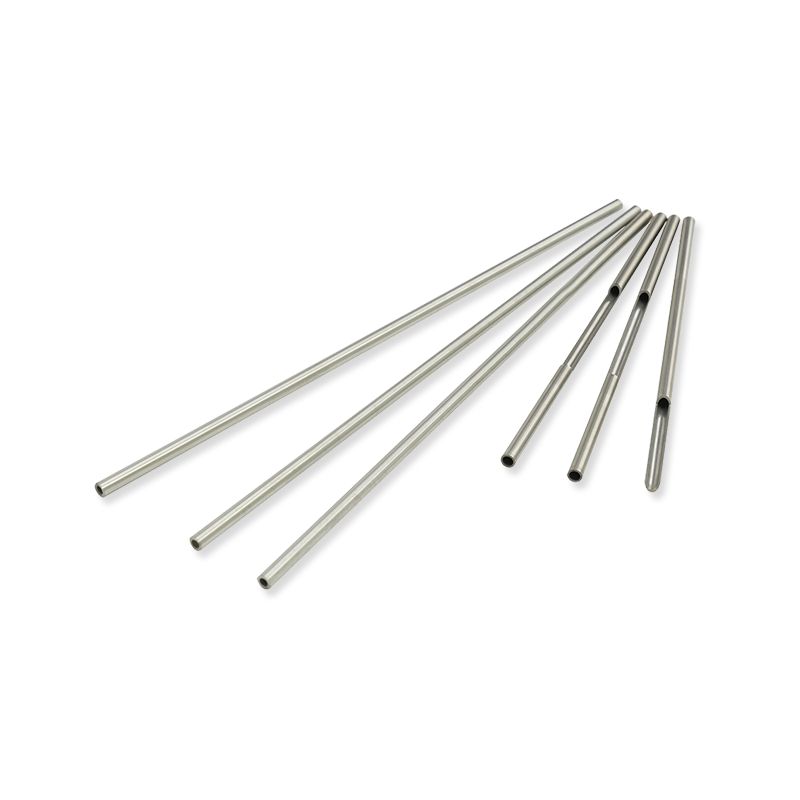 TP316 Series Austenitic Stainless Steel Alloy PipeThis molybdenum-bearing 316 family offers improved chloride resistance over 304. With low-carbon 316L, high-temperature 316H, and stabilized 316Ti variants, it suits welded and high-temperature applications where corrosion performance matters.View Product →
Wall Thickness, Diameter, and the Pressure Equation
Material grade sets the stress limit, but the tube's geometry decides how much pressure it can hold. The relationship is described by Barlow's formula:
P = 2 × S × t / D
where P is the internal pressure, S is the allowable stress, t is the wall thickness, and D is the outside diameter. Doubling the wall thickness doubles the pressure capacity; increasing the outside diameter reduces it proportionally.
The table below shows estimated burst pressures for a 6 mm outside diameter tube with a 1 mm wall, based on minimum tensile strength. Real burst values vary with manufacturing tolerances, temperature, and exact material chemistry, so these figures are for comparison rather than final system design.
| Grade | Burst Pressure (MPa) | Working Pressure at 4:1 Safety Factor (MPa) |
|---|---|---|
| TP304 | 171 | 43 |
| TP316 | 171 | 43 |
| S32304 | 200 | 50 |
| S31803 / S2205 | 207 | 52 |
| S32750 | 267 | 67 |
For thin-wall and small-diameter lines, the strength gain from a duplex or super-duplex grade is significant. An ASTM A269 seamless stainless tubing in S2205 can contain roughly 20% more pressure than a 316 tube of the same size, while also offering better resistance to chloride stress corrosion.
Does Manufacturing Affect Strength? Seamless vs. Welded Tubing
Yes. How a tube is made changes its strength, especially under internal pressure and cyclic loading.
Seamless tubing is produced by extruding a solid billet and then cold drawing or cold rolling it to the final size. Because there is no weld seam, the entire cross-section has uniform grain structure and mechanical properties. For high-pressure service, seamless tubing is the default choice in standards such as ASTM A269, ASTM A213, and DIN 17456.
Welded tubing is formed from strip and seam-welded. Modern welding and full solution annealing can produce a weld zone as strong as the base metal, and welded-and-drawn tubes are widely used in structural, automotive exhaust, and food processing applications. However, the weld seam remains a potential fatigue initiation point under cyclic pressure or vibration, and some standards limit welded tubing to lower working stresses.
Cold drawing also raises yield strength. A tube that is cold drawn after welding or annealing can show a yield strength 30–50% above its annealed minimum, at the cost of reduced elongation. If strength is the priority, specify the temper condition explicitly instead of relying on a generic "stainless steel tube" description.
Stainless Steel vs. Aluminum vs. Carbon Steel Tubing
Comparing strength across material types requires context. Aluminum is lighter, carbon steel is cheaper, and stainless steel sits between them on cost but wins on corrosion resistance and elevated-temperature strength.
| Material | Yield Strength (MPa) | Tensile Strength (MPa) | Density (g/cm³) | Corrosion Resistance |
|---|---|---|---|---|
| 304 stainless steel | 205 | 515 | 7.9 | Excellent |
| 6061-T6 aluminum | 276 | 310 | 2.7 | Good, pitting over time |
| A106 Grade B carbon steel | 240 | 415 | 7.85 | Poor, requires coating |
Aluminum offers the best strength-to-weight ratio: 6061-T6 has roughly the same yield strength as 304 stainless at one-third of the weight. But aluminum loses strength quickly above 150°C, and its corrosion resistance in marine or acidic environments cannot match stainless steel. Carbon steel has higher stiffness and is cheaper, but without protective coating it corrodes rapidly in humid or chloride environments. That is why stainless is specified in food, chemical, marine, and pharmaceutical plants.
Designers often select a duplex grade when the application demands both higher strength and good corrosion resistance, because upgrading from 304 to S2205 raises allowable working pressure without increasing wall thickness.
Matching Strength to Real-World Applications
Different industries need different strength profiles. A tube with 205 MPa yield strength is perfectly adequate for a food processing line, but it is not a safe choice for a subsea hydraulic line. Here is how strength requirements map to common applications:
Hydraulic and instrumentation lines
Need high burst pressure, fatigue resistance, and dimensional precision. Seamless austenitic tubing per ASTM A269 is common. Working pressures range from 10 to 100 MPa depending on tube size.
Boilers and heat exchangers
High-temperature creep strength is the key. Grades such as TP321H and TP347H are designed for continuous service above 500°C, where ordinary 304 would lose strength rapidly.
Offshore and subsea systems
Require both high strength and resistance to chloride stress corrosion. Duplex and super-duplex grades such as S31803 and S32750 are standard in risers, flowlines, and process piping.
Automotive exhaust and structures
Need good formability, fatigue strength, and heat resistance. Ferritic grades like TP409 and TP439 are used for exhaust systems; austenitic tubing is selected where higher impact strength is needed.
For chemical processing and offshore applications, duplex grade S31803 offers a balanced combination of strength and corrosion resistance. Its pitting resistance equivalent number is well above 304, and its yield strength is more than double that of standard austenitic tubing.
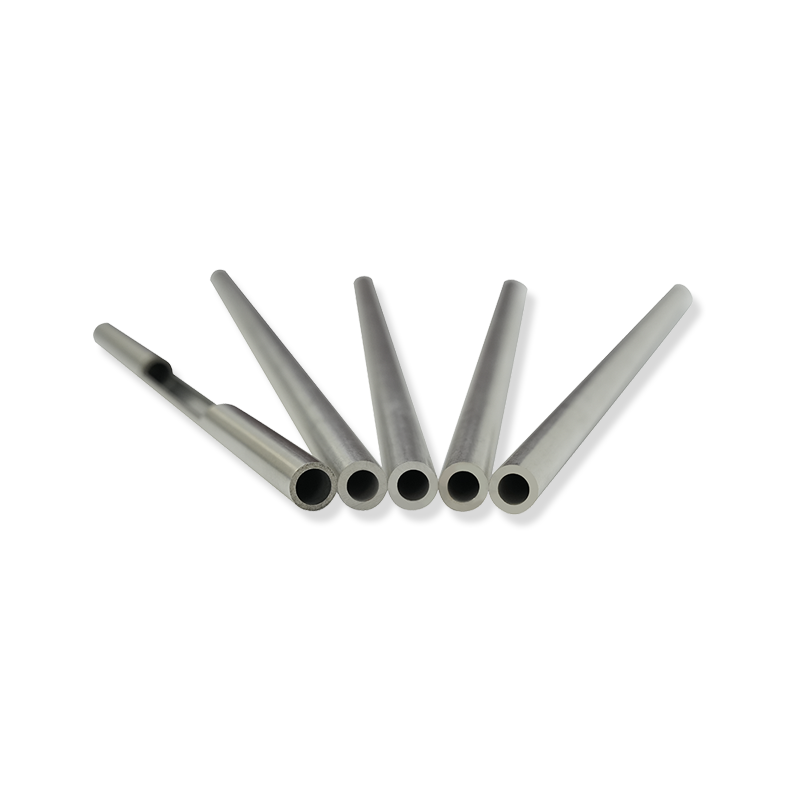 S31803 Duplex Stainless Steel Alloy PipeDuplex grade with balanced strength and corrosion resistance, ideal for chemical and offshore use. Its high chromium, nickel, and molybdenum content protect against pitting and stress corrosion, offering an alternative to standard austenitic tubing.View Product →
How to Choose the Right Strength Level for Your Project
Follow this step-by-step approach when selecting stainless steel tubing based on strength:
- Define the load case. Identify whether the tube is exposed to internal pressure, external pressure, bending, axial tension, or cyclic fatigue. Each case uses a different strength value.
- Determine the design temperature. Strength decreases at elevated temperature, and some grades lose their advantage quickly above 300°C.
- Check the working pressure. Use Barlow's formula or the applicable standard (ASTM A269, EN 10216-5, etc.) to calculate the required wall thickness for the chosen grade.
- Set a safety factor. Instrumentation tubing commonly uses a 4:1 ratio between burst and working pressure. Pressure vessel codes may require lower allowable stresses based on yield or tensile data.
- Review corrosion requirements. Strength is useless if the tube wall corrodes away in service. Match the pitting resistance of the grade to the chloride content and pH of the environment.
When the application demands high mechanical strength and chloride resistance in the same material, super-duplex tubing is the most direct answer. S32750 delivers roughly 2.7 times the yield strength of 304 stainless, so it often allows a smaller wall thickness and a lighter overall structure.
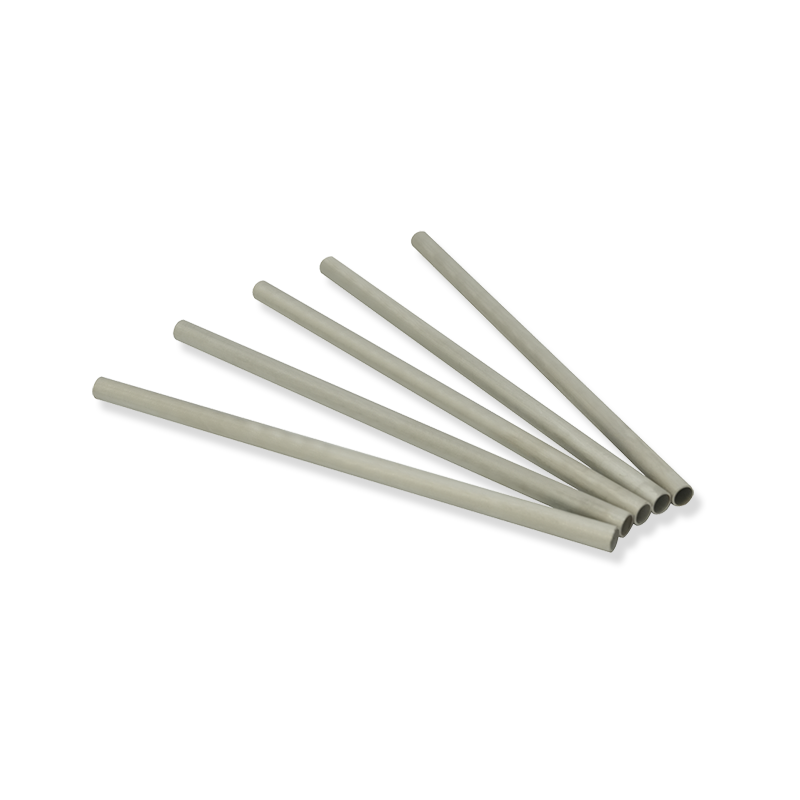 S32750 Super Duplex Steel Seamless PipeCold-drawn and solution-annealed, this super duplex pipe provides high yield strength and excellent pitting resistance. Used in subsea and chemical processing systems, it enables lighter designs compared to standard stainless tubing.View Product →
Frequently Asked Questions About Stainless Steel Tubing Strength
How strong is stainless steel tubing compared with carbon steel?
In annealed condition, 304 stainless has a minimum yield strength of about 205 MPa, which is lower than A106 Grade B carbon steel at 240 MPa. However, duplex stainless steels reach 450–550 MPa yield strength, and cold-worked austenitic tubing can exceed 700 MPa. With comparable wall thickness, duplex or super-duplex stainless tubing is stronger than typical carbon steel tubing, and it eliminates the corrosion allowance that carbon steel requires.
What is the burst pressure of stainless steel tubing?
Burst pressure depends on grade, outside diameter, and wall thickness. A 6 mm OD by 1 mm wall 304 stainless tube bursts at roughly 170 MPa internal pressure. Doubling the wall thickness doubles the burst pressure; doubling the diameter halves it. Always confirm burst pressure with the manufacturer's test certificate or calculate it using the relevant code formula.
Can stainless steel tubing handle high temperature?
Yes, but the grade matters. Standard 304 and 316 stainless steels can operate up to about 870°C in oxidizing conditions, but their strength drops progressively above 400°C. For high-temperature structural applications, stabilized grades such as TP321H and TP347H, or high-alloy grades like Inconel 625, are recommended because they retain useful strength at 600–800°C.
Does cold working make stainless steel tubing stronger?
Cold drawing increases yield and tensile strength significantly. A cold-worked 304 tube can show yield strength above 700 MPa, compared with 205 MPa in annealed condition. The trade-off is reduced elongation and, in some grades, lower corrosion resistance. If the tube will be used in a corrosive environment, solution annealing after cold working is usually required.
How do I choose between seamless and welded tubing on strength?
For static pressure loads, a high-quality welded and cold-drawn tube can match the strength of a seamless tube. For cyclic pressure, vibration, or high-temperature service, seamless tubing has an advantage because there is no weld seam where fatigue cracks can initiate. Most pressure and instrumentation codes require seamless construction for the most critical services.