Search
 한국어
한국어 русский
 عربى
عربىWhen a process engineer in a chemical plant notices pin-hole leaks on a shell-and-tube heat exchanger after only two years of service, the discussion quickly moves from “which gasket” to “which tube material.” The same thing happens when a food plant owner plans a new clean-in-place (CIP) system and wants to avoid weld contamination inside the lines. In both cases, stainless steel tube is the answer that comes up first, because the tube is selected for specific conditions: corrosion, pressure, temperature, and cleanability.
Stainless steel tube, often abbreviated as SS tube, is used wherever a fluid, gas, or steam must be carried while the tube itself resists rust, chloride attack, high temperature, or process fouling. The minimum 10.5% chromium content in stainless steel forms a passive oxide layer that self-repairs when oxygen is present. That film separates stainless steel from carbon steel in demanding service. The practical question is not “Is stainless steel good enough?” but “Which grade of tube should be specified for this process environment?”
How Stainless Steel Tube Is Used in Major Industries
SS tube is specified in almost every processing industry. The sections below focus on applications that affect engineering decisions, including the grade recommended for each environment and the main reason it is selected.
Chemical Processing and Fine Chemical Plants
Chemical plants use stainless steel tube for lines that carry sulfuric acid, nitric acid, caustic soda, chlorides, solvents, and reactive intermediates. The choice of grade depends on the concentration and temperature of the medium. 304L and 316L are the workhorses for general chemical service, while 316Ti is often preferred when the process involves repeated heating and cooling. Nickel-based alloy tubes such as Inconel 625 are reserved for hot acids and highly corrosive mixed streams. For plant engineers, the first question is usually whether the tube has been properly solution-annealed after the final cold working pass, because a poorly heat-treated tube will fail long before its calculated service life.
Oil, Gas, and Offshore Platforms
Offshore production platforms rely on stainless steel tube for subsea control lines, hydraulic lines, chemical injection lines, and instrument tubing. These systems are exposed to seawater, high pressure, and hydrogen sulfide in sour environments. Austenitic grade 316L is common, but duplex stainless steels such as S31803 and S2205 are increasingly specified because of their higher strength and better resistance to chloride stress corrosion cracking. In deeper wells and harsh offshore conditions, super duplex S32750 tubes are used where pitting resistance is critical. Material traceability and pressure ratings matter more than price in this sector, since tube failure can compromise an entire production system.
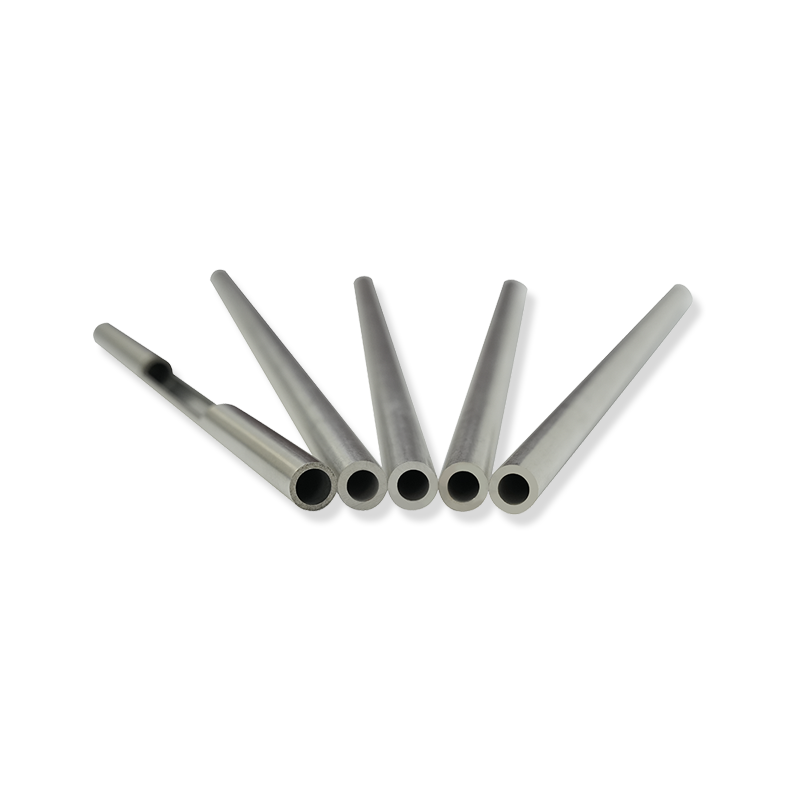 S31803 Duplex Stainless Steel Pipe for Offshore Corrosion ResistanceIdeal for offshore platforms requiring high strength and resistance to chloride stress corrosion cracking, this duplex grade offers superior pitting resistance compared to 316L in harsh seawater environments.View Product →
Food, Dairy, and Beverage Lines
Food and beverage plants use stainless steel tube for milk lines, brewing systems, juice processing, CIP lines, and hygienic steam supply. The surface finish is the key specification: bright-annealed or electro-polished surfaces prevent bacteria from attaching to the inner wall. While 304L is common in the food industry, 316L is preferred when products are acidic or contain salt. The choice between welded and seamless tube in this sector depends on installation requirements. Welded tube can be perfectly hygienic when the weld is properly treated, but seamless tube is often chosen for instrument lines and high-purity applications where uniform microstructure matters.
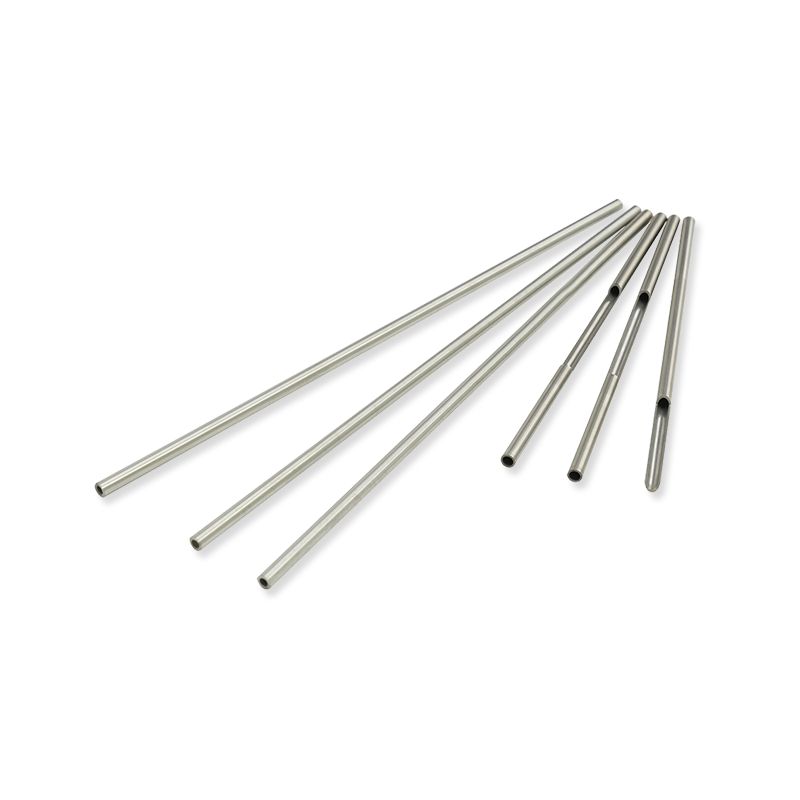 TP316/316L/316H/316Ti Austenitic Stainless Steel Pipe for SeawaterThis molybdenum-bearing grade is the minimum for seawater contact in desalination plants, providing enhanced pitting and crevice corrosion resistance. 316L variant prevents intergranular corrosion after welding.View Product →
Water Treatment and Desalination
Desalination plants use stainless steel tube in high-pressure reverse osmosis lines, brine heaters, evaporators, and seawater intake systems. Chloride ions attack ordinary 304 quickly, so 316L is usually the minimum grade for seawater contact. In hotter streams and concentrate lines, super austenitic grades like 904L or S31254 and duplex grades provide better resistance to pitting and crevice corrosion. Tube diameter and wall thickness must be calculated against the operating pressure, because a high-pressure desalination line can face more than 60 bar of pressure on a continuous basis.
Automotive, HVAC, and Refrigeration
Modern vehicles contain stainless steel tube in exhaust systems, brake lines, fuel lines, and precision hydraulic components. Ferritic grades such as TP409 and TP439 are widely used in exhaust systems because they resist oxidation and thermal fatigue while remaining easy to form. For precision automotive tubing, the outer diameter tolerance may be held within a fraction of a millimetre because the tube is connected to fittings or expanded into valve housings. HVAC equipment uses thin-wall stainless steel tube for heat exchange coils and refrigeration lines, where pressure tightness and clean internal surfaces are mandatory. The same reliability requirements apply to small instrument air lines and process control panels, where manufacturers routinely specify small-diameter stainless steel tubing to keep the layout compact without losing mechanical strength.
Boilers, Superheaters, and Heat-Exchanger Systems
Power plants and industrial boilers use stainless steel tube for superheaters, reheaters, economizers, and heat exchangers. These components operate at elevated temperatures where creep resistance becomes the main design consideration. Grades TP304H, TP321H, and TP347H offer stabilized structures that resist sensitization during prolonged exposure. Nickel-based alloy tube such as Inconel 625 or GH3030 is found in heat exchangers that process hot corrosive gases or handle severe thermal cycling. A metallurgical certificate and heat treatment record are essential for this application, because the tube will spend its life at temperatures where any inconsistency in grain size accelerates failure.
 Inconel 625 Nickel Alloy Tubing for High-Temperature Heat ExchangersWith excellent creep resistance and strength at elevated temperatures, this nickel-chromium-molybdenum alloy suits severe thermal cycling and hot corrosive gases in power plant heat exchangers.View Product →
| Industry | Application / medium | Common tube grade | Critical requirement |
|---|---|---|---|
| Chemical processing | Acids, chlorides, solvents | 304L, 316L, 316Ti | Intergranular corrosion resistance |
| Oil, gas and offshore | Control lines, hydraulic lines, seawater | 316L, S31803, S2205 | Chloride pitting resistance |
| Food, dairy and beverage | Milk, beer, CIP fluids | 304L, 316L | Sanitary surface finish |
| Water desalination | Seawater, brine | 316L, 904L, S31254 | Chloride pitting, crevice attack |
| Automotive | Exhaust, brake lines, fuel lines | TP409, TP439, 304L | Formability, oxidation resistance |
| Boilers and heat exchange | Steam, hot gases, thermal fluids | TP321H, TP347H, Inconel 625 | Creep strength, thermal fatigue |
Stainless Steel Tube vs. Stainless Steel Pipe: Why the Difference Matters
In engineering specifications, “tube” and “pipe” are not interchangeable terms. A pipe is defined by nominal pipe size and schedule, which means its outside diameter is standardised for connection to valves and flanges. A tube is defined by outside diameter and wall thickness, which means the manufacturing tolerance is much tighter. This distinction matters in application because instrumentation, hydraulic systems, heat exchangers, and boiler tubes rely on precise dimensions for sealing and thermal performance. When a drawing requests stainless steel tube, the supplier must control the outside diameter within a small tolerance, because the tube may be expanded, swaged, or welded into a tube sheet.
| Dimension basis | Tube | Pipe |
|---|---|---|
| Outside diameter | Precise millimetre dimensions | Nominal pipe size (NPS) |
| Wall thickness | Exact mm value / inches | Schedule number |
| Tolerance | Tight | Moderate |
| Typical use | Heat exchangers, instrumentation, hydraulics | Long-distance fluid transport |
| Manufacturing standard | ASTM A213, ASTM A269, EN 10216-5 | ASTM A312, JIS G3459 |
When a project specifies NPS, 316L stainless steel pipe is the more obvious product. When a design uses a pump connection or an instrument loop, a stainless steel tube with a defined outside diameter and a hydrated inside surface is more appropriate. Tube is also the standard form for coil sections and U-bent heat exchanger tubing because the exact outside diameter enables reliable bending and welding.
Stainless Steel Tube Grades: Which One Fits Your Process?
The grade of stainless steel tube determines corrosion resistance, mechanical strength, weldability, price, and service life. The table below shows the most common grades, their alloy families, typical applications, and the selection note that engineers tend to focus on.
| Grade | Alloy family | Typical applications | Selection note |
|---|---|---|---|
| 304 / 304L | Austenitic | Food lines, water, general chemical | Low cost, good general corrosion resistance |
| 316 / 316L | Austenitic | Marine, chloride media, pharma | 2% molybdenum improves chloride resistance |
| 316Ti | Austenitic | Chemical process, high-temperature service | Titanium stabilisation prevents sensitisation |
| 321 / 321H | Austenitic | Superheaters, expansion joints | Good creep resistance above 500 °C |
| 347 / 347H | Austenitic | Boilers, refinery heaters | Niobium stabilisation for high-temperature service |
| S31803 / S2205 | Duplex | Offshore, desalination, chemical pressure vessels | Higher strength than 316L with good chloride resistance |
| S32750 | Super duplex | Severe marine, sour service | Very high pitting resistance |
| Inconel 625 | Nickel-based | Hot acids, heat exchangers, aerospace | High temperature strength and resistance to corrosive media |
For most projects, the selection starts with the fluid. If the process contains carbon steel, plain water, or dry gases, 304L is often enough. If the environment includes salt water, bleach, or acidic cleaning agents, 316L or 316Ti is safer. If the design pressure is high and weight is a concern, a duplex grade such as S31803 allows a thinner wall because its yield strength is roughly twice that of 316L. Finally, if the temperature exceeds 400 °C for long periods, the stabilized grades TP321H and TP347H are preferred over non-stabilised austenitic grades.
Manufacturing Capability and Specification Checklist
When you buy stainless steel tube, you are buying both material and manufacturing quality. A good supplier should be able to explain the production route and provide documented evidence of every step. Use the following checklist when reviewing a quotation.
- Seamless or welded: specify the manufacturing route required by your application.
- Surface condition: mill finish, bright annealed, pickled, or electro-polished.
- Heat treatment: solution annealing temperature and method should be recorded.
- Testing: mechanical test, hardness test, hydrostatic test, eddy current test, or ultrasonic test.
- Dimensions: outside diameter, wall thickness, straightness, and length tolerance.
- Certification: EN 10204 3.1 material certificate or other required documentation.
- Standard compliance: ASTM, EN, DIN, JIS, GOST, or GB as called out in the project specification.
It is also worth confirming that the manufacturer has a complete production cycle from raw material to finished tube. A supplier that offers both small-diameter stainless steel tubing and extra-long stainless steel tubing from a single factory can simplify your procurement and reduce material waste. When a manufacturer also controls solution annealing, pickling, and final inspection in their own facility, traceability is easier to maintain and responsibility is clearly defined.
Jend Tube is one such manufacturer, with a seamless tube production range covering 3.18 mm to 406.4 mm outside diameter, wall thickness from 0.3 mm to 20 mm, and lengths up to 25 m. This range allows projects to source small-diameter stainless steel tubing for precision control loops and extra-long stainless steel tubing for long process lines from one supplier. The company produces to ASTM, EN, DIN, JIS, GOST, and GB standards, and it holds ISO 9001, domestic pressure vessel, and EU PED certifications for international pressure applications.
When a project requires special dimensions or a non-standard grade, be sure to verify that the factory can still maintain the same heat treatment and testing discipline. Custom stainless steel tube is only useful when the same quality controls are applied as in a standard production run.
Choosing the right stainless steel tube is a specification exercise, not a brand exercise. Start with the fluid, define the temperature and pressure, and confirm the fabricator’s tolerance requirements. Then select the grade and manufacturing route that meet those conditions. That approach is what allows a stainless steel tube installation to keep working quietly for decades.
Frequently Asked Questions About Stainless Steel Tube Uses
What is stainless steel tube used for?
SS tube is used to carry liquids, gases, and steam in chemical plants, food processing lines, offshore platforms, water treatment plants, and power generation facilities. The exact grade and manufacturing method depend on corrosion, pressure, temperature, and cleanliness requirements.
What is the difference between 304 and 316 stainless steel tube?
304L contains 18% chromium and 8% nickel, while 316L adds about 2% molybdenum. The molybdenum gives 316L better resistance to chlorides, acids, and saltwater. Marine, pharmaceutical, and chemical process applications generally specify 316L because it can cope with a wider range of corrosive media.
Can stainless steel tube be used for seawater service?
Yes, but the grade must be selected carefully. Standard 304 is not reliable for continuous saltwater contact. 316L is the minimum grade for moderate seawater exposure, while duplex grades such as S31803, S2205, and super duplex S32750 are used for more severe marine service and high-chloride environments.
When should I specify seamless stainless steel tube instead of welded tube?
Seamless tube is specified when creep, pressure integrity, or fatigue life is critical. Typical applications are superheater tubes, hydraulic lines, reactor coils, and instrument tubing. Welded tube is acceptable for lower-pressure sanitary systems, structural components, and conditions where the same steel grade provides enough corrosion performance.
How is food-grade stainless steel tube surface finish specified?
Food processing plants usually require a bright-annealed or electro-polished surface with a roughness of 180 to 220 grit, or better. This finish avoids bacterial adhesion and meets clean-in-place requirements. 304L and 316L are the standard grades for food-contact surfaces.