Search
 한국어
한국어 русский
 عربى
عربىWhy Cutting Stainless Steel Tube Is Different from Carbon Steel
When a stainless steel tube is cut with the wrong tool, the result is predictable: a slanted end, heavy burrs, or a band of blue heat tint around the cut. The fix is not brute force. How to cut stainless steel tube cleanly comes down to matching the tool to the tube's diameter and wall thickness, choosing a blade suited to the alloy grade, and following a disciplined process from marking to deburring.
The six methods below cover cutting stainless steel tubing from thin-wall instrument lines to heavy process pipe, and each one accounts for how the material behaves under the blade.
Stainless steel does not cut like mild steel. Its tensile strength runs 50 to 70 percent higher, while thermal conductivity is about one-third lower, so more heat concentrates at the blade edge. Work hardening makes it worse: austenitic grades such as 304 and 316 harden almost instantly at the point of deformation. A blade that dulls begins to rub instead of cut, and the hardened surface ruins the next pass. A blade that slices carbon steel all day can fail on stainless in minutes.
Work hardening also drives the three most common cutting complaints. Burrs form because the material deforms instead of shearing cleanly. Heat tint appears because low thermal conductivity traps heat in a thin surface layer. Deformed ends happen when excessive force meets a thin wall before the cut is complete.
Choosing the Right Cutting Method by Tube Size and Wall Thickness
There is no single best way to cut a stainless steel tube. Among stainless tube cutting methods, the right choice depends on outside diameter and wall thickness. Match the tool and the cut goes smoothly; mismatch them and you fight the material on every pass.
- Rotary tube cutter — Best for thin-wall tube up to about 25.4 mm OD. Clean, burr-free cut with no sparks. Not for heavy walls or large diameters.
- Hacksaw with bimetal blade — Good for one-off cuts up to about 50.8 mm OD using a 24 to 32 TPI blade. Slow, and the end needs deburring.
- Angle grinder with cut-off wheel — The common workshop choice for tube from 12.7 mm to 76.2 mm OD. A 1 mm thick stainless-specific disc cuts fast with a narrow kerf. Produces sparks; heat tint can appear if you dwell.
- Band saw — Best for repeated cuts when squareness matters. A bimetal blade at 10 to 14 TPI gives straight ends. Misaligned guides cause blade drift.
- Abrasive cut-off saw — Handles heavy-wall tube from 25.4 mm OD up to 406.4 mm with walls over 6 mm. Powerful but less precise, with significant heat and burrs at the cut.
- Cold saw — The production-grade option. A carbide-tipped blade running with coolant cuts without heat tint and often leaves an end that needs no secondary work. Higher cost, and the workpiece must be clamped securely.
Tube Wall Thickness and Diameter: The Two Numbers That Decide Everything
Wall thickness, not the OD alone, determines how much force the tube can absorb without collapsing. Measure both before selecting a tool.
- OD below 25.4 mm and wall below 2 mm: rotary cutter or hacksaw. Thin walls buckle easily, so keep clamp pressure and feed force low.
- OD from 25.4 mm to 76.2 mm: angle grinder or band saw. This range covers most handrails, structural frames, and marine fabrications.
- OD above 76.2 mm or wall above 6 mm: abrasive cut-off saw or cold saw. The larger cross-section demands higher power and a rigid setup.
For reference, Jend Tube's seamless production range spans an outer diameter from 3.18 mm to 406.4 mm and wall thickness from 0.3 mm to 20 mm, so every method above applies to a real, orderable product.
Step-by-Step Cutting Guide for Clean, Square Ends
Once the tool matches the tube, follow these five steps. Each one addresses a failure point that would otherwise show up in the finished part.
Measure and Mark with Precision
Measure the required length twice with a tape measure or caliper. For a line that is perfectly perpendicular to the tube axis, wrap a strip of paper around the tube and align its edges. Run the marker along the paper edge to draw a complete circular line. If the line does not meet itself exactly, rotate the paper and re-mark. A square end starts with a square line.
Secure the Tube Properly
Clamp the tube in a bench vise with V-shaped jaws, or pad the jaws with wood blocks to avoid surface indentation. Do not clamp on the area to be cut; the clamp marks remain on the finished part. For tubes longer than one meter, support the free end with a roller stand so it cannot shift mid-cut. Never hold the tube by hand. When the surface finish matters, as with a bright annealed stainless steel tube, use soft jaws and wrap the contact area with clean cloth.
Cut with Controlled, Steady Pressure
This is where most operators push too hard. With an angle grinder, let the weight of the disc do the feeding and keep the disc perpendicular to the tube axis; do not rock it sideways. With a band saw, feed smoothly so the blade removes material at its own pace. With a hacksaw, use a fresh 24 to 32 TPI bimetal blade, with pressure on the forward stroke and almost none on the return. Cutting fluid or wax reduces heat and extends blade life.
Deburr and Dress the Cut End
Inspect the end immediately after the cut. Burrs on the outer edge and inside the bore are normal. Remove outer burrs with a flat file or deburring tool, then clean the inside edge with an internal deburring blade or round file. If the tube will connect to a threaded fitting, add a small outer chamfer so the threads engage smoothly. Deburring prevents hand injuries, ensures fit-up, and reduces stress concentration in welded joints.
Clean Up Heat Tint and Protect the Surface
Heat tint, the yellow-to-blue discoloration near a cut, forms when the surface temperature climbs above roughly 400°C in air. It is usually cosmetic, but in marine or chemical service it can affect corrosion resistance. Remove it with a stainless steel pickling paste or a light pass with a fine polishing wheel. To prevent it, cut at moderate speed, apply coolant or cutting wax, and do not pause mid-cut with the blade sitting in the kerf. Industrial mills apply a similar principle when they solution anneal and pickle tube after hot forming.
How the Stainless Steel Grade Affects Cutting Performance
Grade matters more than most cutting guides admit. A 304 tube and a 2507 super-duplex tube of the same diameter behave completely differently under a cutting tool. Knowing the grade tells you whether a rotary cutter will work or whether you need carbide tooling on a cold saw.
| Family | Typical grades | Cutting behavior | Recommended approach |
|---|---|---|---|
| Austenitic | 304, 316, 321 | Work hardens quickly at the cut edge; dull tools make burrs worse | Sharp bimetal or carbide tooling; moderate speed; coolant for heavy wall |
| Ferritic | 430, 439 | Softer; easier to cut, but burrs peel more readily | Hacksaw or abrasive saw; deburr immediately |
| Martensitic | 410 | Higher hardness and cutting resistance; tools wear faster | Band saw or cold saw with reduced feed rate |
| Duplex | 2205, 2507 | High strength, low thermal conductivity; heat builds fast | Band saw or cold saw with coolant; avoid angle grinders on heavy wall |
| Nickel-based | Inconel 625, Monel 400 | Severe work hardening; dull tools fail rapidly | Cobalt or carbide blades; low speed, steady feed, continuous coolant |
For the austenitic family, including 304 and 316, cut with a sharp blade at a steady speed and never let the tool dwell on one spot. In marine and chemical applications, the 316L stainless steel tube is a frequent choice, and the cutting behavior described here applies to it directly.
 Wholesale TP316L Marine Grade Stainless Steel Tube Factory, Manufacturers - JianAs China TP316L Marine Grade Stainless Steel Tube Manufacturers and Wholesale Factory, Jiangsu Jend Tube Co.,Ltd provides types of TP316L...View Product →
Ferritic grades such as 430 cut more willingly, but a dull blade tears the edge and leaves rough burrs; keep the blade sharp and deburr in the same setup. Martensitic grades like 410 are harder and more abrasion resistant, so expect shorter blade life and reduce the feed rate to preserve the edge.
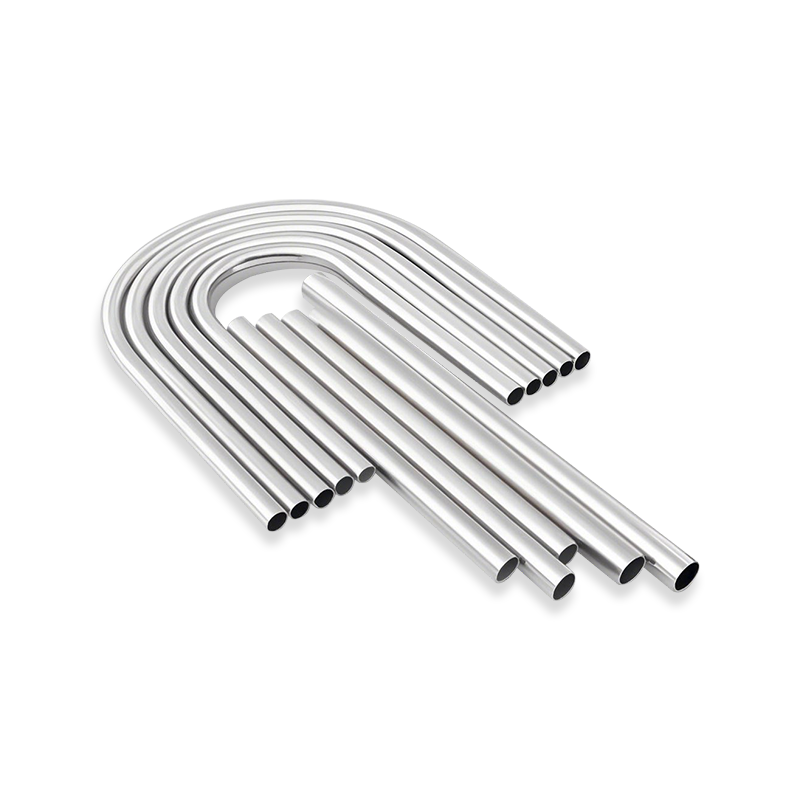
Duplex stainless steels, including 2205, cut slower and generate more heat than austenitic grades. A band saw or cold saw with coolant is the reliable choice. For structural and pressure applications, the S2205 duplex stainless steel pipe is a common specification, and its high strength means slower cutting and additional cooling should be planned for.
 Wholesale S2205 Dual Phase Stainless Steel Pipe Factory, Manufacturers - JiangsuAs China S2205 Dual Phase Stainless Steel Pipe Manufacturers and Wholesale Factory, Jiangsu Jend Tube Co.,Ltd provides types of S2205 Dua...View Product →
Nickel-based alloys are the most demanding category. Do not treat them like ordinary stainless steel. They need sharp cobalt or carbide tools, low cutting speeds, and continuous coolant, so plan them as a separate process.
The bottom line: know your grade before you choose your blade. Matching tooling to material separates a clean 15-minute job from an afternoon of rework.
Common Cutting Problems and How to Fix Them
These are the problems that show up most often in workshops, with the cause and correction for each.
- Out-of-square end. Cause: the tube moved during cutting, or the disc was not perpendicular to the axis. Fix: re-clamp with V-shaped jaws, re-mark using the paper-wrap method, and cut with a new flat disc. Check the end with a machinist's square before removing the part.
- Excessive burrs. Cause: dull blade, excessive speed, or wrong tooth pitch. Fix: replace the blade, reduce RPM where adjustable, and use a 24 to 32 TPI bimetal blade for hand sawing. Deburr inside and out right away.
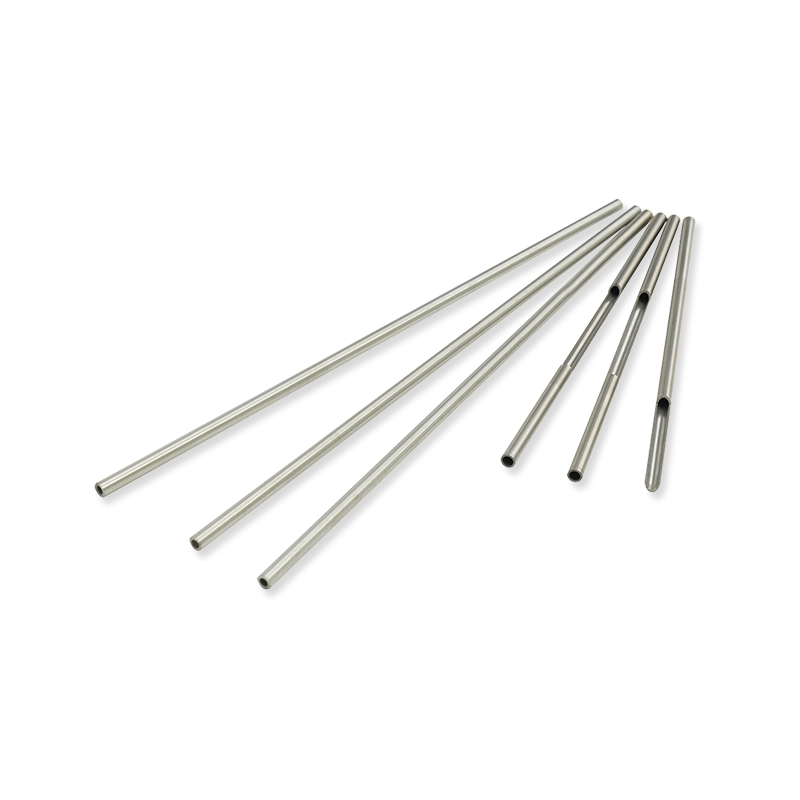
- Wall deformation or collapse. Cause: excessive clamp pressure or a rotary cutter fed too aggressively on a thin wall. Fix: use a V-block or wooden pads, tighten the clamp only enough to stop movement, and feed the cutter lightly. The risk is highest with small-diameter stainless steel tubingWholesale Small Diameter Stainless Steel Tubing Factory, Manufacturers - JiangsuAs China Small Diameter Stainless Steel Tubing Manufacturers and Wholesale Factory, Jiangsu Jend Tube Co.,Ltd provides types of Small Dia...View Product →, where the wall can be as thin as 0.3 mm.
- Heat tint near the cut. Cause: high speed without coolant, or a pause at the end of the cut. Fix: reduce speed, apply cutting fluid, and finish in one continuous motion. Remove existing tint with pickling paste or a fine polishing wheel.
- Cut drifts off the marked line. Cause: starting at an angle or letting the blade wander. Fix: start on the mark with light pressure, cut a shallow groove first, then increase feed. On a band saw, verify blade tracking before starting.
Safety First: What You Need Before Making the First Cut
Cutting stainless steel creates hazards other metals do not. Chips can slice skin, abrasive wheels throw hot sparks, and a broken blade under workpiece stress releases sudden energy.
- ANSI Z87.1-rated safety glasses or a full-face shield
- Hearing protection for angle grinders and abrasive saws
- Flame-resistant clothing, with leather gloves worn only for handling the tube, never near the rotating blade
- A clear work area free of flammable liquids
- Secure clamping: the clamp is a safety device, not just a quality tool
Do not quench a freshly cut end with water. Rapid cooling can alter the microstructure at the cut edge and promote sensitization in austenitic grades. Let the tube cool naturally, or use an air blast when speed matters.
Prepare for Cutting Success: What to Check Before You Start
Inspect the tube before you set up the saw. Check the outer diameter and wall thickness against the order specification; a tube that is out of tolerance will not seat properly in the vise, and square cuts become impossible. Look for surface defects such as deep scratches or pits, which can act as starting points for cracks during cutting or welding. Confirm the grade against the mill certificate before batch work; cutting a heat of 2507 with parameters intended for 304 wastes both material and blades.
Dimensional tolerance is a manufacturing property you feel the moment you clamp the tube. At Jend Tube, the seamless process holds outer diameter and wall thickness within the limits of ASTM A269 and related standards, which is why the material responds predictably to the clamping and cutting steps described above.
Cutting stainless steel tube cleanly comes down to three choices: the right tool for the size, the right blade for the grade, and the discipline to clamp, mark, and deburr every cut. If you need a material that starts with tight dimensional control, choose tube that meets a recognized standard, such as ASTM A269 seamless stainless steel tubing from Jend Tube. The correct tube is the fastest shortcut to a clean cut.