Search

 한국어
 русский
 عربى
Austenitic stainless steel tube becomes a different product once the order moves beyond a generic 304 line item. Chloride level, operating temperature, bending route, pressure class, surface condition, and the standard named on the purchase order all change the grade, heat treatment, tolerance, and test plan. The first useful decision is therefore not the outside diameter. It is the service condition that the tube must survive, followed by the grade and delivery condition that can meet it consistently.
The practical grade map is straightforward: 304 and 304L cover general aqueous, food, and low-chloride service; 316L adds molybdenum for moderate chloride and many process streams; 321 and 347 are stabilised for elevated-temperature duty where sensitisation matters; 310S is selected for high-temperature oxidation resistance; 317L sits between 316L and the super austenitic grades; 904L and S31254 are reserved for aggressive chloride, acid, and seawater-adjacent conditions. Performance then depends on solution annealing, surface finish, cold-work level, and inspection rather than grade alone.
Grade Map for Austenitic Stainless Steel Tube
The 300-series family shares a face-centred cubic structure, good formability, low-temperature toughness, and useful corrosion resistance. The grades are not interchangeable. Carbon content, molybdenum, nitrogen, titanium, and niobium determine which tube survives welding, elevated temperature, chloride pitting, or reducing acid service.
- TP304, TP304L, and TP304H: the general-purpose baseline. 304L limits carbon to improve weld-area corrosion resistance. 304H uses controlled higher carbon for elevated-temperature strength. The grade suffix must match the welding and temperature route, not just the mill's available stock.
- TP316, TP316L, TP316H, and TP316Ti: molybdenum additions improve pitting and crevice corrosion resistance in chloride-bearing process water and chemical streams. 316L is the usual welded and formed choice. 316Ti uses titanium stabilisation for selected high-temperature service.
- TP321, TP321H, TP347, and TP347H: titanium or niobium stabilisation reduces chromium carbide precipitation in the sensitisation range. These grades are common in boiler, superheater, and heat-transfer tubing where welding and 450-900 degrees C exposure occur together.
- TP310S: high chromium and nickel for oxidation resistance and strength at elevated temperature. It is not a general chloride service grade.
- TP317 and TP317L: higher molybdenum than 316L, used where pitting resistance needs a step up without moving to a super austenitic alloy.
- 904L and S31254: high-alloy austenitic options for aggressive chloride, acid, and marine-adjacent service. They require the right welding consumables and qualified procedures, not only a higher purchase price.
Grade selection should start with the failure mode the project is trying to avoid. If the risk is chloride pitting in cooling water, molybdenum and PREN matter. If the risk is sensitisation during welding or high-temperature exposure, carbon control and stabilisation matter. If the risk is acid attack, both alloy content and oxidising condition matter. A tube that is correct for one duty can be over-specified and still fail in another.
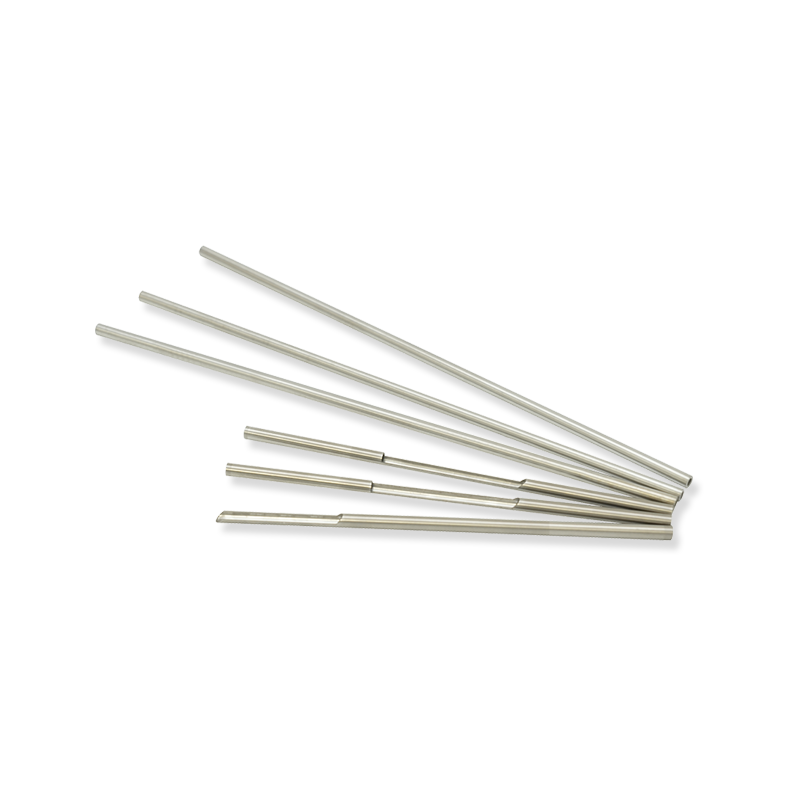 TP304, TP304L, and TP304H Austenitic Stainless Steel PipeCompare standard, low-carbon, and high-carbon 304 grades for corrosion resistance, weldability, and high-temperature service in seamless tube.View Product →
The Metallurgy Behind Consistent Tube Performance
Austenitic stainless steel tube is purchased in the annealed condition for a reason. Solution annealing dissolves carbides and secondary phases, then rapid cooling retains a clean austenitic structure. Slow cooling or an inadequate anneal can leave a tube that looks correct on the outside but performs poorly after welding, bending, or exposure to chlorides.
Structure
The face-centred cubic lattice gives high ductility, good cryogenic toughness, and strong work-hardening. The tube is normally non-magnetic in the annealed condition, although cold drawing and bending can introduce mild magnetic response.
Chemistry
Nickel stabilises the austenite. Chromium forms the passive film. Molybdenum improves pitting resistance. Nitrogen raises strength and pitting resistance. Titanium and niobium stabilise carbon in elevated-temperature grades.
Condition
Cold work raises strength and lowers elongation. Annealing restores ductility. Pickling removes heat-treatment scale. Bright annealing controls surface chemistry. Electropolishing changes roughness and cleanability rather than bulk alloy content.
Why Sensitisation Still Matters
When unstabilised austenitic tube is held in the 450-900 degrees C range, chromium carbides can precipitate at grain boundaries. The surrounding matrix loses chromium, and the tube becomes vulnerable to intergranular corrosion in the affected zone. Low-carbon grades reduce the risk. Titanium-stabilised and niobium-stabilised grades take a different route by tying up carbon before chromium carbides form. Neither approach repairs a poor anneal or a contaminated surface.
Heat treatment control is equally important for appearance and corrosion. Acid pickling removes oxide and restores a passive surface, but it cannot correct a chromium-depleted grain boundary. Bright annealing in a controlled atmosphere avoids scale and can reduce the need for post-anneal pickling, yet the furnace atmosphere, dew point, and cooling rate must be controlled. A buyer who specifies only "annealed" without the condition and test method leaves the most important variable open.
Specification Snapshot: Size, Tolerance, and Standard Fit
Seamless austenitic tube is commonly ordered to a dimensional drawing plus a product standard. The standard defines chemistry, tensile requirements, heat treatment, test methods, and marking. The drawing defines the actual OD, wall, length, end finish, and allowable deviation. A purchase order that names only the grade and one dimension creates avoidable inspection disputes.
| Attribute | Common reference | What to confirm |
|---|---|---|
| Outside diameter | 3.18 mm to 406.4 mm for seamless tube supply | Actual OD, tolerance class, ovality limit, and whether the dimension is for tube or pipe. |
| Wall thickness | 0.3 mm to 20 mm | Minimum wall, average wall, wall tolerance, and eccentricity allowance. |
| Length | Random, fixed, or up to 25,000 mm for long tube supply | Straightness, cut length tolerance, handling limit, and transport protection. |
| Product standard | ASTM A213, ASTM A269, ASTM A312, EN 10216-5, DIN 17456, JIS G3459, GOST 9941 | The exact edition and whether the application is heat transfer, general service, pressure piping, or a project specification. |
| Delivery condition | Solution annealed and pickled, bright annealed, or electropolished | Surface finish, roughness target, residual scale, and passivation requirement. |
| Testing | Eddy current, hydrostatic, ultrasonic, PMI, tensile, flattening, hardness | Test frequency, acceptance criteria, third-party witness, and certificate content. |
| Documentation | EN 10204 3.1 mill certificate, heat number traceability, PED compliance where applicable | Material grade, heat treatment record, test results, and traceability from heat to bundle. |
Tube or Pipe
Tube is normally specified by outside diameter and wall thickness, while pipe is tied to nominal pipe size and schedule. The two can look similar in a warehouse and behave differently in a drawing. Heat exchanger tube, instrumentation tube, and precision mechanical tube usually follow tube dimensions with tighter ovality and wall control. Pressure piping may follow a pipe standard with schedule-based wall. The buyer should state which system governs the drawing and which standard governs acceptance.
Standards Are Not Label Equivalents
ASTM A269 covers seamless and welded austenitic tubing for general service. ASTM A213 covers seamless ferritic and austenitic steel boiler, superheater, and heat exchanger tube. ASTM A312 covers seamless, welded, and heavily cold-worked austenitic pipe. EN 10216-5, DIN 17456, JIS G3459, and GOST 9941 each carry their own tolerance, test, and marking conventions. A tube made to one standard does not automatically satisfy another without a gap review. For international projects, the cleanest route is often to manufacture to the primary standard and add project-specific tests rather than to assume equivalence from the grade name.
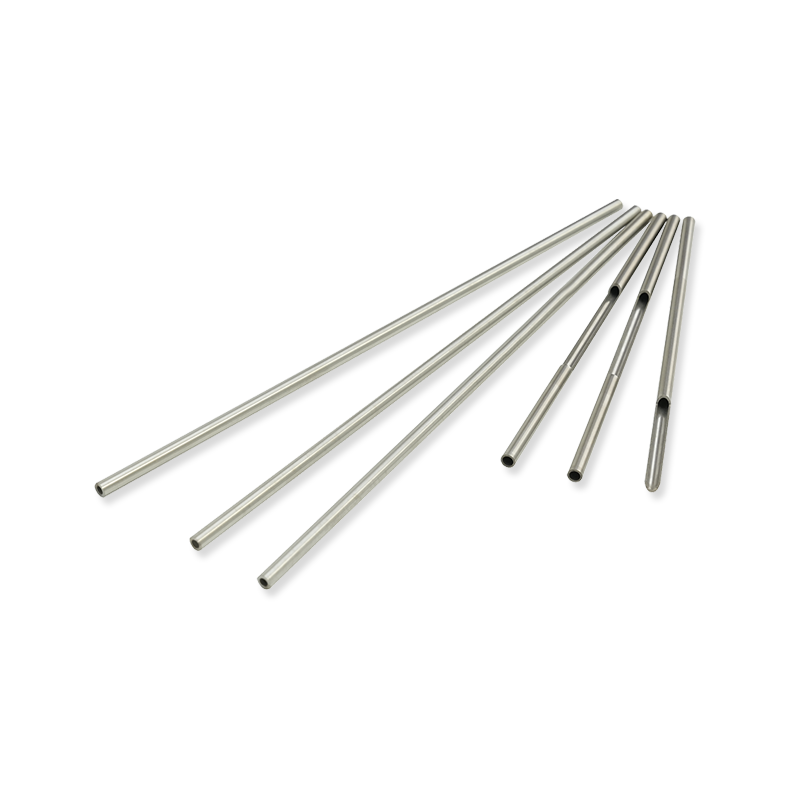 TP316, TP316L, TP316H, and TP316Ti Alloy PipeReview molybdenum-bearing 316 grades for chloride pitting resistance, welded fabrication, high-temperature strength, and stabilised service in corrosive piping.View Product →
Where Austenitic Tube Earns Its Place
The application determines whether a low-carbon grade, a stabilised grade, a molybdenum-bearing grade, or a high-alloy grade is justified. The same 316L tube that performs well in a clean process stream may pit in stagnant chlorinated water. The same 321 tube that resists sensitisation in a boiler may be unnecessary in a room-temperature instrument line.
Boiler and Heat-Transfer Service
Superheater, reheater, and heat exchanger tube must tolerate thermal cycling, steam-side oxidation, and weld fabrication. TP321H and TP347H are common where metal temperatures enter the sensitisation range and stabilisation is required. TP310S is selected for higher-temperature oxidation resistance. For lower-temperature heat transfer with clean water, 304L or 316L may be sufficient. The key purchasing detail is not only the grade but the final heat treatment, bend radius, and whether the tube will be U-bent before or after the final anneal. Buyers often reference ASTM A213 TP310S boiler tubes when high-temperature oxidation resistance is the controlling requirement.
Chemical, Marine, and Food Contact
Chemical processing uses 316L, 317L, 904L, and S31254 depending on chloride, acid concentration, temperature, and oxidising condition. 304L is often adequate for nitric acid and many food-contact streams, but chlorides and cleaning chemicals can change the risk. Marine-adjacent service is not a simple "316L is marine grade" decision. Stagnant seawater can create crevice conditions that exceed the resistance of 316L, while super austenitic grades or duplex alternatives may be required. Food and pharmaceutical service adds a different requirement: cleanability. Surface roughness, weld quality, electropolishing, and drainability can matter as much as alloy content.
Instrumentation, Cryogenic, and Mobility
Small-diameter austenitic tube is used for impulse lines, analyser systems, and precision instrumentation. Bright-annealed or electropolished tube with controlled cleanliness reduces particle retention and helps maintain consistent flow. Cryogenic service benefits from the toughness of 304L and 316L at low temperature, provided the tube has not been excessively cold worked without suitable qualification. Automotive hot zones may use stabilised austenitic grades where temperatures and welding make sensitisation a concern. Compressed natural gas and liquefied natural gas systems use austenitic tube where low-temperature toughness and pressure integrity are required, but the design code and test regime still govern acceptance. Buyers specifying precision instrumentation stainless steel tubing usually need to define cleanliness and dimensional tolerance at least as carefully as the grade.
Heat Transfer
Check thermal expansion, U-bend ovality, tube-to-tubesheet fit, and whether the final anneal occurs after bending.
Process Piping
Check pressure design, schedule versus wall thickness, weld procedure, and the difference between pipe and tube standards.
Clean Service
Check surface roughness, internal cleanliness, end caps, passivation, and packaging that prevents contamination before installation.
Corrosion and Temperature: Practical Selection Rules
Austenitic stainless steel relies on a chromium-rich passive film. That film is stable in many oxidising environments and less stable in chlorides, reducing acids, crevices, and stagnant conditions. Selection therefore needs the actual chemistry and temperature, not a generic corrosion table.
PREN is calculated from chromium, molybdenum, and nitrogen. It is useful for comparing pitting resistance, not for predicting every failure. A high PREN tube can still suffer crevice corrosion under a gasket or deposit. Surface finish, flow, oxygen level, and temperature can outweigh a small chemistry difference.
Chloride Pitting and Crevice Attack
Pitting starts where the passive film breaks down, often under deposits, in tight gaps, or at weld heat-tint. Crevice corrosion is more sensitive to geometry than a simple chloride concentration limit. Stagnant water in a tube bundle, incomplete drainage after hydrotesting, and poor cleaning can create the conditions a smooth corrosion table never captures. For chloride-bearing cooling water, 316L is a common starting point, but higher molybdenum grades may be needed when temperature, chloride level, and crevice geometry combine.
Stress Corrosion Cracking
Chloride stress corrosion cracking is a risk for austenitic tube under tensile stress, chloride exposure, and elevated temperature. Cold bending, residual weld stress, and tight U-bends add stress. The alloy family is not immune, and a grade change alone does not replace stress relief, drainage design, or temperature control. Where chloride stress cracking is a credible risk, the design should be reviewed against alternative materials and operating controls, not treated as a purchasing detail.
High-Temperature Oxidation and Sensitisation
At elevated temperature, oxidation resistance depends on chromium and nickel content, surface condition, and cycling. Stabilised grades reduce sensitisation risk during welding and service in the carbide precipitation range. 310S offers higher oxidation resistance than 304H or 316H in many furnace and boiler applications, but it is not a universal high-temperature answer. The tube metal temperature, flue gas chemistry, and support conditions must be known.
Acid Service
Reducing acids often require molybdenum and sometimes copper. Oxidising acids behave differently. 304L may be suitable for some nitric acid duties, while 316L and 904L are used in selected sulfuric and phosphoric acid environments. Concentration and temperature change the conclusion. A supplier should ask for the full process condition before recommending an alloy, because a grade that is correct at one concentration can corrode rapidly at another.
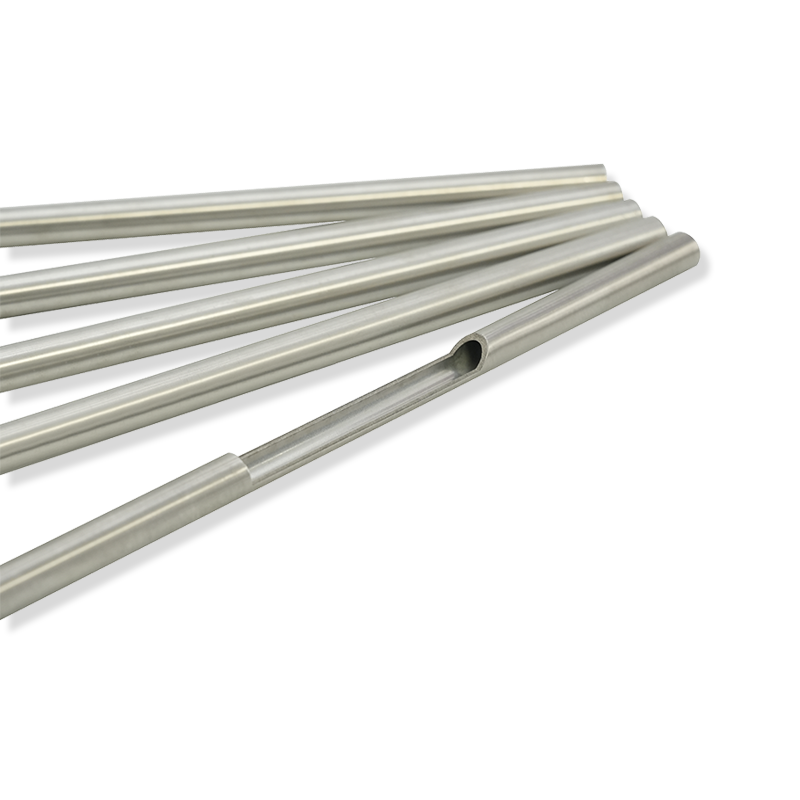 TP321 Titanium-Stabilized Austenitic Stainless Steel PipeConsider titanium-stabilized 321 tube for welded high-temperature piping where intergranular corrosion resistance matters and post-weld annealing can often be avoided.View Product →
Manufacturing Route and Quality Controls That Change the Outcome
Two tubes with the same grade and dimensions can differ in wall uniformity, ovality, surface state, and residual stress. The manufacturing route is therefore part of the product, not background information. For seamless austenitic tube, the route usually runs from raw material verification through piercing, cold drawing, heat treatment, finishing, and inspection.
Raw material and PMI
Verify heat chemistry, grade identity, and traceability before the billet or tube hollow enters production. Positive material identification helps prevent mixed grades.
Piercing and cold draw
Control wall eccentricity, mandrel condition, drawing speed, and lubrication. These variables influence concentricity, surface defects, and residual stress.
Solution anneal
Use the specified temperature and rapid cooling. Furnace load, atmosphere, and cooling rate affect carbide dissolution and final corrosion performance.
Pickle, bright anneal, or polish
Remove scale, restore the passive film, or control roughness according to service. Surface treatment cannot correct a chromium-depleted structure.
NDT and final test
Eddy current, hydrostatic, ultrasonic, dimensional checks, and mechanical tests confirm the agreed acceptance criteria before marking and packing.
Wall Uniformity and Ovality
Heat exchanger tube and precision tube often carry tighter ovality and wall requirements than general-service tube. A cold-drawn tube can meet the nominal wall and still have an eccentric wall that reduces pressure capacity or complicates tube-to-tubesheet rolling. The purchase order should state whether minimum wall, average wall, or both are measured and where. For U-bend tube, ovality after bending and the bend tangent point need separate acceptance criteria.
Surface Condition
Pickled tube has a matte finish and a restored passive surface. Bright-annealed tube has a cleaner, reflective surface and controlled atmosphere scale. Electropolished tube has lower roughness and is often selected for high-purity, pharmaceutical, and semiconductor-adjacent service. Each finish has a different inspection basis. A buyer should not ask for "bright" without defining whether the requirement is appearance, roughness, cleanliness, or corrosion performance.
Non-Destructive and Destructive Testing
Eddy current testing is effective for detecting longitudinal and transverse discontinuities in tube, but it does not replace dimensional inspection. Hydrostatic testing confirms pressure integrity under the specified test pressure. Ultrasonic testing can detect internal defects in heavier wall or critical service. Mechanical tests normally include tensile, yield, elongation, hardness, and flattening or flare where the standard requires them. Intergranular corrosion testing may be specified for stabilised or low-carbon grades in aggressive service. The certificate should show actual results tied to the heat number, not only a statement of conformity.
Traceability and Pressure Equipment Compliance
European pressure equipment projects often require PED compliance and EN 10204 3.1 certification. The mill certificate should connect the finished tube to the steel heat, heat treatment batch, test results, and marking. Additional requirements such as third-party inspection, witnessed tests, or a specific marking layout should be agreed before production. Traceability that is reconstructed after shipment is weaker than traceability built into the route card.
Procurement Checklist: What to Confirm Before Ordering
Most order disputes come from missing details rather than a missing grade. The purchase order should define the product standard, grade, delivery condition, dimensions, tolerances, test plan, documentation, marking, and packaging. The following checks reduce the chance of receiving a tube that is metallurgically correct but commercially unusable.
01. Grade and suffix
State 304L rather than 304 when low carbon is required. State 321H rather than 321 when high-temperature strength is specified. Do not leave the suffix to the mill's discretion.
02. Standard and edition
List ASTM, EN, DIN, JIS, or GOST with the edition and any project addendum. Confirm whether pipe or tube dimensions govern.
03. Wall basis
Define minimum wall, average wall, and allowable eccentricity. For pressure or bending duty, the difference changes the safe design.
04. Length and end finish
Confirm random or fixed length, straightness, cut tolerance, bevel, plain end, cap, and whether long tube needs special transport protection.
05. Surface and cleanliness
Specify pickled, bright annealed, electropolished, passivated, or a defined roughness range. Add cleaning and end-capping requirements for sensitive service.
06. Test and documents
Agree eddy current, hydrostatic, ultrasonic, PMI, mechanical tests, intergranular corrosion testing, third-party witness, and certificate type before the heat is released.
Questions That Reveal a Weak Inquiry
- Is the tube for pressure, heat transfer, instrumentation, or structural use? Each route has a different acceptance basis.
- What is the actual chloride level and maximum metal temperature, including upset or cleaning conditions?
- Will the tube be welded, bent, expanded, or machined after delivery? These operations change the required condition and test plan.
- Which dimension is critical: inside diameter for flow, outside diameter for fit, or wall for pressure?
- Does the project require PED, TS, or another pressure equipment approval, and who witnesses the tests?
- Is the surface finish a corrosion requirement, a cleanliness requirement, or only an appearance preference?
A clear inquiry does not need to be long. It needs to separate fixed requirements from preferences. That allows the mill to propose a feasible route without quietly changing the grade, annealing condition, or test frequency to meet a price target.
Market Signals for Austenitic Tube Buyers in 2026
Purchasing teams are paying closer attention to alloy surcharges, heat treatment documentation, and delivery reliability than to headline tonnage alone. Nickel and molybdenum exposure can move the cost of 316L, 904L, and S31254 faster than the base tube conversion cost. A lower initial quote can become the more expensive order if the certificate is incomplete, the anneal is not traceable, or the tube fails incoming inspection.
Several practical shifts are visible in project inquiries. Buyers are asking for tighter dimensional data before shipment rather than after arrival. Pressure equipment projects are requesting PED and EN 10204 3.1 documents at the quotation stage. Heat exchanger fabricators are reviewing U-bend ovality and bend anneal records more closely. Precision tube users are adding cleanliness and roughness limits to drawings that previously named only the grade. Multi-standard projects are asking for a gap review between ASTM, EN, and project specifications instead of assuming that a grade name covers every acceptance point.
Supply planning also matters. Long tube, special wall, stabilised grades, and electropolished finishes usually need more production time than standard 304L stock sizes. Ordering a non-standard length or a tight ovality limit late in a project can force air freight or a redesign. The safer approach is to reserve capacity for the critical heat, agree the test plan early, and keep a documented alternates list for dimensions that can be adjusted without changing the design basis.
For 2026 projects, the strongest purchasing position is not simply the lowest price per meter. It is a verified route from heat chemistry to final certificate, with the grade, anneal, surface, tolerance, and test method matched to the actual service. That is especially true where austenitic tube is exposed to chlorides, elevated temperature, cyclic loading, or a cleaning regime that was not considered in the original material datasheet.
FAQ: Austenitic Stainless Steel Tube Selection
Is 316L always better than 304L?
No. 316L is usually better in chloride-bearing and many chemical streams because of its molybdenum content, but 304L can be the more practical choice in low-chloride, general-service, and food-contact duties where its corrosion resistance is sufficient. The decision should be based on chemistry, temperature, cleaning, and weld condition.
What does solution annealed mean for tube?
Solution annealing heats the tube to a temperature that dissolves carbides and secondary phases, followed by rapid cooling to retain an austenitic structure. It restores ductility and corrosion resistance after cold working. The exact temperature and cooling method depend on the grade and standard.
When should I choose 321 or 347 instead of 316L?
Choose a stabilised grade when elevated-temperature exposure and welding create a sensitisation risk. 321 uses titanium stabilisation; 347 uses niobium stabilisation. They are common in boiler and heat-transfer tube. They are not automatically more corrosion resistant than 316L in chloride-bearing water.
What is the difference between ASTM A213 and ASTM A269?
ASTM A213 covers seamless ferritic and austenitic steel boiler, superheater, and heat exchanger tube. ASTM A269 covers seamless and welded austenitic tubing for general service. The correct choice depends on the application, pressure design, and the tests the project requires.
Why does a 304 tube sometimes show rust?
Rust on 304 usually points to surface contamination, embedded iron, chlorides, poor drainage, or a passive film that was never properly restored after welding or pickling. It does not always mean the grade is wrong. The surface condition and service environment need to be reviewed before changing alloy.
Can austenitic tube be supplied as U-bend or coil?
Yes, subject to grade, size, bend radius, and the agreed test plan. U-bend tube needs ovality, wall thinning, heat treatment, and tangent-point checks. Coil tube needs length, coiling diameter, surface protection, and pressure-test arrangements defined in the order.