Search
 한국어
한국어 русский
 عربى
عربى
We understand the challenges of various industries, and manufacture reliable quality products through top-notch equipment and professional production technology, so that customers' ideas can be quickly realized.
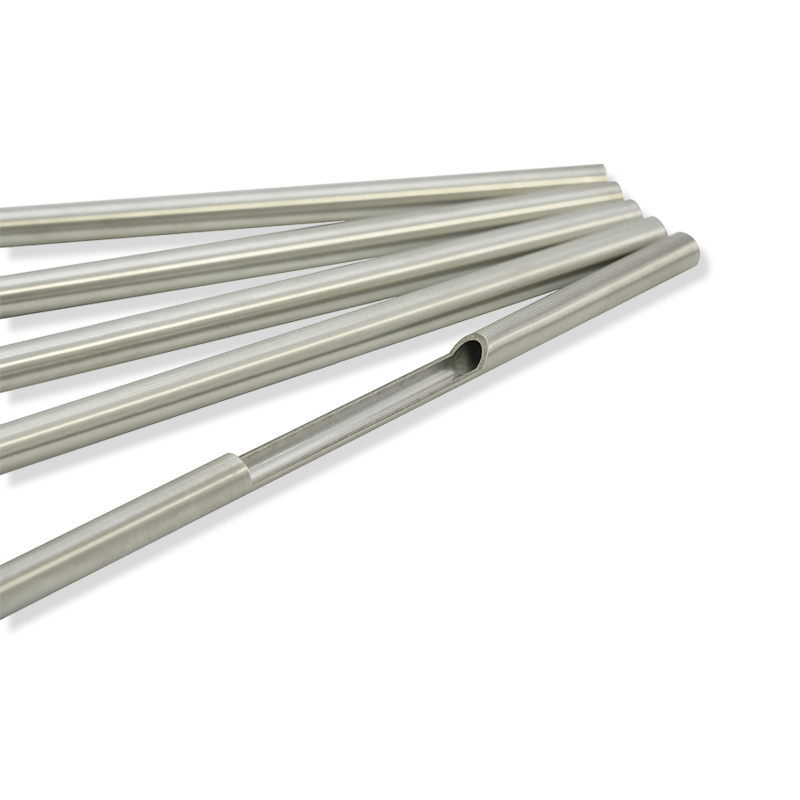
6Mo alloy pipe, known commercially as 254 SMO™, is a high-alloy austenitic stainless steel engineered for maximum resistance to pitting and crevice corrosion. Its elevated chromium, molybdenum, and nitrogen content makes it highly suitable for chloride-rich environments, including brackish water, seawater, pulp mills, bleach plants, and other high-chloride industrial processes.
Due to its compatibility with conventional austenitic stainless steels, 6Mo alloy is often used as a replacement in large structures where 316L or 317L stainless steels have failed due to pitting, crevice corrosion, or chloride stress corrosion cracking. Although significantly stronger than common austenitic grades, the alloy retains high ductility and impact toughness.
254 SMO™ also offers excellent weldability and formability, capable of cold bending to very small radii without cracking, making it highly versatile in critical and complex piping systems.
Next-generation thermal piping solution combining titanium stabilization with superior high-temperature strength. TP321 seamless pipes eliminate intergranular corrosion sensitivity while delivering exceptional performance at sustained temperatures from -50°C to 425°C+. Experience welding simplicity, superior formability, and reliable thermal cycling resistance across demanding furnace and heat-recovery applications.
3.18-406.4mm
Diameter Range
No PWHT
Post-Weld Heat Treatment
0.35-0.55%
Titanium Content
30+ Years
Service Life
Specialized High-Temperature Applications
01
Furnace & Boiler Systems
Radiant furnace circuits, convection sections, and superheater applications. TP321 delivers sustained strength and reliability across thermal cycles from 350-425°C without post-weld sensitization concerns.
02
Heat Exchangers & Recovery Systems
Economizers, air preheaters, and waste heat recovery units. Titanium stabilization enables complex fabrication without expensive post-weld annealing while maintaining thermal stress resilience.
03
Chemical & Petrochemical Reactors
Welded reactor vessels and distillation columns requiring both thermal and chemical resistance. TP321 prevents sensitization in the HAZ while delivering corrosion protection during manufacturing and operation.
04
Thermal Reformers & FCC Units
Fluid catalytic cracking units and high-temperature piping handling hydrocarbon streams. Exceptional thermal stability and hassle-free welding characteristics enable complex thermal systems.
05
Power Generation Installations
Coal-fired and combined-cycle power plants with sustained high-temperature piping requirements. TP321 delivers the reliability and welding simplicity demanded in critical power infrastructure.
06
Industrial Thermal Processing
Metal heat treatment furnaces, sintering systems, and specialized thermal applications. Titanium stabilization ensures freedom from intergranular corrosion across complex fabricated systems.
Technical Specifications
Outer Diameter
3.18mm to 406.4mm (comprehensive thermal system sizing)
Wall Thickness
0.3mm to 20mm (precision engineering for thermal application)
Titanium Content
0.35-0.55% (stabilization element preventing sensitization)
Chromium Content
17-19% (superior thermal corrosion resistance)
Nickel Content
8-10% (austenitic stability enhancement)
High-Temperature Performance Metrics
| Tensile Strength at 425°C | 310-450 MPa (sustained thermal loading) |
| Yield Strength | 205-310 MPa (temperature dependent) |
| Continuous Service Temperature | -50 to +425°C (exceptional thermal range) |
| Intergranular Corrosion Sensitivity | Eliminated (titanium stabilization) |
| Thermal Cycling Resistance | Excellent (austenitic toughness) |
| Post-Weld Heat Treatment Required | No (major fabrication advantage) |
Titanium Stabilization Technology
Intergranular Corrosion Prevention
Traditional austenitic stainless steels develop chromium carbide precipitation during welding, creating chromium-depleted zones vulnerable to intergranular corrosion attack. TP321's titanium content preferentially binds with carbon, preventing carbide formation and protecting the grain boundaries from corrosive attack.
This fundamental material advantage eliminates the need for expensive post-weld annealing (PWHT) procedures. Complex welded structures achieve full corrosion protection without thermal processing stress or distortion, delivering significant cost savings in fabrication procedures.
The titanium stabilization mechanism maintains structural integrity across welding heat input variations, ensuring consistent protection regardless of welding technique or thermal history.
Superior Thermal Performance
TP321's austenitic structure delivers exceptional strength retention across elevated temperature ranges from 350°C to 425°C continuous service. The titanium-stabilized chemistry maintains metallurgical stability without precipitation hardening complications affecting strength development.
Thermal cycling—the repeated heating and cooling cycles characteristic of furnace and heat-recovery applications—creates mechanical stress and potential distortion in inferior materials. TP321's ductility and fatigue resistance ensure reliable performance across thousands of thermal cycles without cracking or dimensional changes.
The combination of thermal strength, freedom from post-weld sensitivity, and superior formability creates an engineered solution specifically addressing high-temperature thermal system demands.
Six Strategic Advantages
Eliminates Post-Weld Annealing
Titanium stabilization prevents sensitization without thermal processing. Direct cost savings from eliminated PWHT procedures and reduced fabrication complexity. Freedom from annealing-related distortion enables precision manufacturing.
Superior Weldability
No intergranular corrosion sensitivity in the heat-affected zone. Standard TIG, MIG, and SMAW welding procedures apply directly without special precautions. Field welding and repairs proceed without compromising structural reliability.
Exceptional Thermal Cycling Resistance
Austenitic structure withstands repeated heating and cooling cycles without fatigue cracking. Superior ductility and toughness ensure reliability across thousands of thermal cycles in furnace and heat-recovery applications.
Thermal Strength Retention
Maintains robust mechanical properties at sustained 425°C+ operating temperatures. Superior to standard 304H grades for thermal applications requiring both fabrication simplicity and thermal strength.
Superior Formability
Excellent cold-working and bending characteristics enable complex pipe geometries. Tight radius bends and intricate fabrication achieve full strength without intermediate annealing cycles.
Extended Equipment Lifespans
30+ year service life in thermal applications with minimal maintenance. Superior corrosion and thermal cycling resistance reduce replacement frequency and total cost of ownership.
Fabrication Cost & Lifecycle Analysis
Simplified Fabrication Procedures
Elimination of post-weld annealing delivers direct cost savings through reduced thermal processing and associated labor. No expensive annealing equipment operations or extended cooling procedures required. Faster project timelines and improved fabrication efficiency.
Installation & Commissioning Economics
Field welding and repairs proceed without thermal processing constraints. Flexibility in construction procedures reduces schedule delays and on-site complications. Equipment operational deployment accelerates with simplified welding requirements.
Long-Term Reliability Value
30+ year operational lifespans eliminate frequent replacement cycles. Minimal maintenance and corrosion-related repairs reduce operational expenses. Superior thermal cycling resistance ensures predictable long-term performance economics.
Established Global Thermal System Deployments
Europe & Industrial Centers
- Power plant boiler systems - widespread deployment
- Chemical processing reactor fabrication - established standards
- Furnace piping systems - industrial manufacturing
- Heat recovery equipment - efficiency applications
- Refinery thermal systems - petrochemical industry
North America & Energy Sector
- Coal-fired power plant installations - established operations
- Combined-cycle thermal piping - modern energy facilities
- Oil refinery thermal systems - high-temperature processing
- Chemical plant reactors - diversified industries
- Industrial furnace applications - metal heat treatment
Asia-Pacific & Rapid Industrialization
- Power generation expansion - growing energy demand
- Chemical facility construction - industrial development
- Petrochemical plant installations - capacity additions
- Thermal equipment manufacturing - emerging capabilities
- Industrial modernization projects - efficiency upgrades
International Standards & Quality Certifications
ASTM A269
American standard for seamless austenitic stainless steel tubing specifications
EN 10216-5
European standard for seamless high-temperature steel tubes
DIN 17456
German standard for seamless stainless steel tubes including stabilized grades
JIS G3448
Japanese standard for titanium-stabilized stainless steel tubes
GOST 9941
Russian standard for high-temperature seamless stainless steel tubes
ISO 1127
International standard for stainless steel seamless tubes and pipes
TP321 vs. Competitive High-Temperature Austenitic Grades
| Feature | TP321 Stabilized | TP304H | TP347 (Nb-Stabilized) |
| Post-Weld Annealing Required | No (major advantage) | Recommended | No |
| Thermal Service Temperature | 425°C+ (excellent) | 425°C (acceptable) | 425°C+ (excellent) |
| Thermal Cycling Resistance | Exceptional | Good | Excellent |
| Fabrication Complexity | Simplified | Requires PWHT | Simplified |
| Cost Position | Moderate premium | Standard baseline | 10-15% premium |
| Global Availability | Good sourcing | Universal | Good availability |
Frequently Asked Questions
How does titanium stabilization prevent intergranular corrosion?
▼
During welding, traditional austenitic stainless steels develop chromium carbide precipitation along grain boundaries, depleting chromium and creating electrochemical potential differences that drive intergranular attack. TP321's titanium content preferentially binds with carbon, forming stable titanium carbides and preventing chromium carbide formation. This protection mechanism maintains the passive oxide film across grain boundaries, eliminating sensitization without requiring post-weld annealing.
Can TP321 be welded without post-weld heat treatment?
▼
Yes, TP321's titanium stabilization eliminates the need for post-weld annealing (PWHT) in most applications. The microstructure remains stable and corrosion-resistant immediately after welding. This represents a major fabrication advantage compared to TP304H and standard austenitic grades. Standard welding procedures (TIG, MIG, SMAW) apply directly without special thermal processing. For critical applications, consult specifications regarding any beneficial stress-relief annealing.
What is the maximum continuous service temperature for TP321?
▼
TP321 maintains excellent mechanical properties to approximately 425°C continuous service. At these elevated temperatures, the material retains robust yield and tensile strength for thermal system demands. Brief excursions above 425°C are tolerable, but sustained operation beyond this range requires consultation with materials engineering. The austenitic structure provides exceptional toughness across the entire operational temperature range from -50°C to 425°C+.
How does TP321 handle thermal cycling stress?
▼
TP321's austenitic structure delivers exceptional resistance to thermal cycling fatigue. The high nickel content ensures outstanding ductility and impact resistance at all operating temperatures. Unlike ferritic or martensitic alternatives, austenitic TP321 maintains uniform material properties across thousands of thermal cycles without embrittlement or strength degradation. This superior thermal cycling capability makes TP321 ideal for furnace, heat-recovery, and thermal-shock-prone applications.
What are the cost advantages of eliminating PWHT?
▼
Post-weld annealing requires expensive furnace operations, extended cooling procedures, and specialized equipment handling. Elimination of PWHT delivers direct labor cost savings, faster project timelines, reduced energy consumption, and freedom from annealing-related dimensional distortion. These fabrication advantages often offset TP321's material cost premium, delivering superior total lifecycle economics. Additional benefits include simplified field installation and repair procedures.
Is TP321 suitable for furnace and boiler applications?
▼
Absolutely—TP321 was specifically engineered for furnace and high-temperature thermal applications. The combination of thermal strength retention (425°C+), thermal cycling resistance, and freedom from post-weld sensitization makes it the ideal choice for radiant furnace circuits, convection sections, superheaters, and boiler systems. Thousands of global furnace and power generation installations rely on TP321 for proven reliability and simplified fabrication.