Search

 한국어
 русский
 عربى
The surface condition of a stainless steel tube decides how it behaves in chloride service far more than the mill certificate does. A 25 mm x 2 mm TP316L heat exchanger tube can leave the inspection bench looking perfectly bright and still carry a mill scale layer or embedded iron particles that turn into pitting sites within weeks of start-up. Pickling and passivation are the two steps that decide whether the tube leaves the works in that state, or in a genuinely passive one.
The two processes get written as a single line on purchase orders, which is where most of the confusion starts. Pickling removes something. Passivation rebuilds something. Treating them as one operation, or substituting one for the other, produces a surface that photographs well and fails early.
Pickling
A mixed-acid treatment, normally nitric plus hydrofluoric, that dissolves mill scale, heat tint and the chromium-depleted metal sitting underneath. It is a removal step, and it does take a small amount of wall thickness with it.
Passivation
An oxidising acid step that grows the chromium-rich passive film back onto chemically clean metal. It cannot work through scale. If pickling was skipped or incomplete, passivation has nothing to build on.
Rinsing
Low-chloride water flushing residual acid out of the bore. A tube that is pickled and passivated but poorly rinsed carries its own corrosion starter into the pipe rack.
Verification
Blue dot, water break or copper sulphate testing to prove the film exists. Without a test result, "passivated" on a certificate is a claim rather than a fact.
Why Pickling and Passivation Get Written as One Process – and Why They Are Not
The practical difference shows up when a purchase order says only "pickled and passivated" and the mill has to interpret it. Some suppliers will run a single nitric dip and call both boxes ticked. That works on a tube that never formed scale. On a hot-rolled or solution-annealed seamless tube with a visible oxide layer, a nitric-only dip does very little to the scale itself.
Three standards matter here, and they govern different things. The material standard, for example ASTM A213 for seamless ferritic and austenitic boiler and heat exchanger tubing, covers chemistry, mechanical properties, dimensions and non-destructive testing. It does not prescribe how the surface is cleaned. ASTM A380 covers cleaning, descaling and passivation of stainless steel parts, and it is the reference most inspection bodies reach for when they want a method statement. ASTM A967 governs chemical passivation treatments specifically and lists the nitric and citric options by number.
A purchase specification that cites A380 and A967 alongside the material standard is much harder to argue with than one that says "clean surface". It tells the mill which method family applies, which test proves it, and which party pays for the retest if the blue dot goes positive.
The order of operations is not negotiable: degrease, rinse, pickle, rinse, passivate, rinse, dry, verify. Skipping the degrease stage is the most common reason pickling looks uneven, because oil holds acid away from part of the surface and lets it attack other parts for too long.
What Pickling Actually Removes from the Tube Wall
Pickling is not a cosmetic brightening step, even though that is how it is often described. On a seamless tube it removes four distinct things, and each one has its own consequence if left in place.
- Mill scale from hot working or solution annealing. The oxide layer is brittle, cracked and chromium-depleted at its base. Cracks in the scale become crevices, and crevices are where chloride pitting starts.
- The chromium-depleted zone under the scale. This is the part most often overlooked. The metal immediately beneath a heat-formed oxide can drop several points below the base alloy's chromium content. Strip the scale and leave that layer behind, and the surface still cannot form a stable passive film even though it now looks grey and clean.
- Embedded free iron. Rollers, mandrels, dies, saw blades and handling equipment all transfer iron onto stainless. Those particles sit on the surface as small anodes and corrode first, and once they start, the pit does not necessarily stop at the particle.
- Heat tint from welding. The straw, blue and purple colours on and beside a weld are oxide films of varying thickness. The darker the tint, the more chromium has been consumed to form it, and the lower the corrosion resistance in that band.
The chemistry behind the removal step is a working balance rather than a fixed recipe. A nitric-hydrofluoric bath typically runs around 10–20% nitric acid with 1.5–5% hydrofluoric acid at 20–60 °C for 15–60 minutes, and the exact window depends on alloy, scale thickness and how much dissolved iron the bath is already carrying. Hydrofluoric acid does the descaling work and also attacks the base metal; nitric acid keeps the surface oxidised while it happens. Push the time too long and the tube comes out with a roughened, slightly etched wall. Pull it short and the depleted layer stays put.
This is why two tubes that both read "pickled" on a certificate can behave completely differently. The word describes an intention. The bath parameters and the rinse that follows describe what actually happened to the metal.
Where Corrosion Starts When the Surface Treatment Is Incomplete
Field failures that trace back to surface condition follow a consistent pattern: a small anodic site sits exposed while the surrounding passive film acts as a large cathodic area. The ratio does the damage. A tiny anode coupled to a big cathode corrodes fast, and the pit penetrates rather than spreads.
Heat exchanger tube bundles in coastal cooling water
Take a shell and tube exchanger on a coastal site running cooling water at roughly 150 ppm chloride. The TP316L bundle is the standard choice and it is correctly specified. Six weeks after commissioning, leaks appear near the tubesheet and around the first support plate. Inspection finds heat tint still present on the bore close to the tube-to-tubesheet welds, because the tube ends were welded after pickling and nobody cleaned them afterwards. Under that tint the metal had already lost enough chromium that the film could not reform. Passivation cannot repair a zone that was never properly pickled in the first place.
Polished hygienic lines that were never chemically cleaned
A mechanically polished line looks like the cleanest thing in the plant, and that is exactly the trap. Polishing burnishes the surface but does not necessarily remove embedded iron from the abrasive or the tooling. Product residue settles into the fine scratch pattern during a shutdown, the next cleaning cycle attacks those residues, and the attack continues into the wall. A mechanical finish and a passive surface are two different properties, and only one of them is visible.
Duplex welds finished with a wire brush
On duplex and super duplex work, a weld that was never pickled is the most common origin of early pitting. The heat tint band has an altered ferrite-austenite balance on top of the chromium depletion, so its corrosion resistance is a fraction of the parent metal's. Brushing removes the colour and leaves the depleted metal. Offshore and marine service is unforgiving about this, which is why duplex tube specifications for those duties increasingly name the cleaning method explicitly rather than leaving it to the fabricator.
The common thread across all three cases is that the highest risk sits on weld heat-affected zones and on hot-formed surfaces. Those are exactly the areas where scale forms, chromium moves, and filler metal changes the local chemistry. They are also the areas a buyer can check cheaply with a blue dot test before the material leaves the yard.
Matching the Cleaning Route to the Tube Family
One bath recipe does not serve every alloy, and mills that run everything through the same tank tend to produce their worst results on the grades they run least often. The differences below are the ones worth writing into a specification.
Austenitic: TP304/304L, TP316/316L, TP321/321H, TP347/347H
The straightforward case. Nitric-hydrofluoric pickling followed by nitric or citric passivation is the standard mill route for hot-finished seamless tube. Titanium and niobium stabilisation in TP321 and TP347 does not remove the need for pickling, and it does not undo sensitisation if the material was already sensitised during thermal processing.
Duplex: S31803, S32205, S32304, S32750
The ferrite phase dissolves faster than austenite in acid. Run the bath too long and the surface roughens selectively, which is a corrosion site in its own right. Keep immersion to the shortest window that produces a uniform grey surface and rinse immediately and thoroughly. Residual acid trapped between tubes in a bundle is a recurring defect source.
Super austenitic: 904L, S31254
Molybdenum and nitrogen raise pitting resistance but slow film reformation. These grades need the full passivation step, a longer rinse and tighter rinse water quality than a 316L tube does. Cutting the passivation short to save a shift is a false economy on this family.
Nickel alloys: Monel 400, Inconel 625, Incoloy 800
Hydrofluoric acid is more aggressive towards nickel-based matrices, and Monel 400 develops a copper-enriched surface that a strong HF mix can disturb. Many shops move these grades to a nitric or citric route with minimal fluoride, accept a longer cycle time, and get a more predictable result.
Martensitic: TP410
Hydrogen and residual stress are the risks here. Long acid exposure on a martensitic tube that will later be bent or flared raises the chance of hydrogen-induced cracking. Citrus-based or low-fluoride routes with tight time control are the safer specification, and a drying step after rinsing is not optional.
Ferritic: TP409, TP430, TP439, TP444
Lower alloy content means less corrosion margin, so surface quality carries more of the load. Pickling must be followed by passivation, and rinse water quality matters more than on a 316L line because a damaged film on a lean ferritic recovers slowly.
Four Routes to a Clean Surface, and Where Each One Fails
Buyers tend to think of pickling as a single service. In practice there are four routes in common use, and they are not interchangeable for a given geometry or alloy.
| Route | Best fit | Bore coverage | Long tube suitability | Main risk |
|---|---|---|---|---|
| Tank immersion pickling | Straight lengths and coils within tank size | Full, both surfaces | Yes, if racking and drainage are designed for it | Acid trapped in low points and between nested tubes |
| Pickling paste | Site welds and large fabrications | Applied area only | Yes | Operator inconsistency; neutralisation is frequently skipped |
| Electrolytic pickling | Weld caps and high-cleanliness surfaces | Accessible areas only | Limited | Contact marks; needs a thorough rinse afterwards |
| Blasting plus acid | Heavy scale, large diameter thick wall | Good | Yes | Blast media embedding; carbon steel media contaminates the surface |
| Bright annealing, no scale formed | Small diameter, thin wall, precision tube | Excellent | Yes | Solves heat scale only, not handling or storage contamination |
The last row deserves attention because it changes the whole discussion. A tube bright annealed in a reducing atmosphere never forms the oxide layer that pickling exists to remove, so the removal step becomes unnecessary for the annealed length. That does not make the tube contamination-proof. Cutting, deburring, transport and storage all reintroduce the problem, and a bright annealed tube that gets dragged across a carbon steel rack is no longer a clean tube.
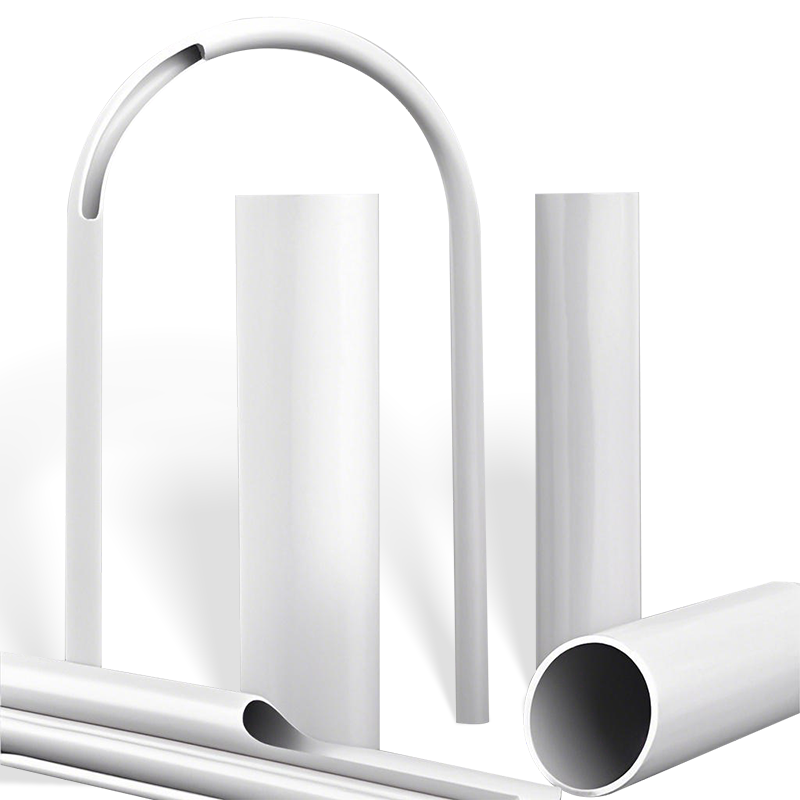 Solid Solution Pickled Stainless Steel PipeSolution treatment followed by pickling removes surface oxides and contaminants, supporting corrosion resistance for chemical, petrochemical and seawater piping applications.View Product →
Nitric Versus Citric Passivation Under ASTM A967
Both chemistries are legitimate and both appear in ASTM A967 as numbered methods. The choice usually comes down to what the tube will do afterwards, how the plant handles waste, and how much time the line can give the step.
| Item | Nitric passivation | Citric passivation |
|---|---|---|
| Typical concentration | 20–45% nitric acid | 4–10% citric acid formulation |
| Typical temperature | 20–50 °C | 20–60 °C |
| Film formation speed | Fast | Slower, needs dwell time |
| Free iron removal | Strong oxidising action | Moderate, relies on chelation |
| Effect on duplex and super duplex | Can attack ferrite selectively if time or temperature drift | Gentler on mixed-phase surfaces |
| Waste and emissions | NOx fume, nitrate-loaded effluent, higher neutralisation cost | More biodegradable, simpler neutralisation |
| Where it is usually specified | Pressure equipment, general industrial tubing | Hygienic lines, site weld cleaning, heat-sensitive alloys |
A common compromise on mixed production lines is to pickle in a nitric-hydrofluoric bath and passivate in citric acid. The pickling does the heavy removal work, and the citric step avoids a second nitric exposure for alloys that do not enjoy it. Where the specification insists on nitric passivation, the fume extraction and effluent load become part of the cost of the order and should be quoted as such.
How Clean Is Clean Enough? The Acceptance Tests That Settle Arguments
Surface condition arguments are expensive because they usually happen after delivery. A short list of tests, agreed before the order is placed, moves the argument to the mill floor where it costs a fraction as much to resolve.
| Test | What it demonstrates | Typical pass criteria | Time required |
|---|---|---|---|
| Blue dot test, potassium ferrocyanide | Free iron on the surface | No blue colour within 30 seconds | Minutes |
| Water break test | Continuous, uniform wettability | Water film holds for at least 30 seconds after rinsing | Immediate |
| Copper sulphate test | Exposed iron and film defects | No copper deposit within 6 minutes | About 6 minutes |
| Salt spray, ASTM B117 | Resistance to pitting initiation | No red rust within the hours stated on the order | 24–500 hours |
| EDS or XPS surface analysis | Surface chromium to iron ratio | Threshold agreed with the buyer | Laboratory turnaround |
| Surface roughness measurement | Residue retention potential | Ra ≤ 0.8 µm for hygienic duty | Minutes |
The blue dot test is the workhorse because it is fast, cheap and directly targets the failure mode that causes most early pitting. It is not a measure of film thickness and it will not detect a chromium-depleted layer that sits under an intact but thin film. Where the service is genuinely aggressive, a salt spray result alongside the blue dot gives a much better picture than either test alone.
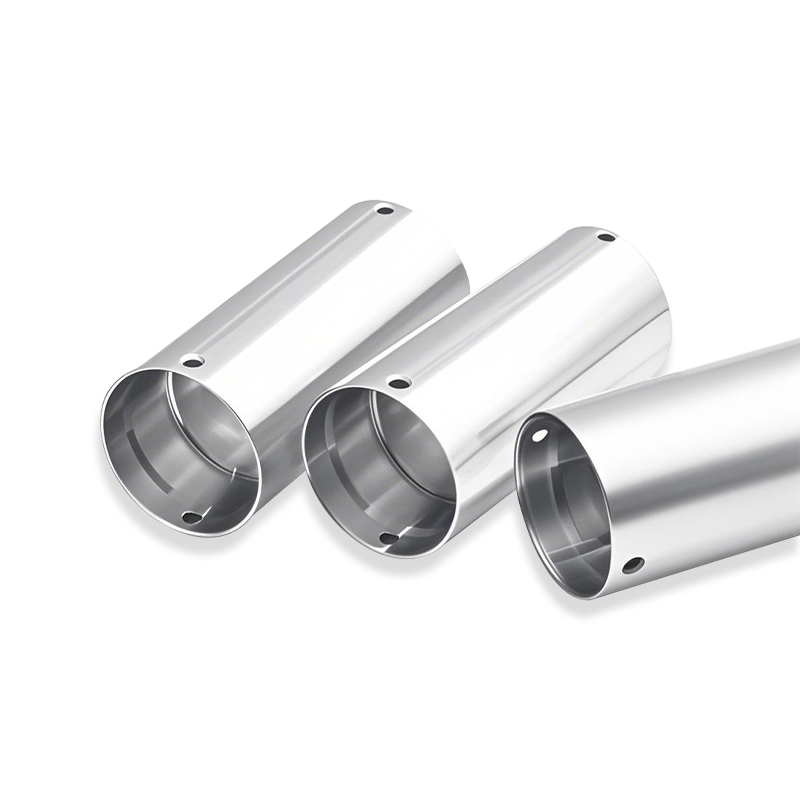 Electropolished Stainless Steel Tube for Hygienic ServiceElectropolishing smooths microscopic high points to create a uniform, high-gloss surface for food, pharmaceutical and medical tubing where cleanliness and corrosion resistance matter.View Product →
Bath Parameters and How They Drift
A pickling line that passes its audit in January can be producing a different surface by June without anyone changing a setpoint. Baths drift continuously as they work, and the drift is invisible on a certificate.
Typical immersion windows in a nitric-hydrofluoric bath. Actual values depend on scale thickness, bath iron content and temperature, and should be re-qualified whenever the bath is made up fresh.
The four things that move first
- Dissolved iron. Every pickled tonne adds iron to the bath. Beyond a threshold the bath starts depositing rather than removing, and tubes come out with a smutty film that looks like scale but is not.
- Hydrofluoric acid depletion. Fluoride is consumed by both scale and base metal. Concentration checks that only look at nitric acid miss the half of the bath doing the work.
- Temperature stratification. Long tanks heat unevenly. The end nearest the steam inlet pickles faster, and the tube that sat there gets a thinner wall than the tube at the far end.
- Rinse water conductivity. Final rinse water above roughly 10 µS/cm is carrying enough dissolved solids and chloride to leave a residue. Reused rinse water with no conductivity control is the quietest route to field pitting.
Keeping Pickling Defects off the Boat
Most pickling defects are visible or testable before shipment, which is the cheapest possible time to find them. The table below covers the failures that reach buyers most often.
| Defect | Root cause | How to catch it early |
|---|---|---|
| Roughened or over-etched surface | Immersion too long, fluoride too high, temperature drift | Retain a reference sample per batch and compare finish before and after pickling |
| Hydrogen-induced cracking | Absorbed hydrogen, most relevant on martensitic grades | Bend or flare test on samples from the pickled lot |
| Acid residue at tube ends | Insufficient final rinse or poor drainage during drying | pH paper on the rinse water, target 6.5–8.5 |
| Uneven brown discolouration | Slow transfer between pickle and rinse | Visual comparison against an agreed finish sample |
| Localised pitting after pickling | Paste residue, or acid pooled at contact points and spacers | Inspect the contact marks when the bundle is unpacked |
| Intergranular attack | Sensitised material held in acid too long | Metallographic check on any heat suspected of improper annealing |
The over-etching row is the one that costs wall thickness. Pickling removes metal, typically in the range of a few tens of microns on a well-controlled line, and considerably more on a poorly controlled one. On a thin wall tube at the low end of the tolerance band, that difference is not cosmetic. It is the difference between passing and failing the next dimensional check.
Writing Cleaning Requirements onto the Purchase Order
Most of the disputes in this area disappear when eight items are written down. None of them are exotic, and all of them are cheaper to agree than to argue about later.
- Name the cleaning standards, not just the material standard. ASTM A380 for cleaning and descaling practice, ASTM A967 where passivation is required, alongside the relevant material specification.
- Specify the passivation method by number. "Passivated" is open to interpretation. A named ASTM A967 method removes the ambiguity and gives the inspector a reference.
- Set rinse water limits. Final rinse chloride at or below 50 ppm and conductivity at or below 10 µS/cm is a workable baseline for most industrial tubing.
- Agree the acceptance test and sampling rate. Blue dot per bundle, or per heat number, or per length on critical service. Write which one.
- State the roughness requirement. Ra ≤ 0.8 µm for hygienic duty, tighter where product adhesion matters, and confirm whether it is measured before or after passivation.
- Control the tooling. Stainless brushes, stainless racks, no carbon steel anywhere near the wet surface. A single carbon steel lifting hook can undo a full shift of work.
- Require records. Bath temperature, concentration, immersion time and rinse conductivity, tied to the heat number of the tubes processed.
- Define packaging. Neutral wrapping, capped ends, dry interior. A perfectly passivated tube stored in a damp container arrives contaminated and the argument restarts at destination.
Items three and four carry most of the weight in practice. Rinse quality and a defined test are the two variables that a buyer can verify cheaply on arrival, and they cover the failure modes that actually reach the field.
Rinse Water, Waste Acid and the Compliance Questions Buyers Now Ask
Pickling is a regulated activity in most exporting markets, and the handling of its waste streams increasingly shows up in supplier qualification, not just in environmental permits. The questions an audit team tends to ask are predictable.
- Nitric passivation fume. Nitric acid generates nitrogen oxides that need scrubbing. A shop with visible yellow-brown fume over the passivation tank is a shop with a scrubber problem, and it is visible to any visitor.
- Spent hydrofluoric acid. Fluoride-bearing effluent needs calcium precipitation or acid regeneration before discharge. Rinse water volumes are large, which is why counter-flow rinsing is standard on well-run lines.
- Neutralisation records. Discharge pH in the 6.5–8.5 range, logged. Buyers in regulated markets are starting to ask for this alongside the mill certificate.
- Operator protection. Hydrofluoric acid burns are serious and often painless at the time. The presence or absence of calcium gluconate gel at the line tells you more about a workshop's safety culture than any certificate.
None of this changes the metallurgy, but it does change who can supply a given order. A mill with controlled rinse water, logged neutralisation and proper fume extraction can put a surface treatment on a certificate that survives scrutiny. A mill without them may produce the same-looking tube and a much harder conversation two years later.
Post-Weld Cleaning on Site: When the Pickling Tank Cannot Reach
Every tube mill's pickling line stops at the loading dock. The welds made during installation are the buyer's problem, and they are the highest-risk areas on the finished system.
Paste pickling is the usual answer for site welds. The practical sequence matters more than the product: clean the area, apply paste to both the weld cap and the root where accessible, allow the reaction to complete, remove the paste, neutralise the residue, rinse with clean low-chloride water, and dry. Skipping the neutralisation step leaves acid in a crevice where it will keep working.
Brushing has its place but it is not a substitute. A stainless brush removes loose colour and leaves the depleted layer underneath. If the specification requires a passive weld, brushing is a preparation step, not a finish. Mechanical grinding has the same limitation plus the risk of iron contamination from a wheel that has previously been used on carbon steel.
After cleaning, test the weld. A water break test takes under a minute, and a blue dot test on the heat-affected zone tells you whether the treatment actually removed the free iron. Both are cheap enough to run on every weld rather than on a sample.
How the Mill Locks the Surface Condition Before Dispatch
There are three finishing routes on a tube line, and each one solves a different part of the surface problem. Choosing between them is a technical decision, not a marketing one.
Solution annealing followed by tank pickling is the standard route for hot finished seamless tube. The anneal restores the metallurgy, the pickle removes the scale that the anneal created, and the passivation step rebuilds the film. It is the most widely applicable route and the one most specifications assume.
Electropolishing goes further. It removes metal at a controlled rate and levels the surface at the same time, producing a smoother, more uniform finish than acid pickling alone can reach. For hygienic lines, semiconductor support systems and high-purity service, the smoother surface leaves fewer places for residue to sit, and the chromium-enriched outer layer that results is measurably more resistant to pitting.
Bright annealing removes the scale problem at the source. A reducing atmosphere during annealing means no oxide forms, so there is nothing to pickle on the annealed length. It suits small diameter and thin wall precision tube where a heavy acid cycle would threaten dimensional tolerance. It does not, however, protect the tube from what happens after the furnace, so handling discipline still decides the outcome.
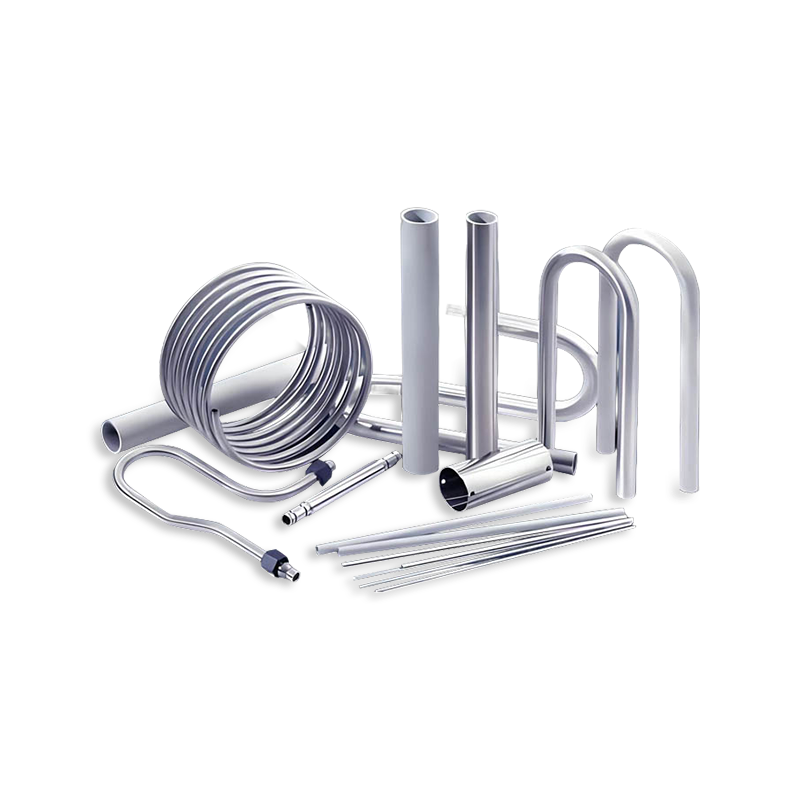 Bright Annealed Stainless Steel TubeA reducing-atmosphere anneal avoids oxide formation on precision tube, while the bright finish suits visible architectural, automotive and equipment applications.View Product →
Frequently Asked Questions on Pickling and Passivation of Stainless Steel Tubes
Is pickling the same as passivation?
No. Pickling removes scale, heat tint and the chromium-depleted layer beneath them. Passivation rebuilds the chromium oxide film on a surface that is already chemically clean. Running one does not deliver the other, and a nitric-only dip on a scaled tube does neither job properly.
Will a stainless steel tube passivate on its own in air?
Yes, given enough time and a clean surface. The problem is the qualifier. Oxygen in air will rebuild a film on clean metal within hours, but it will not remove scale or free iron, and it will not draw chromium back into a depleted layer in any useful timeframe. Left in a humid warehouse, an unclean tube may show rust before it ever shows a proper passive film, which is exactly what happens in cases where a stainless tube still rusts despite reading "stainless" on the label.
Does passivation affect wall thickness?
Passivation removes almost nothing measurable. Pickling does remove metal, typically a few tens of microns under good control, and considerably more if the bath is aggressive or the immersion runs long. That is why thin wall tube and tight tolerance orders need the immersion window agreed in advance rather than left to the operator.
Does bright annealing replace pickling?
For the annealed length, effectively yes, because there is no scale to remove. It does not protect the tube from cutting, handling, storage or welding contamination afterwards. A bright annealed tube that is not protected during packing can arrive in worse condition than a correctly pickled one.
How long does a passive film last?
Indefinitely, as long as it is not mechanically damaged, contaminated with iron or chlorides, or held in a strongly reducing environment. The film is self-repairing in the presence of oxygen, which is why passivated tube in clean dry storage keeps its condition for years.
Do I need to test every length?
Not usually. Sampling per heat number or per bundle is common practice and is enough for most industrial service. Site welds are the exception, and those should be tested individually because the operator and conditions change weld by weld.
What happens if the rinse is incomplete?
Residual acid keeps reacting in the bore, usually at low points, thread roots and contact points between nested tubes. The result is localised pitting that appears weeks after delivery and looks like a material defect rather than a process one. A pH check on the rinse water takes seconds and prevents the entire discussion.
Can a pickled tube be welded without re-cleaning?
The tube itself is fine. The weld is not. Welding destroys the passive film in the heat-affected zone and creates fresh tint, so any weld made after pickling needs its own cleaning and passivation step, whether in the fabricator's shop or on site.