Search
 한국어
한국어 русский
 عربى
عربىIntroduction: Why "Pipe" and "Tube" Are Not Interchangeable
Last week, a customer asked us for "1 inch stainless steel pipe." When our engineer asked for the schedule, the caller paused. What he actually needed was a 1.000-inch outside diameter tube for a precision instrumentation line. A standard NPS 1 pipe would have delivered a 1.315-inch OD, a difference of roughly 8 mm in circumference. That single word would have turned a simple order into weeks of rework.
The conclusion is straightforward: pipe and tube are not interchangeable terms. They differ in how dimensions are specified, how tightly tolerances are held, which manufacturing and inspection standards apply, and where each is best deployed. For an engineer or buyer, misusing the terms does not just cause confusion; it leads to wrong products, budget overruns, and sometimes unsafe installations when wall thickness is underestimated for the actual service pressure.
What Is a Stainless Steel Pipe?
A stainless steel pipe is a hollow, cylindrical product designed primarily for the conveyance of fluids, gases, and steam under pressure. It is almost always round in cross-section because a circular shape distributes internal pressure evenly and allows the use of standardized fittings such as elbows, tees, flanges, and valves.
Pipes are ordered using Nominal Pipe Size (NPS) and Schedule. NPS does not directly equal either the outside or inside diameter. For NPS 1, the actual outside diameter is 1.315 inches; for NPS 2, it is 2.375 inches. The Schedule number defines wall thickness, and higher schedules mean thicker walls. For example, NPS 1 Schedule 40 has a wall thickness of 0.133 inches, while NPS 1 Schedule 80 has a wall thickness of 0.179 inches. The same Schedule number at different NPS sizes does not produce the same wall thickness, which is a frequent source of buyer confusion.
Because the NPS system is tied to pressure ratings and standard fitting dimensions, piping systems in refineries, chemical plants, water treatment facilities, and fire protection systems rely on it.
What Is a Stainless Steel Tube?
A stainless steel tube is also a hollow section, but its dimensions are stated as exact outside diameter (OD) and wall thickness (WT). The OD is a precise value, not a nominal one. This precision is why tubes are used in heat exchangers, boiler bundles, hydraulic lines, instrumentation, medical devices, and structural frames.
Tubes are available in round, square, rectangular, and oval profiles. The manufacturing and inspection tolerances are typically much tighter than for pipe. A common industry rule is that out of the three dimensions — OD, ID, and WT — you may specify any two, and the third becomes a theoretical value calculated from the other two (for example, ID = OD − 2 × WT).
If a drawing states "1-inch OD × 0.065-inch WT tube," that is exactly what you receive. There is no hidden deviation in the nominal size. That precision allows a tube to be inserted into a tube sheet, welded, or mechanically rolled without the fit-up problems that appear when actual dimensions drift.
The 5 Key Differences Between Stainless Steel Pipe and Tube
The following table summarizes the five dimensions along which pipe and tube differ. The sections after it explain each point in manufacturing terms.
| Aspect | Stainless Steel Pipe | Stainless Steel Tube |
|---|---|---|
| Dimensional standard | NPS + Schedule | OD + Wall thickness |
| Shape | Round only | Round, square, rectangular, oval |
| Tolerance | More relaxed | Tight precision available |
| Typical application | Fluid and gas conveyance | Structural, heat exchange, precision parts |
| Strength emphasis | Pressure rating from wall thickness | Structural performance from precise geometry |
1. Dimensional Standards: OD/WT vs. NPS/Schedule
The single most common source of order errors is confusing the two measuring systems. When you order pipe, you state NPS and Schedule. When you order tube, you state exact OD and WT.
| NPS | Actual OD (inches) | Actual OD (mm) |
|---|---|---|
| 1/2 | 0.840 | 21.3 |
| 1 | 1.315 | 33.4 |
| 2 | 2.375 | 60.3 |
| 3 | 3.500 | 88.9 |
| 4 | 4.500 | 114.3 |
In contrast, a 1-inch tube has an actual OD of exactly 1.000 inches. There is no "nominal" component. This is why a pipe specification and a tube specification can never be swapped without engineering review.
2. Shape Options: Round-Only vs. Multiple Profiles
Pipe is round by design. A circular cross-section ensures uniform stress distribution under internal pressure, which is essential for pressure containment. Tube does not have that single duty. Because tubes often serve structural or mechanical roles, they are manufactured as square, rectangular, and oval sections in addition to round. A square or rectangular stainless steel tube is a common structural member in frames, railings, and machinery. A round tube, however, remains the preferred form for pressure-containing heat exchange surfaces.
3. Tolerance & Precision: The Manufacturing Reality
Tolerance is where the factory floor splits from the catalog. Tube grades like ASTM A269 typically require much tighter dimensional tolerances than pipe grades like ASTM A312. For example, a drawn tube might hold an outside diameter tolerance of ±0.005 inches, while a pipe can run to ±0.031 inches at the same nominal size.
From a manufacturer's perspective, achieving tight tube tolerances requires additional cold drawing passes, precision straightening, and more rigorous eddy current or ultrasonic testing. Those additional steps make precision tube more expensive per kilogram than commodity pipe, even when the material grade is identical. For applications that require tight tolerances at small diameters, the process becomes even more critical. Selecting small-diameter stainless steel tubing from a mill that controls the full production cycle ensures the roundness, straightness, and wall uniformity your design assumes.
 Wholesale Small Diameter Stainless Steel Tubing Factory, Manufacturers - JiangsuAs China Small Diameter Stainless Steel Tubing Manufacturers and Wholesale Factory, Jiangsu Jend Tube Co.,Ltd provides types of Small Dia...View Product →
4. Strength & Pressure Handling
Buyers often ask whether pipe or tube is stronger. The honest answer is that it depends on whether you mean pressure containment or structural load.
A pipe is designed around wall thickness and schedule, so a heavy-wall pipe in a high schedule can withstand very high internal pressures. For that reason, high-pressure steam lines and hydraulic systems frequently use pipe or heavy-wall tube. A tube, by contrast, is manufactured to precise OD and wall dimensions, which gives it excellent structural strength and consistency. When a design calls for predictable bending, buckling, and fatigue behavior, a precision tube is usually the better fit, especially in thin-wall or small-diameter forms.
5. Production Method: Seamless vs. Welded
Both pipe and tube can be produced as seamless or welded products, and the production route changes the product's cost and performance.
Seamless products start with a solid stainless steel billet. The billet is pierced, hot rolled, and then cold drawn or cold rolled to the final dimensions. The absence of a longitudinal weld gives seamless products better pressure integrity and makes them the default choice for critical high-pressure, high-temperature, and corrosive services.
Welded products start as stainless steel coil that is slit, formed into a round or shaped section, and joined by welding. After welding, the seam can be cold worked, annealed, and sometimes redrawn to improve its properties. Welded tube is more economical, offers consistent dimensional control, and is well suited to structural, decorative, and many general process applications.
As a full-cycle manufacturer, our production lines cover both routes, with an outside diameter range from 3.18 mm to 406.4 mm and wall thickness from 0.3 mm to 20 mm. The process route you choose should follow the pressure, corrosion, and inspection requirements of your service, not a rule of thumb.
Stainless Steel Grades: Choosing the Right Material for Your Pipe or Tube
Once you have established whether you need pipe or tube, the next decision is material grade. The grade drives corrosion resistance, mechanical properties, and cost. At our mill, we produce six families of stainless and nickel alloys, and the selection logic repeats across all of them.
Austenitic stainless steels (304, 316, 321, 347) are the workhorses. Type 304 is the economical choice for food processing, general chemical service, and architectural applications. Type 316 adds molybdenum for improved resistance to chlorides and marine environments. Types 321 and 347 add titanium or niobium stabilization for high-temperature service, which prevents sensitization and intergranular corrosion.
Duplex stainless steels (S31803, S2205, S32750) combine high strength with excellent resistance to stress corrosion cracking. Duplex grades are common in offshore oil and gas, chemical pressure vessels, and desalination plants. For those services, a S2205 duplex stainless steel pipe delivers roughly twice the yield strength of 304 while maintaining good weldability and corrosion performance.
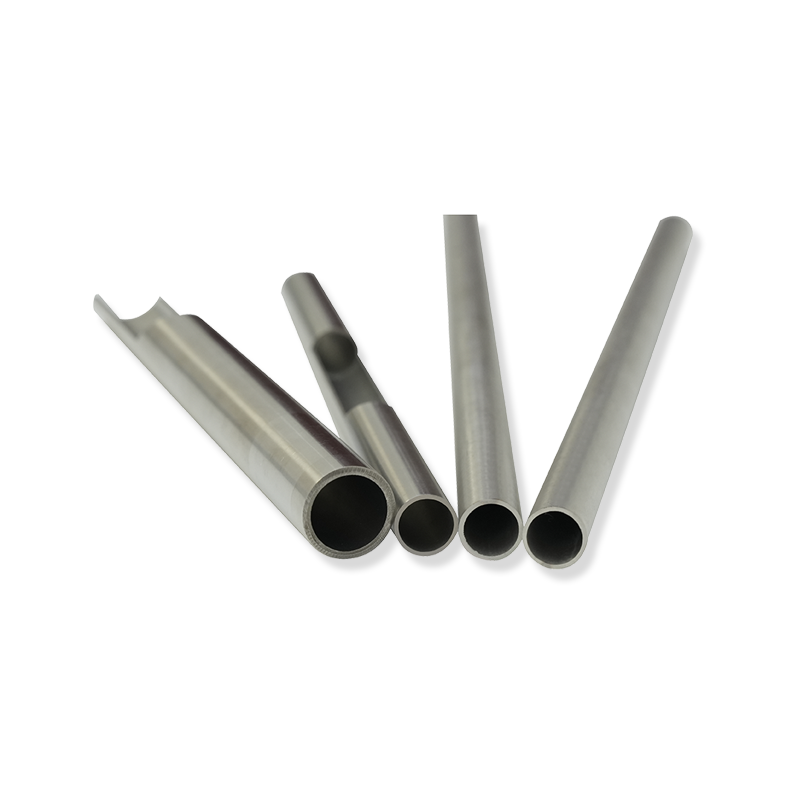 Wholesale S2205 corrosion resistant duplex stainless steel pipe Factory, ManufacJiangsu Jend Tube Co.,Ltd is China wholesale S2205 corrosion resistant duplex stainless steel pipe factory and S2205 corrosion resistant ...View Product →
Nickel-based alloys (Monel, Inconel, Incoloy) are specified for extreme corrosion and high-temperature environments such as flue gas desulfurization, aerospace, and aggressive chemical processing. They are the most expensive option and are justified only when the service environment eliminates standard stainless grades.
From a manufacturer's view, material grade deserves more engineering attention than the pipe-versus-tube question. A correctly dimensioned part in the wrong alloy will fail faster than a slightly mis-toleranced part in the right alloy.
How to Order Correctly: A Practical Checklist for Buyers
To avoid the expensive mistakes we see weekly, work through this checklist before you send an inquiry:
- Decide whether the product will convey fluids or gases under pressure (pipe) or serve a structural, mechanical, or heat-exchange function (tube).
- State the dimension system explicitly: for pipe, give NPS plus Schedule; for tube, give exact OD plus WT.
- Specify the governing standard. For a general-service tube, that may be ASTM A269 seamless stainless tubing
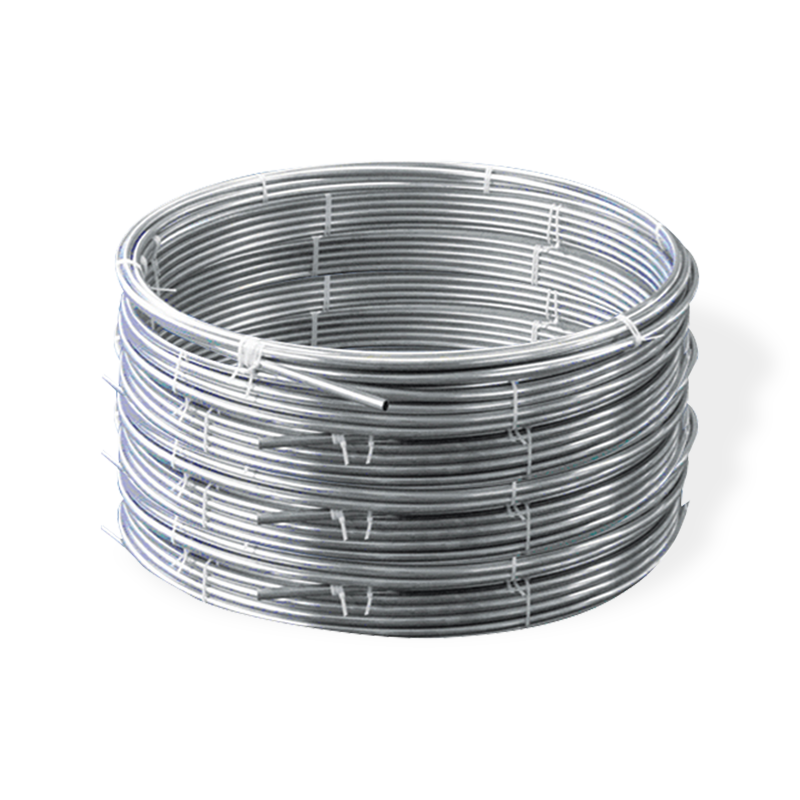 Wholesale ASTM A269 Seamless Stainless Tubing Factory, Manufacturers - Jiangsu JAs China ASTM A269 Seamless Stainless Tubing Manufacturers and Wholesale Factory, Jiangsu Jend Tube Co.,Ltd provides types of ASTM A269 S...View Product →; for a pressure pipe, ASTM A312; for a boiler or heat exchanger tube, ASTM A213.
 - Choose seamless or welded construction based on pressure, temperature, inspection, and budget.
- Define length, straightness, and end preparation. Confirm if you need extra-long tubes up to 25 meters, cut-to-length pieces, or special end finishes.
- List any post-processing requirements such as bright annealing, electropolishing, or solution annealing and pickling.
- Request the material test certificate and any third-party inspection reports before the order is placed.
Pipe vs. Tube: Which One Do You Actually Need?
If you are still deciding, use this practical logic:
- Water, air, steam, or hydrocarbon conveyance — use pipe, ordered in NPS and Schedule.
- Boiler or heat exchanger tube bundles — use tube, ordered in OD and WT under ASTM A213.
- Hydraulic systems, instrumentation, or medical devices — use tube, because tight tolerances are non-negotiable.
- Structural frames, machine parts, railings, or enclosures — use tube, with square or rectangular profiles available.
- Long-distance, large-diameter transmission lines — use pipe, for pressure integrity and standardized fittings.
- Small-diameter precision coils or thin-wall tubing — use tube, manufactured for exact dimensions and flexibility.
The pattern is simple: pressure and flow push you toward pipe; precision and structure push you toward tube.
Why Source from a Full-Cycle Manufacturer Like Jend Tube?
The practical difference between buying from a distributor and buying from a full-cycle manufacturer shows up in three areas: technical guidance, customization, and traceability.
Distributors sell what they stock. A manufacturer can advise you on material selection, adjust dimensions, run the right heat treatment, and produce specialty forms such as extra-long tubes, bright annealed surfaces, or electropolished bores. Jend Tube has operated as an integrated manufacturer since 2011, with an outside diameter range of 3.18 mm to 406.4 mm, wall thickness from 0.3 mm to 20 mm, and lengths up to 25,000 mm. We produce to ASTM, EN, DIN, JIS, GOST, and GB standards, and our materials cover austenitic, super-austenitic, ferritic, martensitic, duplex, and nickel-based alloys. Our quality system is certified to ISO 9001, TS, and PED, and our products currently ship to more than 50 countries.
When you send us your service conditions, process parameters, and required standards, our engineering team works from the raw material upward to define the correct pipe or tube. That is the advantage of sourcing from the people who actually control the metal, the furnace, and the inspection line. If you have a project in the specification stage, send us your requirement and we will respond with the manufacturing and compliance details you need to move forward.