Search
 한국어
한국어 русский
 عربى
عربىA process engineer evaluating tubing for a new heat exchanger and a purchasing agent comparing quotes face the same starting question: what are the three types of stainless steel tubing, and which one belongs in the spec? The most useful answer begins with metallurgical structure. Austenitic, ferritic, and martensitic tubing differ in composition, magnetism, weldability, and corrosion resistance — and those differences drive both performance and cost.
What Counts as Stainless Steel Tubing?
Stainless steel is an iron-chromium alloy with a minimum chromium content of 10.5%. Chromium forms a thin, self-repairing oxide layer on the surface. When the film is scratched, it re-forms in the presence of oxygen, which is why stainless steel resists corrosion for years. Any manufacturing step that disrupts that layer must be followed by proper cleaning or pickling to restore the passive film.
Tubing also differs from pipe in a way that matters for procurement. Pipe is generally classified by nominal inner diameter and used to convey fluids. Tube is classified by outside diameter and wall thickness, with tighter tolerances, and is used for structural, precision, and heat-transfer applications. The distinction changes how you communicate sizes and which standards apply.
For engineered service, the common reference point is ASTM A269, which covers ASTM A269 seamless stainless steel tubing standards for seamless and welded austenitic tubing in general industrial service.
Why Metallurgical Structure Defines the Three Types of Stainless Steel Tubing
Metallurgical structure, not end use, is the most reliable basis for classifying stainless steel tubing. The microstructure — austenitic, ferritic, or martensitic — is set by composition and heat treatment, and it determines corrosion resistance, magnetic response, weldability, toughness, and strength.
Commercial catalogs sometimes group tubing by application into "decorative," "industrial," or "custom" categories. That logic is easy to present but difficult to engineer with. A decorative handrail tube and a chemical-process tube can both be austenitic 304, yet behave very differently under pressure. Sorting by microstructure avoids that confusion because it compares materials with the same rules.
The stainless family also includes duplex, super-austenitic, and precipitation-hardening grades, but for most procurement decisions, the three types of stainless steel tubing described here are where selection begins.
Type One — Austenitic Stainless Steel Tubing
Austenitic is the most widely used stainless steel tubing category. Its face-centered cubic structure is stabilized by nickel, and the most common grade, 304, contains roughly 18% chromium and 8% nickel. This structure provides excellent formability, weldability, corrosion resistance, and low-temperature toughness. Austenitic tubing is also essentially non-magnetic.
Some industry estimates put the austenitic share of stainless steel tubing consumption at around 70%. The family includes TP304/TP304L, TP316/TP316L, TP321, and TP347. TP304L suits food processing and general chemical service; TP321 and TP347 add stabilization for high-temperature boiler and heat-exchanger work.
304 vs. 316 — What Changes When Molybdenum Is Added
The most frequent selection question inside the austenitic family is 304 versus 316, and the deciding factor is molybdenum.
316 carries roughly 16% chromium, 10% nickel, and about 2% molybdenum. Molybdenum raises resistance to pitting and crevice corrosion in chloride environments, which is why 316/316L austenitic stainless steel alloy pipe is standard for marine, offshore, and chemical processing work. In coastal or hot chloride service, 316 typically outlasts 304 significantly.
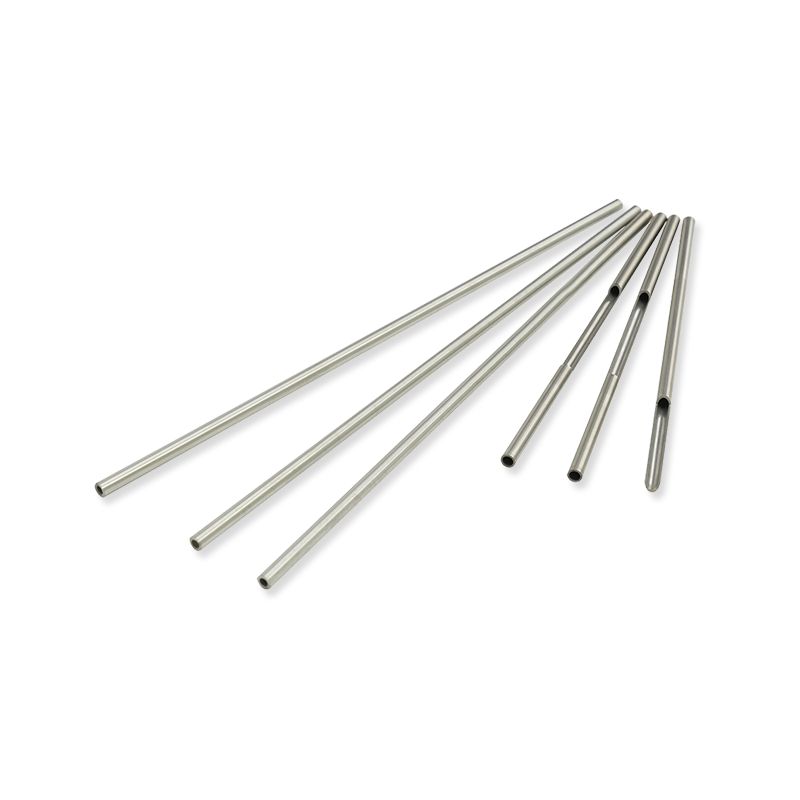 Wholesale TP316/TP316L/TP316H/TP316Ti austenitic stainless steel alloy pipe FactJiangsu Jend Tube Co.,Ltd is China wholesale TP316/TP316L/TP316H/TP316Ti austenitic stainless steel alloy pipe factory and TP316/TP316L/T...View Product →
The cost is higher, and the premium must be justified. Added molybdenum and nickel raise the alloy price, so 304 remains economical where chloride exposure is low. For forming, 304 is slightly more forgiving than 316, though both handle standard bending well.
For coastal or salt-laden applications, the marine-grade 316L stainless steel tube is the usual recommendation. For dry interior lines or cost-sensitive structures, 304 is a sound default. Check chloride concentration, temperature, and whether pitting has appeared on existing equipment — those three signals point to the correct grade.
Type Two — Ferritic Stainless Steel Tubing
Ferritic stainless steel tubing is the lower-cost member of the stainless family. It contains about 16-18% chromium with very little or no nickel, which keeps the alloy price down. The body-centered cubic structure makes ferritic tubing magnetic, so a simple shop-floor magnet test separates it from austenitic tubing immediately.
Ferritic grades offer better resistance to stress corrosion cracking than austenitic grades in certain hot chloride environments. They also maintain good oxidation resistance at elevated temperatures, which is why ferritic tubing appears in heat-exchange equipment, furnace components, and automotive exhaust systems.
The main limitation is weldability. The ferritic microstructure can coarsen in the heat-affected zone during welding, reducing toughness. As a result, ferritic tubing is often supplied as seamless, especially for thin walls or cyclic thermal service.
Representative grades include TP405, TP409, TP430, TP439, and TP444. TP409 serves automotive exhaust widely. TP430 balances corrosion resistance with formability for architectural trim and heat-exchange components. The TP430 ferritic stainless steel pipe page lists available dimensions and standards. Where improved weldability or high-temperature stability is needed, the TP439 chromium ferrite stainless steel pipe is a practical upgrade in the same price tier.
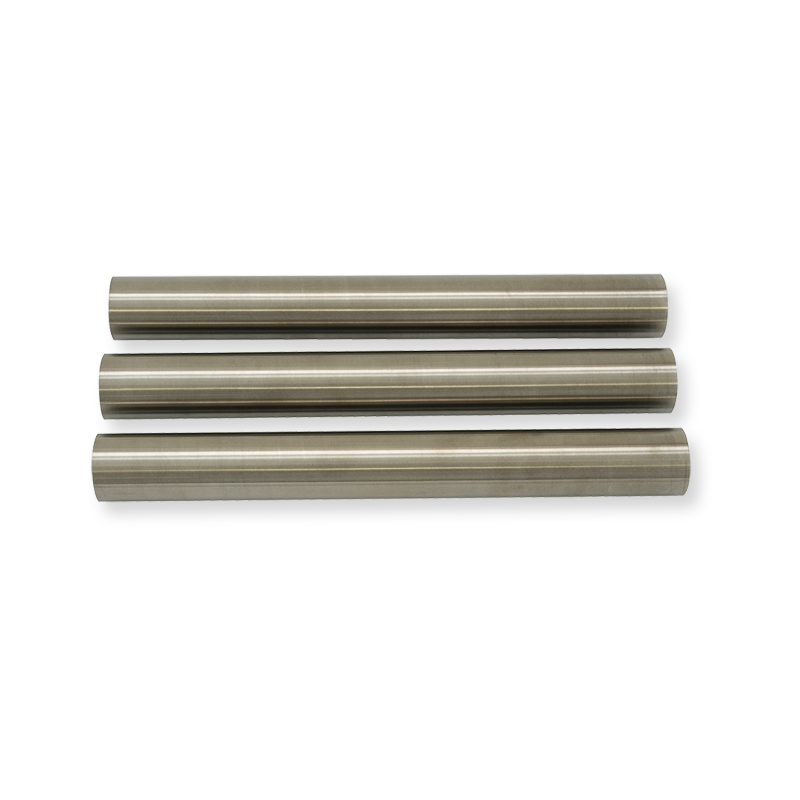 Wholesale TP430 ferritic stainless steel pipe Factory, Manufacturers - Jiangsu JJiangsu Jend Tube Co.,Ltd is China wholesale TP430 ferritic stainless steel pipe factory and TP430 ferritic stainless steel pipe manufact...View Product →
Type Three — Martensitic Stainless Steel Tubing
Martensitic stainless steel tubing serves a different function in the selection scheme. The grades contain roughly 12-18% chromium with a higher carbon content than austenitic or ferritic grades. That carbon enables heat treatment: martensitic tube can be hardened and tempered, producing high strength, hardness, and wear resistance that the other two types cannot match in the as-supplied condition.
The tradeoff is lower corrosion resistance. Martensitic grades perform clearly below austenitic and ferritic in chloride, acid, and marine environments. They are selected for mechanical duty, not corrosion service — for valves, shafts, wear sleeves, and hardened machine elements where the tube itself becomes part of a moving or abrasive system.
TP410 is the principal martensitic grade produced in tubing form. It appears in valve components, pump shafts, wear sleeves, and similar mechanical parts. In moderate-temperature steam service, some martensitic alloys also provide useful creep strength.
The specification on the TP410 engineering martensitic stainless steel pipe covers the heat-treatment condition and hardness range to confirm before ordering. If the application is purely structural and hardening is not required, ferritic or austenitic tubing usually delivers better corrosion performance with shorter lead time.
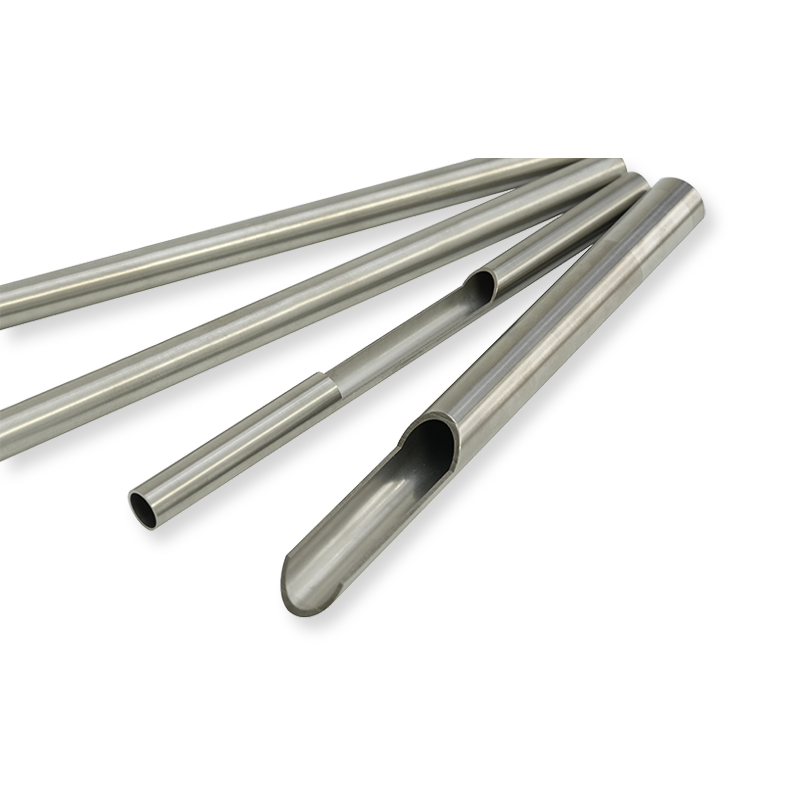 TP410 Martensitic Stainless Steel Pipe/Tube Factory, ManufacturersJiangsu Jend Tube Co.,Ltd. is China 410 engineering martensitic stainless steel pipe factory and 410 stainless steel tube manufacturers, ...View Product →
How Manufacturing Method Affects the Three Types
Grade selection is only half the decision. The manufacturing route — seamless or welded — determines how the tube behaves under pressure, fatigue, and corrosion, and it interacts with the material family.
Seamless tubing starts from a solid billet and is formed to final size without a longitudinal weld seam. It is preferred for high-pressure hydraulics, boiler tubes, and critical process lines where a weld would be the weakest point.
Welded tubing is formed from strip, joined with a longitudinal weld, then cold reduced and annealed. It costs less and can be produced in very long lengths and thin walls. For non-pressure structural work, welded austenitic tubing performs well.
The three families respond differently to these processes. Austenitic grades are commonly supplied in both seamless and welded forms. Ferritic grades are more often seamless, because the welded heat-affected zone can lose toughness. Martensitic grades are almost exclusively seamless, since their hardening response complicates welded fabrication.
Surface finish completes the picture. A solution-annealed and pickled stainless steel pipe has been heat-treated and chemically cleaned to restore the chromium oxide layer after hot working — a requirement for corrosion-critical service. For food, pharmaceutical, and precision instrument work, a bright-annealed stainless steel tube offers a smooth, reflective surface that is easier to clean and inspect.
Quick Selection Guide — Which of the Three Types Fits Your Application?
Begin with the service environment, not the unit price. Define corrosion load, temperature range, mechanical demands, and budget — the correct family will follow.
| Dimension | Austenitic | Ferritic | Martensitic |
|---|---|---|---|
| Representative grades | TP304/L, TP316/L, TP321, TP347 | TP405, TP409, TP430, TP439, TP444 | TP410 |
| Chromium / nickel / molybdenum | 18/8/0 for 304; 16/10/2 for 316 | 16-18% Cr, low or no Ni | 12-18% Cr, higher carbon |
| Magnetic | No | Yes | Yes |
| Chloride pitting resistance | High, especially with molybdenum | Moderate | Low |
| Relative cost | Medium to high | Low to medium | Low |
| Typical applications | Chemical processing, food, marine, cryogenic | Exhaust systems, heat exchangers, architecture | Valves, shafts, wear parts, steam service |
A practical decision path can be compressed into four checks:
- Marine or chloride-heavy environments call for austenitic with molybdenum; hot-chloride stress corrosion cracking points to ferritic.
- Cryogenic service needs austenitic; high-temperature oxidation suits ferritic; hardness at temperature points to martensitic.
- Hardness and wear mean martensitic; most process piping points to austenitic.
- Tight budgets and mild environments favor ferritic, if its weld limitations are accepted.
For geometries outside standard ranges, confirm supplier capability early. Small-diameter stainless steel tubing and heavy-wall stainless steel pipe options cover the two most common specialty requests.
Conclusion — Choosing a Reliable Supplier for Your Stainless Steel Tubing
Narrowing your project to one of the three types of stainless steel tubing gets the material family right, but final performance depends on the supplier's execution.
First, confirm standards coverage. A mill that produces to ASTM, EN, DIN, JIS, and GOST equivalents gives flexibility across multiple markets. Certifications such as ISO9001 and PED add confidence for pressure equipment.
Second, check the dimensional envelope. A supplier covering roughly 3.18 mm to 406.4 mm outside diameter, wall thicknesses from 0.3 mm to 20 mm, and lengths up to 25 m can handle both precision tubing and heavy industrial pipe in one order. Regular export to more than 50 countries signals that documentation and logistics meet international expectations.
Third, define post-processing in writing. Specify whether the tube must be solution-annealed, pickled, bright-annealed, or electropolished, along with tolerances and test certificates.
If service conditions exceed what the three classic families can handle — severe chloride pitting at high temperature, or high strength plus corrosion resistance — duplex grades are the natural extension. The S31803 duplex stainless steel alloy pipe page is a reliable reference for that alternative.
In short: identify the environment, map it to one of the three types of stainless steel tubing, choose the manufacturing route and surface finish, then evaluate suppliers on standards compliance and dimensional capability.